Prime Minister Datuk Seri Anwar Ibrahim has responded forcefully to opposition criticism over the Tabung Haji crisis, accusing lawmakers of manufacturing political controversy rather than addressing the real concerns of the pilgrimage fund's depositors. In a Facebook statement, he challenged the opposition to shift its focus away from personal attacks on his leadership and instead concentrate on those responsible for mismanagement at the institution, which has affected millions of Malaysian savers attempting to fulfil their religious obligations.
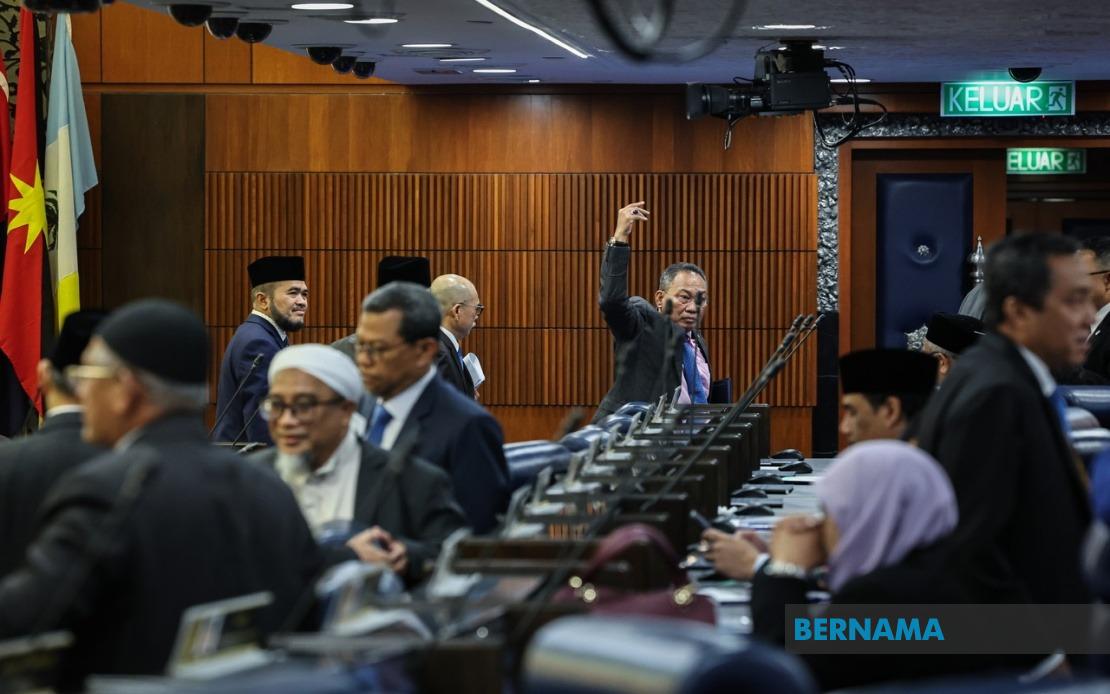
The prime minister's remarks came in the wake of a contentious parliamentary session in which several opposition Members of Parliament staged a walkout to protest the absence of Anwar, who was recuperating from elective laparoscopic surgery to address a para-umbilical hernia. The opposition objected to Speaker Tan Sri Johari Abdul's decision to proceed with a ministerial briefing on the Royal Commission of Inquiry report without the Prime Minister present, and rejected a motion by PN Chief Whip Datuk Seri Takiyuddin Hassan to adjourn proceedings.
Anwar's health condition provided a backdrop for the parliamentary drama, though the core dispute centred on how lawmakers should treat the most significant institutional failure affecting ordinary Malaysians in recent years. The special sitting was convened to present findings from a 211-page RCI report on Tabung Haji's financial deterioration and to update parliament on corrective measures undertaken. The inquiry examined governance and operational weaknesses spanning 2014 to 2020, a period during which systemic failures accumulated, eventually requiring government intervention and public rehabilitation efforts.
The Prime Minister's rebuttal took particular aim at the Perikatan Nasional bloc, led by PAS, questioning whether the coalition genuinely prioritised the interests of working-class Malaysians who depend on Tabung Haji. He posed a pointed question about the opposition's commitment to protecting the savings of fishermen, farmers, educators, security personnel, and retirees who have contributed to the fund with the expectation of accessing resources for their hajj pilgrimage. This framing transformed the debate from one about executive accountability into a question about which political grouping truly champions the concerns of ordinary citizens.
The 211-page RCI report, released publicly on July 29, revealed extensive institutional shortcomings that had eroded depositor confidence and jeopardised savings accumulated over decades. The inquiry produced 25 formal recommendations aimed at strengthening governance, operational transparency, and financial safeguards. By July 30, Tabung Haji had already implemented 75 per cent of these recommendations, indicating a proactive approach to remediation, though critics argued such measures came too late for those whose funds had already suffered losses during the years of mismanagement.
The establishment of the RCI itself reflected the severity of concerns about Tabung Haji's trajectory. Announced in 2021 with commissioners appointed in January 2022, the inquiry represented an acknowledgment by authorities that institutional problems required independent investigation. The completed report was formally presented to the Yang di-Pertuan Agong on August 30, 2022, signalling royal involvement in addressing a matter touching the religious and financial security of the Muslim majority population.
For Malaysian readers, the Tabung Haji controversy encapsulates broader questions about institutional governance, political accountability, and the protection of ordinary citizens' assets. Millions of Malaysians have entrusted their life savings to the fund, viewing it as a secure vehicle for accumulating resources necessary to perform the hajj, one of Islam's five pillars. The mismanagement that necessitated an RCI represents not merely bureaucratic failure but a breach of trust with religious and cultural dimensions that extend beyond conventional financial analysis.
The opposition's parliamentary tactics, from Anwar's perspective, divert attention from these substantive issues. By focusing on his absence from the special sitting rather than engaging with the substance of institutional reform, critics according to the Prime Minister prefer theatrical confrontation to constructive deliberation about depositor protection and future fund management. This argument resonates with Malaysians concerned that political point-scoring should not override the practical work of restoring confidence in an institution essential to millions of families' hajj aspirations.
Anwar's invocation of the phrase "traitors" to Tabung Haji suggests his government views the previous mismanagement as something more serious than mere administrative incompetence. By characterising earlier managers and overseers as having betrayed the institution and its depositors, the Prime Minister positions his administration as the corrective force genuinely invested in restoration and accountability. This rhetorical stance attempts to occupy the moral high ground, suggesting that opposition criticism serves only to obstruct genuine reform work.
The timing of the opposition's protest, coinciding with Anwar's medical absence, raises strategic questions about parliamentary conduct during health emergencies. While opposition parties have legitimate grounds to scrutinise government performance on the Tabung Haji issue, the decision to proceed with boycotts during a period when the Prime Minister was undergoing recovery procedures presents a perception challenge for those critical voices, potentially inviting accusations of opportunism over substance.
Moving forward, the resolution of the Tabung Haji crisis will likely remain a political flashpoint through Malaysia's next electoral cycle. The manner in which the government implements the RCI recommendations, the speed of financial recovery, and whether depositors experience tangible restoration of confidence will determine whether Anwar's government can successfully claim stewardship of institutional renewal. For opposition parties, the challenge lies in constructing criticism that demonstrates genuine commitment to depositor welfare rather than appearing to weaponise a crisis for political advantage.
The broader context for Southeast Asian readers involves understanding how Islamic financial institutions manage the intersection of religious obligation, public trust, and commercial sustainability. The Tabung Haji model, while uniquely Malaysian, reflects challenges faced across the region as pilgrimage funds, development banks, and faith-based financial institutions navigate governance standards while serving predominantly Muslim populations with specific religious and cultural expectations about how their resources should be stewarded.

