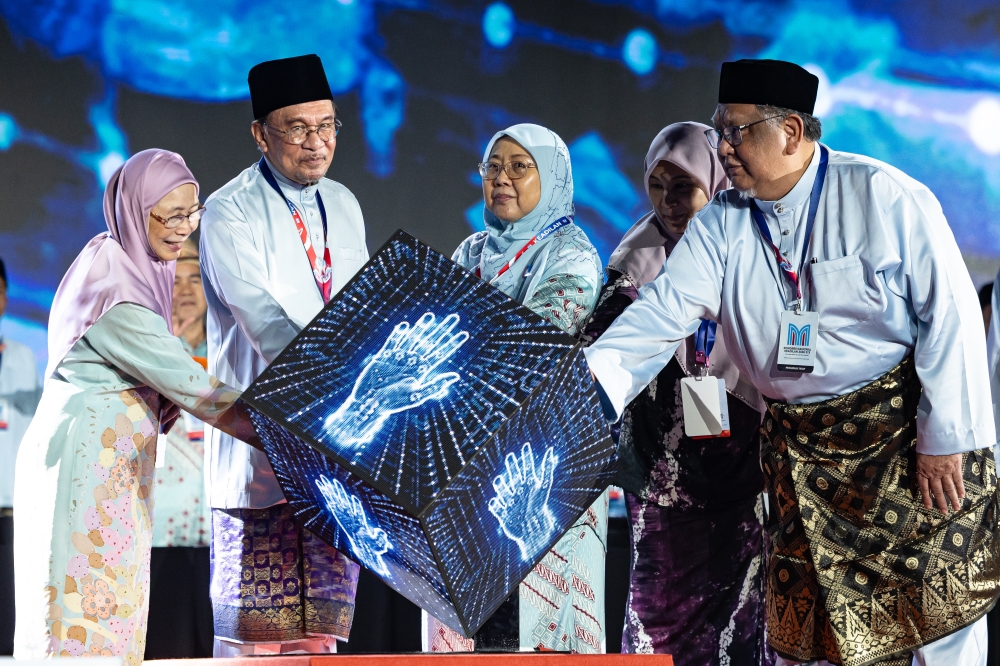
Prime Minister Datuk Seri Anwar Ibrahim has dismissed suggestions that his administration unfairly distributes development funds, contending instead that states including Sabah, Sarawak, Kedah and Kelantan have received substantially larger budget allocations under the Madani government compared to its predecessors. Speaking in Melaka on August 15, Anwar addressed persistent complaints from certain political quarters that the current federal administration neglects non-Selangor territories, particularly East Malaysian states and regions governed by opposition parties.
The Prime Minister's remarks come amid ongoing debate about fiscal fairness across Malaysia's thirteen states and three federal territories. Opposition figures and state leaders from both Peninsular Malaysia and the Borneo territories have periodically raised concerns that budget distribution reflects political preferences rather than developmental needs or demographic representation. Anwar's intervention suggests the federal government views these assertions as sufficiently damaging to warrant direct rebuttal from the highest office, indicating that budget allocation remains a sensitive political issue capable of mobilising voters across the federation.
Sabah and Sarawak occupy a distinct position within Malaysian federalism, having negotiated constitutionally protected autonomy in areas including education, healthcare, and internal security prior to joining the federation. This special status means budget negotiations between Putrajaya and the East Malaysian state capitals involve complex constitutional considerations absent from negotiations with other states. The two states collectively represent approximately 40 percent of Malaysia's land area yet account for roughly 13 percent of the national population, creating unique allocational challenges that federal policymakers must navigate carefully to maintain political stability in the Borneo territories.
Kedah and Kelantan, while peninsular states, have historically presented distinct political challenges. Kedah's fluid political alignment has shifted between government and opposition coalitions, while Kelantan has remained an opposition stronghold under various Islamist parties. The inclusion of these states in Anwar's enumeration suggests the federal government seeks to demonstrate even-handedness regardless of partisan control, a necessary posture for maintaining national cohesion and preventing accusations of vindictive governance. Such neutrality in budget distribution has become increasingly important as Malaysia navigates more fractious coalition politics following recent elections.
The Madani government assumed office in 2022 with a mandate to improve economic governance and restore public confidence in institutions after years of political turbulence. Budget allocation disputes have threatened this agenda by reviving perceptions of favouritism and politicised distribution of resources. By publicly defending funding increases for multiple states and regions, Anwar attempts to reframe the government's fiscal narrative away from zero-sum regional competition toward collective national development. This rhetorical strategy becomes particularly important when states perceive they receive insufficient allocations to address infrastructure deficits, social service demands, or economic development priorities.
The timing of Anwar's comments, delivered through public remarks rather than formal budgetary documentation, suggests the government recognises the communication challenge inherent in fiscal matters. Most citizens rarely examine detailed appropriations schedules or understand the complex mechanics of federal-state financial transfers, revenue-sharing formulas, and conditional grants that characterise Malaysia's fiscal federalism. Political opponents can therefore make broad claims about unfair distribution without necessarily confronting specific data. By vocalising aggregate assertions about increased allocations, Anwar addresses this communication gap, though sceptics may demand detailed comparative analysis substantiating the claims.
Economic considerations amplify the political importance of budget allocation debates. East Malaysian states have consistently advocated for increased federal investments to address infrastructure deficits in transportation, digital connectivity, and energy generation that constrain regional economic growth. Similarly, Kedah and Kelantan require substantial allocations to modernise their economies and improve living standards relative to more developed regions. The federal government's willingness to increase funding for these areas signals commitment to more geographically balanced economic development, potentially reducing internal migration to Selangor and Kuala Lumpur that has created congestion and social pressures in the Klang Valley.
Federal budget decisions inevitably involve difficult trade-offs. Increased allocations to certain states necessitate either reductions elsewhere, increased overall spending, or reorientation of funds from other priorities. The government must balance regional equity against efficiency considerations, sometimes channelling investment toward areas with better absorptive capacity or existing infrastructure that maximises returns on spending. This tension between equity and efficiency creates ongoing political difficulty, as states perceiving shortfalls question whether technical considerations or political bias explain funding disparities. Anwar's public defence suggests the government prioritises emphasising the equity dimension while managing efficiency concerns through bureaucratic channels.
The broader context of Malaysian federalism complicates these discussions considerably. The 14th Parliament contains fragmented representation with no party commanding overwhelming majorities, meaning the government requires coalition cooperation to pass budgets and legislation. States governed by coalition partners possess considerable leverage in negotiating allocations, while opposition-controlled states must persuade the federal government that development funding serves national rather than partisan interests. This structural reality incentivises the government to demonstrate fairness across partisan lines, lest opposition-controlled states withdraw cooperation on other legislative priorities or mobilise voters against perceived unfair treatment.
International economic trends compound the urgency of regional equity discussions. Slower global growth, commodity price volatility, and supply chain disruptions have constrained Malaysian economic expansion and government revenues. In this constrained fiscal environment, allocation decisions become more zero-sum and contentious. States facing reduced growth or unemployment pressures demand federal support, while the federal government must prioritise limited resources across competing demands. Anwar's assertions about increased allocations must therefore be situated within this challenging macroeconomic backdrop, where any increase represents a conscious government choice to prioritise certain regions despite tighter overall budgets.
Looking forward, the government faces sustained pressure to demonstrate fiscal fairness while maintaining macroeconomic stability. Budget allocation remains a potent political issue capable of eroding support among constituencies perceiving themselves disadvantaged. Anwar's willingness to address these concerns publicly indicates the administration recognises the risks of allowing unfair allocation narratives to circulate unchallenged. Future budgets will require careful calibration to balance regional equity, economic efficiency, and political coalition management, determining whether the Madani government sustains public confidence in its fiscal stewardship or succumbs to perceptions of partisan budget manipulation that plagued predecessors.

