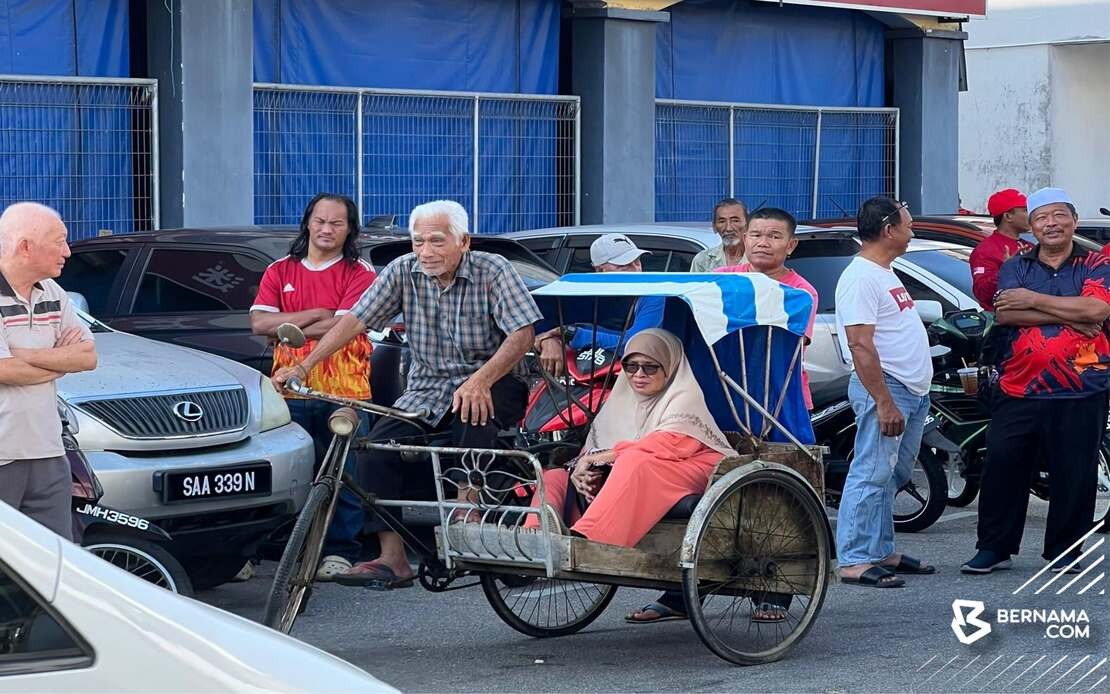
Prime Minister Datuk Seri Anwar Ibrahim has publicly expressed his appreciation for an octogenarian's heartfelt gesture during his recent visit to Johor, acknowledging the determination and devotion displayed by an elderly couple who made an extraordinary effort to be present during his campaign activities in the state. The premier's emotional response to the incident has resonated with Malaysians, highlighting the personal connections that can develop between political leaders and constituents across generational divides.
Abdul Razak Pelangga, an 86-year-old resident of Kampung Parit Bugis, made the decision to transport his wife Jamilah Samsudin, aged 64, by trishaw from their home to Kedai Kopi Hailam Sri Medan in Senggarang, Batu Pahat. The couple travelled nearly a kilometre through the town upon learning that Anwar would be stopping at the modest eatery for breakfast as part of his engagement with local residents during the Johor State Election campaign period. What made the journey particularly noteworthy was Abdul Razak's deliberate choice of transport—despite having access to both a car and motorcycle at home, he opted for the traditional trishaw, a decision motivated by practical concerns about parking availability in the bustling town centre.
The imam of Masjid Raudhatul Jannah Parit Bugis later explained the reasoning behind Abdul Razak's transportation choice, emphasising that the elderly gentleman had weighed his options carefully and settled on the trishaw specifically to circumvent the inconvenience and difficulty of locating a suitable parking space in Senggarang. This detail underscores not only Abdul Razak's consideration for his wife's comfort but also his realistic assessment of the challenges of navigating urban areas during peak hours, even within a small town setting. The thoughtfulness inherent in this decision—choosing the path of least resistance and greatest convenience for an elderly companion—resonated powerfully with observers who recognised the gesture as emblematic of devotion and care within long-term partnerships.
During his visit to the Senggarang state constituency on the day in question, Anwar allocated approximately fifty minutes to his breakfast engagement at the eatery, during which he interacted with local residents in a structured meet-and-greet programme. The extended timeframe allowed him to engage meaningfully with members of the community and gather feedback on their concerns and aspirations. However, the specific timing or circumstances meant that the prime minister did not encounter Abdul Razak and Jamilah during this window of opportunity, a fact that Anwar subsequently addressed through a Facebook post expressing his regret at the missed meeting.
In his social media statement, Anwar conveyed genuine appreciation for the couple's effort and encouragement, whilst simultaneously offering an apology for the inability to connect with them in person during his breakfast stop. The prime minister's tone struck a balance between acknowledging the couple's gesture and expressing authentic disappointment at the missed opportunity for a direct interaction. By utilising Facebook to reach out, Anwar demonstrated awareness of the digital landscape and the importance of personal acknowledgment in contemporary political communication, ensuring that his gratitude would be visible not only to Abdul Razak and Jamilah but to the broader Malaysian public.
Anwar's message carried spiritual undertones appropriate to the Malaysian context, invoking Islamic blessings as he wished the couple good health and the facilitation of their life endeavours by Allah SWT. This invocation of divine blessing, coupled with his explicit reference to their encouragement and support, framed the incident within the broader narrative of community support for his political endeavours during the Johor State Election campaign. The prime minister's choice to publicly acknowledge the couple elevated what might have been a routine incident of a supporter attempting to attend a political event into a meaningful moment of human connection that transcended the typical dynamics of political engagement.
The story of Abdul Razak and Jamilah's journey resonates particularly strongly within the Malaysian context, where trishaw travel carries cultural and historical significance, often associated with a vanishing mode of transport that connects present-day Malaysia with its recent past. The couple's decision to utilise this form of transport—whether motivated by practical convenience or perhaps also by a touch of nostalgia and authenticity—has prompted reflection on intergenerational values and the ways in which commitment to community participation persists across age groups. In an era when political engagement among older citizens sometimes receives less attention than youth mobilisation efforts, Abdul Razak's proactive participation and his wife's willingness to accompany him on the trishaw journey serve as a reminder of the enduring civic consciousness among Malaysia's elderly population.
The Johor State Election context provides important backdrop for understanding the significance of this encounter. As a campaign event, Anwar's visit to Senggarang represented one component of a broader political mobilisation effort within the state, and constituents' willingness to make personal sacrifices to attend or witness such occasions reflects the intensity of political interest and engagement at particular electoral moments. Abdul Razak and Jamilah's gesture, therefore, should be understood not merely as a charming anecdote but as an indicator of genuine electoral participation and the personal investments that citizens make in democratic processes.
The broader implications of this incident extend to questions about accessibility and inclusivity within political engagement. The fact that an 86-year-old felt sufficiently motivated and capable of arranging transport to attend a prime ministerial campaign event speaks to the inclusive nature of such gatherings, whilst simultaneously raising questions about how political leaders can ensure that elderly and potentially less mobile citizens are adequately informed about and accommodated within campaign activities. Anwar's public acknowledgment of the couple's effort may serve to reinforce the message that such participation is valued and appreciated by the political establishment, potentially encouraging further engagement from older demographics in future electoral cycles.

