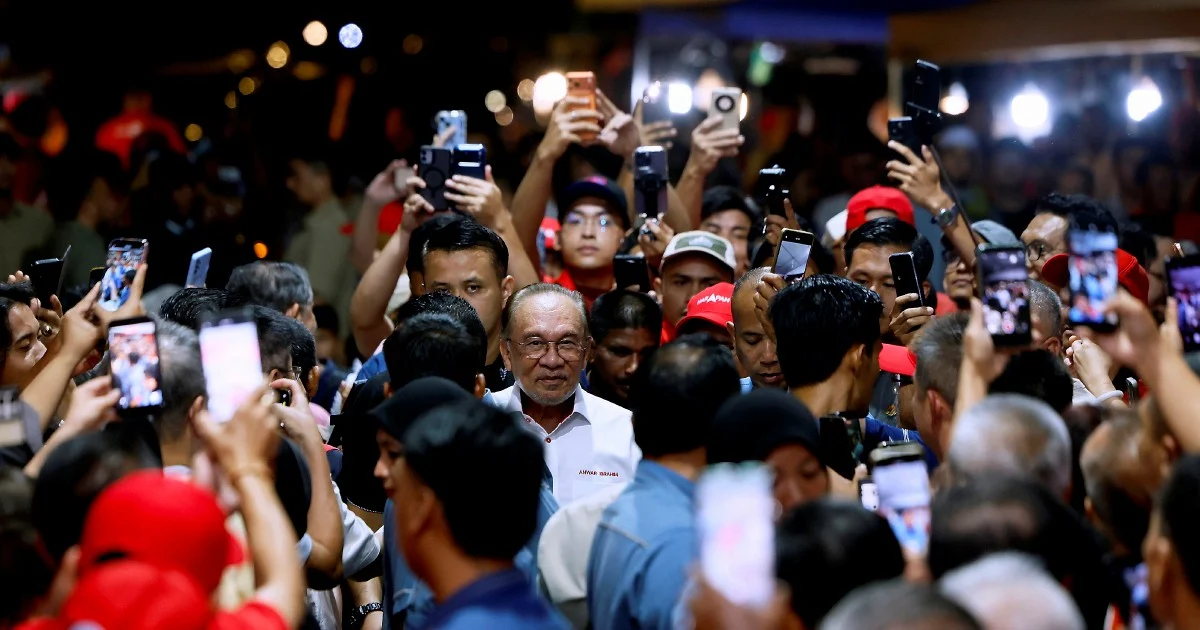
Prime Minister Datuk Seri Anwar Ibrahim delivered a forceful message in Muar on governance and accountability, stating unequivocally that the longstanding practice of using political office to accumulate personal wealth through connected networks is finished. The pronouncement underscores a deliberate repositioning by the Madani administration, which has centred much of its political legitimacy on the promise of dismantling systemic corruption and the informal arrangements that once dominated Malaysia's corridors of power.
The prime minister's remarks reflect both a policy direction and a rhetorical strategy designed to consolidate public confidence in the government's anti-corruption credentials. By framing the transition in stark historical terms—positioning what came before as a discrete and departed era—Anwar articulated a narrative of clear rupture with previous administrations. This messaging approach carries particular weight in Malaysia's contemporary political environment, where accusations of cronyism and illicit enrichment have figured prominently in public discourse and electoral calculations for more than a decade.
The concept of a "culture of plunder" addresses deeply rooted patterns in Malaysian governance where political patronage networks have historically determined access to lucrative government contracts, timber rights, banking licenses, and other valuable state assets. Under such systems, those with connections to political elites could accumulate fortunes through arrangements that circumvented competitive tendering and market discipline. Anwar's declaration that this paradigm has ended signals an intent to restructure how such decisions are made, emphasising merit, transparency, and formal accountability mechanisms instead of behind-the-scenes negotiations.
The Madani Government, which took office following the 2022 general election, positioned clean governance as a central pillar of its mandate. This commitment distinguishes the current administration from its recent predecessors, all of whom faced substantial public scepticism regarding corruption and the undue influence of political insiders. By repeatedly affirming that the culture of patronage is no longer operative, Anwar is attempting to lock in public perception of his government as fundamentally different from what preceded it, even as Malaysia's institutional capacity to prevent corruption—while improved—remains subject to ongoing scrutiny.
For Malaysian businesses and investors, clarity on this matter carries practical implications. An operating environment where contracts and licenses are allocated according to technical qualifications and transparent processes rather than political connections would theoretically create a more level playing field for enterprises without elite connections. This could expand opportunities for smaller companies and entrepreneurs who lack access to top political networks. However, entrenched interests accustomed to preferential treatment may resist implementation of such changes, potentially creating friction between policy intention and institutional reality.
The declaration also reflects regional context. Across Southeast Asia, questions of governance integrity and crony capitalism have become increasingly salient as countries compete for foreign investment and talent. Investors increasingly factor political stability and transparency into location decisions. Malaysia's positioning itself as a jurisdiction moving decisively away from patronage systems represents a competitive advantage in attracting the foreign direct investment necessary for economic growth, particularly in high-value sectors like technology and finance that require sophisticated governance frameworks.
Anwar's statement in Muar, a constituency within Johor, also held territorial significance. The southern state has long been associated with particular political networks and business interests that benefited substantially from patronage arrangements during previous administrations. By making such a declaration in this location, the prime minister may have been sending a targeted message to local stakeholders about the new terms of engagement between government and business in this region.
Implementing the structural changes implicit in Anwar's promise will require sustained institutional effort. Malaysia's anti-corruption agency, the Malaysian Anti-Corruption Commission, would need consistent political backing and adequate resources to investigate allegations involving sitting politicians and their associates—a sensitive undertaking anywhere but particularly challenging in a coalition government with multiple stakeholder groups. Procurement reforms, asset declaration requirements, and whistleblower protections all require legislative amendments and bureaucratic cooperation to function effectively.
Public perception will ultimately determine whether Anwar's declaration marks a genuine turning point or remains aspirational rhetoric. The government's credibility on this issue depends on demonstrable action: the investigation and prosecution of high-profile individuals credibly connected to past wrongdoing, the transparent allocation of major government contracts, and the protection of officials who expose corruption within their own ranks. Citizens and international observers will scrutinise whether stated principles translate into consistent practice across different ministries and agencies.
The prime minister's willingness to make such categorical statements also reflects confidence that sufficient political consensus exists within his coalition to support transparency measures. Managing competing interests among alliance partners while advancing genuine reform represents a delicate balancing act, one that will test the durability of the Madani Government's commitment to the principles Anwar articulated. The months and years ahead will reveal whether the era he described has genuinely ended or whether it has merely been renamed and relocated.

