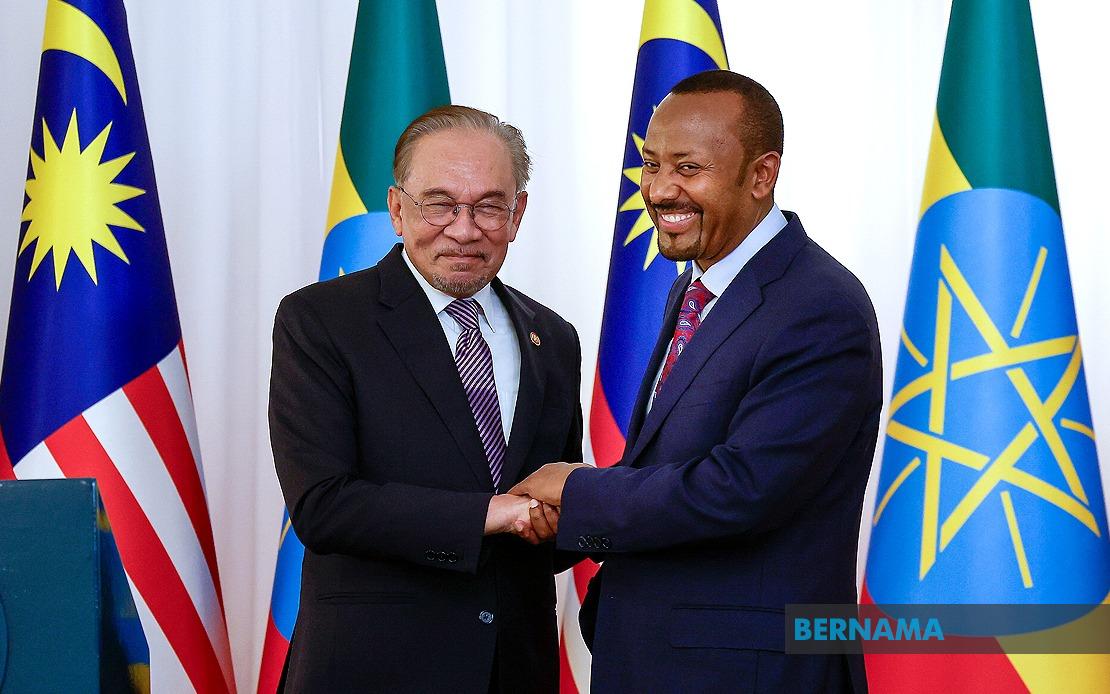
Prime Minister Datuk Seri Anwar Ibrahim has publicly congratulated Ethiopian Prime Minister Abiy Ahmed Ali and his Prosperity Party following their triumph in Ethiopia's recent general election, underscoring the deepening relationship between Malaysia and the East African nation. The gesture comes as part of Anwar's broader diplomatic outreach to African leaders and signals Kuala Lumpur's commitment to strengthening engagement across the continent.
Anwar conveyed his felicitations through a Facebook statement, reflecting on his historic visit to Addis Ababa the previous year—a milestone marking the first official visit by a Malaysian prime minister to Ethiopia. That journey had been carefully choreographed to establish what Anwar describes as a foundation for sustained cooperation, with discussions between the two leaders focusing on areas of mutual interest and shared vision.
The Prime Minister's comments reveal a philosophical alignment between the two leaders on global affairs. Anwar noted that his conversations with Abiy demonstrated a convergence in how both men view international developments and the role of emerging economies in shaping the global order. This shared perspective extends to their views on the importance of solidarity among nations in the Global South, a theme that has become increasingly central to Malaysian foreign policy under Anwar's leadership.
According to Anwar's statement, both leaders recognized that countries from the developing world stand to benefit substantially through collaborative engagement conducted on equal footing, rather than within traditional hierarchical frameworks that have historically characterized North-South relations. This philosophical stance reflects broader discussions within Global South forums about creating alternative structures and platforms for dialogue that bypass traditional power dynamics dominated by wealthy Western nations.
Ethiopia holds particular strategic significance for Malaysia's African policy. As the seat of the African Union and a nation of over 120 million people with considerable influence across the continent, Ethiopia represents a crucial gateway for Malaysian companies and diplomatic initiatives seeking greater traction in Africa. The country's economic potential, combined with its geopolitical importance, makes it an obvious priority for Kuala Lumpur's expanding presence in the region.
Anwar's reference to ongoing initiatives established during his previous visit suggests that Malaysian-Ethiopian cooperation extends beyond ceremonial exchanges into tangible areas. The Prime Minister indicated that substantive projects and arrangements had been set in motion during that landmark trip, initiatives that he expects will gain momentum under the continued leadership of Abiy and his government. These could encompass trade agreements, educational partnerships, cultural exchanges, or development cooperation programs.
The timing of Anwar's congratulatory message carries political undertones as well. Abiy's election victory demonstrates continued electoral support for his government, which had undertaken significant constitutional and political reforms since coming to power. The Prosperity Party's success at the ballot box validates these reforms in the eyes of the Ethiopian electorate and strengthens Abiy's mandate to continue his governance agenda, potentially creating a stable environment for foreign partnerships.
For Malaysia specifically, an strengthened Abiy government offers continuity in bilateral relations and predictability for Malaysian investments and diplomatic initiatives in Ethiopia. Anwar's willingness to publicly align with Abiy's victory also reflects Malaysia's pragmatic approach to African engagement, prioritizing relationships with key continental players regardless of their governance styles or international profiles.
The emphasis on Global South cooperation in Anwar's message reflects his broader vision for Malaysian foreign policy during his tenure as Prime Minister. Rather than focusing exclusively on traditional partnerships with Western nations or Southeast Asian neighbors, Anwar has sought to elevate Malaysia's profile among developing economies and build coalitions that advance shared interests. His engagement with Ethiopia exemplifies this strategy, positioning Malaysia as a serious partner for African nations rather than a peripheral actor.
Abiy's electoral success also carries implications for regional stability in the Horn of Africa. His government has worked toward peace settlements following Ethiopia's conflict with the Tigray People's Liberation Front, and stronger international support could facilitate these efforts. Malaysia, as a Muslim-majority nation with diplomatic presence across Africa, can play a constructive role in peace-building and development initiatives alongside other like-minded countries.
Looking forward, Anwar's statement suggests that Malaysian-Ethiopian cooperation will intensify across multiple dimensions. Whether through increased trade, investment in infrastructure or agriculture, or expanded people-to-people connections, the foundation laid during the Prime Minister's visit is positioned to yield tangible benefits for both nations. For Malaysian businesses and civil society organizations, Ethiopia represents an increasingly accessible market and partner for collaboration.
This diplomatic gesture also reinforces Malaysia's commitment to non-aligned foreign policy and its embrace of multipolar international relations. By engaging meaningfully with African leadership and celebrating their electoral outcomes, Malaysia differentiates itself from powers that take African support for granted or approach the continent primarily through extractive economic relationships. Such positioning enhances Malaysia's standing among Global South nations and creates openings for broader cooperation frameworks.