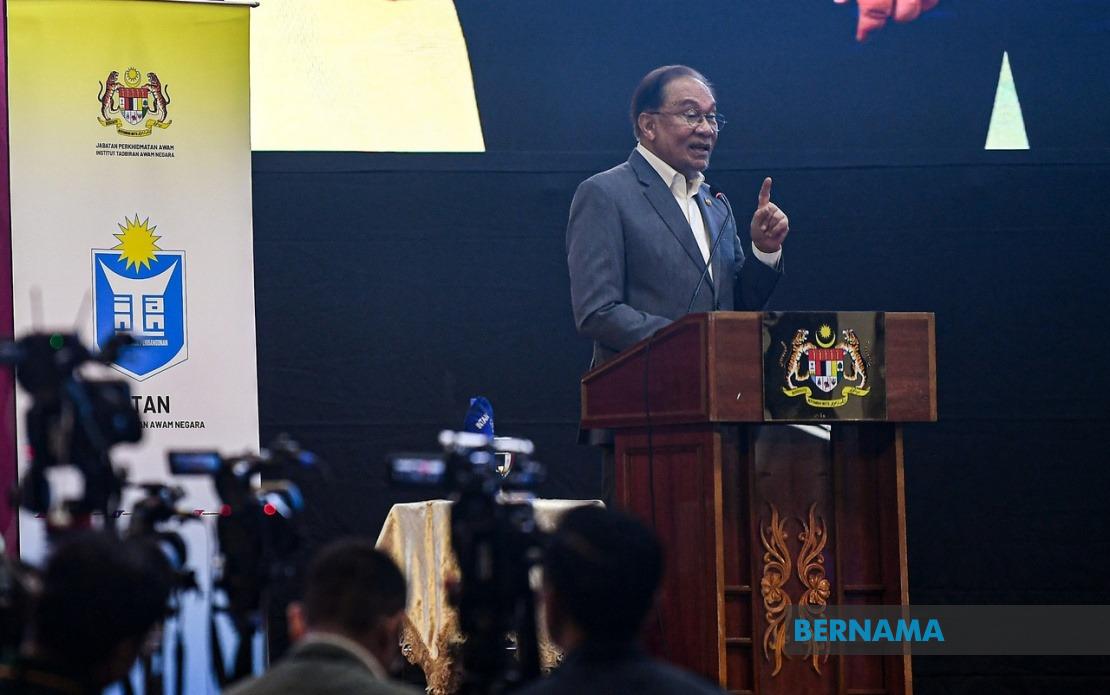
Prime Minister Datuk Seri Anwar Ibrahim has offered an apology to those who may have interpreted his direct communication style with civil servants as unnecessarily harsh or inappropriate for his office. Speaking during a gathering with civil servants from the Central Zone at Universiti Islam Selangor on July 20, Anwar acknowledged feedback from colleagues and the public who suggested that his firm tone does not align with the measured demeanour typically expected of a sitting Prime Minister.
Anwar explained that he has received counsel from associates urging him to moderate his approach when engaging with government officials and the broader population. According to those advisors, a Prime Minister should maintain composure, speak with deliberate calmness, and foster constructive dialogue rather than adopt a forceful or emotionally charged register. The Prime Minister stated openly that he recognises this guidance and is making a conscious effort to adjust his communication methods accordingly, though he emphasised that changing one's natural demeanour is a process that requires time and reflection.
Yet Anwar also articulated a defence of his unvarnished expression, arguing that his intensity stems from genuine conviction and deep personal investment in the nation's trajectory. When matters strike at his core values or trigger his emotional engagement, he suggested, restraint can sometimes feel inauthentic or counterproductive to conveying the urgency of critical governance issues. He framed his apology not as an admission of wrongdoing but rather as a respectful acknowledgement that his style may have caused discomfort, even though his intentions and underlying message remain sound.
The Prime Minister's remarks were made in the presence of Chief Secretary to the Government Tan Sri Shamsul Azri Abu Bakar, underscoring the formal context of his address to the civil service leadership. This setting is significant because it reflected Anwar's determination to use the platform to reinforce the gravity of the civil service's role in translating government policy into tangible outcomes for the nation. His pointed delivery to this audience was not random but deliberately calibrated to impress upon senior officials the stakes involved in their work.
Anwar's rationale for his communicative approach centred on the operational reality of governance. He asserted that his firm tone, rather than being a character flaw, actually mirrors the importance he attaches to the bureaucracy's function in executing the government's development agenda. Civil servants form the institutional backbone through which policy ambitions become implemented programmes, and Anwar appeared to believe that only frank, emotionally resonant communication could adequately convey the weight of that responsibility.
In interrogating his own style, Anwar posed a rhetorical question about the appropriate audience for passionate expression from a leader. He argued that if a Prime Minister cannot speak candidly with his own administrative machinery—the team tasked with ensuring national programmes succeed—then meaningful dialogue becomes impossible. This perspective suggests Anwar views forthrightness with the civil service not as a lapse in decorum but as a necessary feature of effective leadership, one that demands transparency about what is at stake.
The controversy over Anwar's tone reflects broader expectations about presidential and prime ministerial communication in contemporary Malaysian politics. Public figures in high office face constant scrutiny regarding their demeanour, with observers frequently debating whether emotional directness constitutes authenticity or unprofessionalism. Anwar's comments suggest he has internalised these criticisms but simultaneously wishes to defend his conviction-driven approach as having merit distinct from performative composure.
For the civil service, Anwar's remarks carry important implications regarding workplace culture and expectations. Civil servants hearing their Prime Minister explain his firm engagement with them may interpret this as validation that rigorous accountability and passionate commitment to outcomes are valued, even as Anwar gestures toward a more temperate future style. This dual messaging could either clarify institutional priorities or introduce ambiguity about the behavioural norms the government expects to establish.
The incident also reflects the transition challenges Anwar may face in adjusting to the ceremonial and symbolic dimensions of the Prime Minister's office. Having spent much of his political career in opposition and advocacy roles where passionate rhetoric was an asset, Anwar must now balance his authentic voice with the diplomatic constraints and symbolic weight that accompany high executive office. His apology suggests he recognises this tension even as he resists fully capitulating to it.
From a regional perspective, Malaysia's experience with leadership communication styles offers lessons about governance and public trust. How leaders navigate the space between authentic passion and professional restraint influences perceptions of sincerity and competence. Anwar's willingness to engage self-reflectively with criticism on this matter may strengthen rather than undermine confidence in his stewardship, provided the adjustment feels genuine rather than purely cosmetic to observers.

