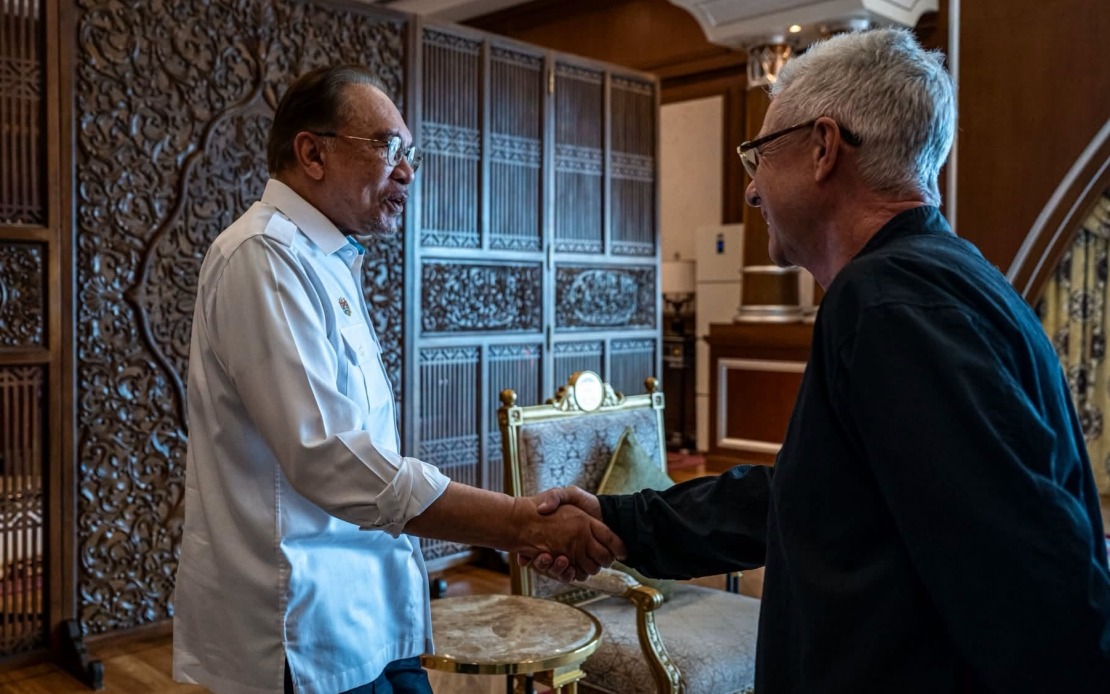
Prime Minister Datuk Seri Anwar Ibrahim has convened with Michael Roche, Executive Director of the Singapore Grand Prix, to extract strategic insights from the city-state's experience hosting one of Asia's most acclaimed motorsports events. The consultation, confirmed through an official Facebook statement, represents a deliberate effort to fortify Malaysia's preparations for the Formula 1 Gulf Air Bahrain Grand Prix scheduled to run from October 2 to 4 at Sepang International Circuit (SIC) later this year.
The convergence of Malaysia and Bahrain in a joint hosting arrangement marks a significant development in Formula 1's regional footprint, following an unexpected shift in the 2026 calendar. Originally, the Bahrain Grand Prix was set to take place at the Bahrain International Circuit in April, but geopolitical tensions in West Asia prompted organisers to relocate and postpone the event to Malaysia's shores during the fourth quarter. This unexpected pivot has thrust Sepang back into international motorsports prominence after nearly a decade of absence from the Formula 1 circuit.
Anwar's engagement with Singapore's motorsports leadership underscores recognition that neighbouring jurisdictions often possess institutional knowledge and operational frameworks that transcend national boundaries. Singapore's Grand Prix, held since 2008, has cultivated a global reputation for flawless execution and sophisticated event management, serving as a compelling case study for emerging motorsports destinations. By studying the logistical architecture, safety protocols, community engagement strategies, and vendor coordination that underpin the Marina Bay circuit's success, Malaysian planners can circumvent common pitfalls and accelerate their own readiness timeline.
The economic calculus motivating this endeavour is substantial. Anwar emphasised that a successfully executed Formula 1 event functions as an economic catalyst, capable of channelling tourist arrivals, employment opportunities, and business transactions throughout the broader economy. The anticipated ripple effects extend beyond the racing weekend itself, with downstream benefits materialising through hotel occupancy, transportation services, hospitality, and retail activity concentrated around Sepang and its surrounding Klang Valley environs. These considerations carry heightened relevance given Malaysia's broader tourism expansion objectives, particularly the Visit Malaysia 2026 campaign, which positions major international events as cornerstone attractions for foreign visitors.
Sepang's resurrection as a Formula 1 venue arrives against a historical backdrop of disappointing withdrawal. The Malaysian Grand Prix, which graced the circuit annually from 1999 to 2017, eventually succumbed to escalating hosting costs and increasingly onerous licensing fees imposed by Formula 1 governing authorities. The cumulative financial burden rendered continued participation economically unviable under the previous administration's budgetary constraints. The return of F1 competition represents a vindication of Malaysia's technical capabilities and circuit infrastructure, validating decades of investment in world-class facilities that have not deteriorated despite years of reduced international utilisation.
The collaborative framework between Malaysia and Bahrain establishes a novel operational model within Formula 1's traditional governance structure. Rather than a single nation assuming complete organisational responsibility, the joint venture distributes administrative burden and financial exposure across two jurisdictions, potentially offering a more sustainable pathway for developing economies seeking to maintain competitive-level motorsports involvement. This cooperative approach may serve as a template for future calendar additions throughout Asia-Pacific, where shared hosting arrangements could democratise access to premium sporting events previously concentrated among wealthier nations.
Anwar's explicit commitment to ensuring the event meets international standards while simultaneously strengthening Malaysia's positioning as a regional motorsports hub reveals a dual-track strategic vision. Beyond the immediate October logistics challenge, the government perceives Formula 1's return as foundational to a longer-term identity as a motorsports destination capable of attracting related industries, technical expertise, and investment capital. This aspirational framing acknowledges that singular events generate temporary economic bursts, but infrastructure and reputation effects compound over successive years, attracting subsequent motorsports initiatives and related commercial activities.
The invitation of Singapore's expertise carries additional significance given the city-state's proven capacity to operate large-scale international events flawlessly despite geographic and infrastructural constraints that mirror Malaysia's own challenges. Singapore's experience navigating traffic management, security coordination with law enforcement, environmental regulation compliance, and vendor logistics optimisation represents invaluable institutional knowledge transferable across regional contexts. The willingness of Singapore's leadership to facilitate such knowledge-sharing reflects broader ASEAN collaborative impulses, transcending occasional political disagreements through recognition of shared interests in regional economic development and tourism promotion.
Sepang International Circuit itself possesses the fundamental physical attributes required for Formula 1 competition, having hosted twenty consecutive seasons of championship-calibre racing at the highest technical levels. The facility's infrastructure—pit lanes, garages, medical facilities, media centres, and spectator amenities—require refreshment and modernisation following dormancy in elite motorsports, but the foundational engineering and safety systems remain largely intact. This existing asset base substantially reduces capital expenditure requirements compared to constructing entirely new circuits, making the October timeline achievable despite compressed preparation intervals.
The geopolitical circumstances precipitating Bahrain's relocation to Malaysia underscore how international sporting calendars remain susceptible to security considerations and regional instability. Formula 1's willingness to explore alternative venues reflects the sport's institutional flexibility and commitment to maintaining scheduled competitions despite external challenges. Malaysia's availability as a substitute venue, combined with its established motorsports infrastructure and government support, positioned it as the natural alternative to Bahrain's original scheduling constraints. This development inadvertently revitalises Malaysian motorsports ambitions that had languished following the Malaysian Grand Prix's discontinuation in 2017.
The broader implications for Southeast Asian motorsports development warrant consideration. Formula 1's return to Sepang signals to regional governments and private investors that premium international sporting events remain viable within the region's economic context and organisational capabilities. This demonstration effect may encourage other nations to pursue motorsports investments, potentially catalysing a virtuous cycle of regional event clustering and infrastructure development that strengthens Asia-Pacific's position within global sports tourism rankings. The consultation between Anwar and Singapore's motorsports executives represents a manifestation of this emerging regional consciousness regarding shared opportunities in sports event management and international sporting commerce.

