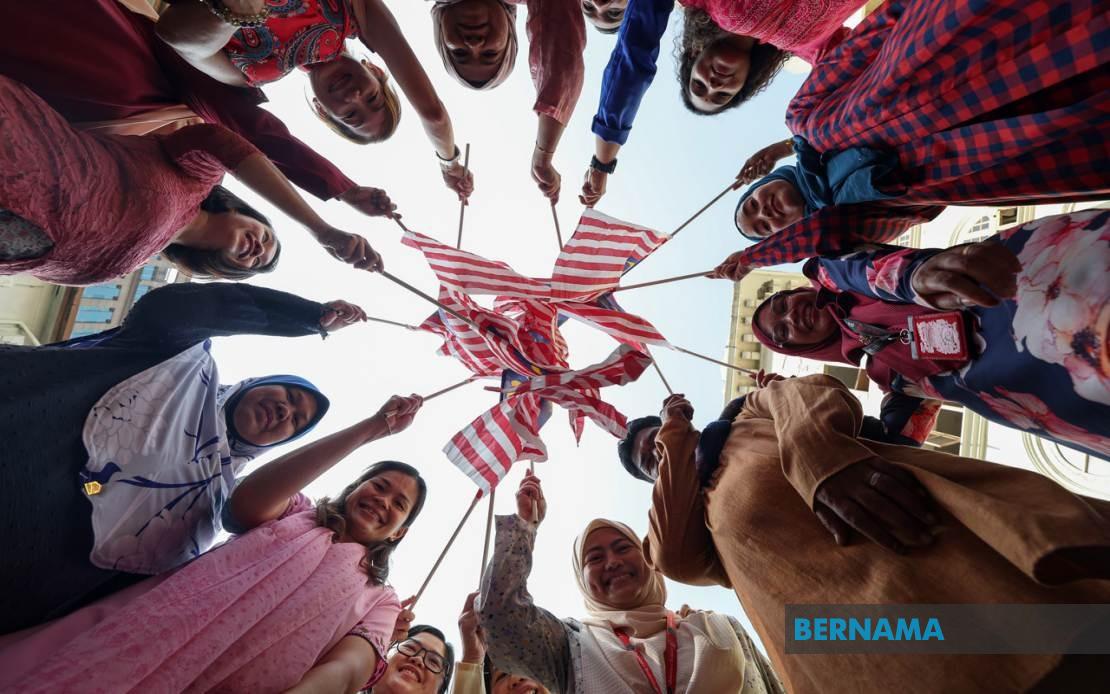
Prime Minister Datuk Seri Anwar Ibrahim has made an impassioned call to Malaysians to actively protect their nation and maintain the bonds of unity that form the backbone of Malaysia's stability, as the country prepares to commemorate its 69th National Day tomorrow. Speaking through a social media post and accompanying video message, Anwar framed independence not merely as a historical milestone but as an ongoing responsibility requiring constant vigilance and collective commitment from all citizens across the nation's diverse communities.
The Prime Minister articulated a vision of independence that extends beyond political sovereignty, emphasizing that true freedom requires citizens to possess the confidence and determination to chart their own course whilst maintaining a steadfast commitment to national interests. Anwar's message underscores an understanding that independence is both a privilege earned through struggle and a responsibility inherited by each generation to preserve and strengthen for those who follow. His call resonates particularly at a time when Malaysia faces complex challenges ranging from economic pressures to social cohesion.
Central to Anwar's appeal is the notion that Malaysia's greatest asset lies in its multicultural fabric. He specifically highlighted the contributions and significance of the Malay, Chinese, Indian, Iban, Kadazan, Murut, Bidayuh and Orang Ulu communities, characterizing their collective strength as the genuine foundation upon which national resilience rests. Rather than treating diversity as a challenge to be managed, the Prime Minister positioned it as an inherent advantage that distinguishes Malaysia on the global stage and provides the nation with unique cultural and intellectual resources.
Anwar grounded his appeal in historical consciousness, reminding Malaysians that the achievements the nation currently enjoys were forged through considerable sacrifice by previous generations. He emphasized that independence and national development were not gifted freely but rather secured through the determination, labour, and in some cases the lives of those who came before. This historical framing serves to elevate the duty of contemporary Malaysians to become custodians of that hard-won legacy, investing their own efforts to maintain and enhance what has been inherited.
A particularly significant element of the Prime Minister's message concerns the imperative to prioritize national interests above sectional concerns. Anwar explicitly called for Malaysia's broader well-being to take precedence over ethnic, religious, or regional loyalties, acknowledging a persistent tension within Malaysian society between particularistic identities and the overarching national project. This appeal carries particular weight given ongoing discussions about social polarization and the need for renewed commitment to the foundational principles of the Malaysian social contract.
The Prime Minister also articulated a vision of Malaysia as a nation fundamentally committed to justice and equity. He stressed that the country must be recognized not merely for its development achievements but for its commitment to fairness for all inhabitants, with particular emphasis on protecting the interests of marginalized and disadvantaged segments of society. This dimension of his message addresses the relationship between national unity and social inclusion, suggesting that genuine solidarity requires actively addressing disparities and ensuring that benefits of national development are distributed equitably.
Anwar's emphasis on collective action and team spirit reflects an understanding that national preservation cannot be the work of government alone but requires active participation and commitment from ordinary citizens. His call for Malaysians to work as a unified team, maintain their collective spirit, and defend the nation with determination appeals to a deeper sense of shared citizenship that transcends transactional politics. This invocation of communal responsibility attempts to mobilize Malaysians around positive national endeavours rather than reactive positions.
The timing of these remarks, coming immediately before National Day celebrations with the theme "Malaysia MADANI: Kesejahteraan Dinikmati," suggests an intentional effort to frame the independence commemoration around substantive national values rather than ceremonial nostalgia. The theme emphasizing shared prosperity aligns with Anwar's emphasis on justice and equitable development, positioning National Day as an occasion for recommitting to principles of inclusive growth and social solidarity.
For Malaysian society, Anwar's message carries implications extending beyond formal political rhetoric. It represents an attempt to rekindle the social contract foundations upon which Malaysia was established, emphasizing that national strength derives from genuine multicultural cooperation rather than hierarchical accommodation of diversity. The Prime Minister's framing suggests that national resilience in an era of global uncertainty depends fundamentally on renewing commitment to unity principles whilst simultaneously advancing substantive justice and equity for all citizens.

