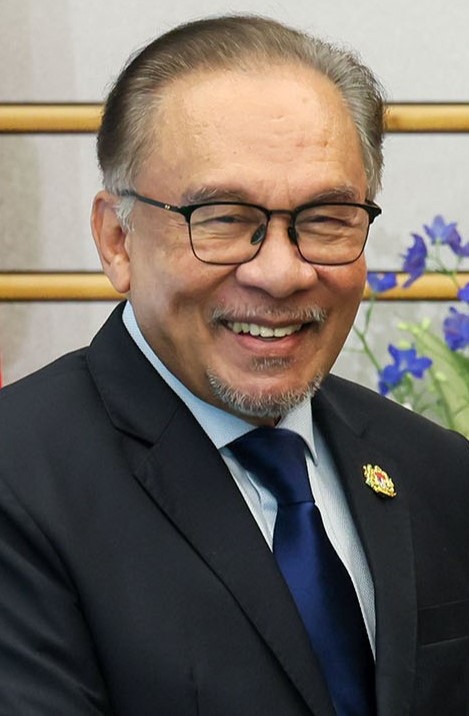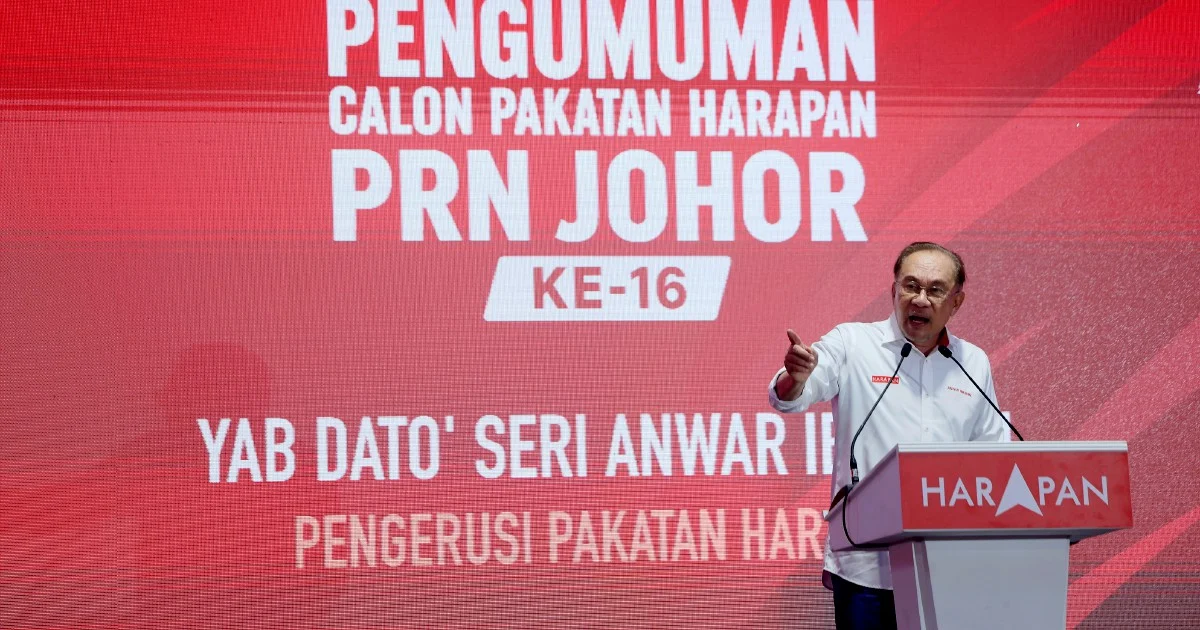
Prime Minister Datuk Seri Anwar Ibrahim has challenged Johor's political leadership to take a more aggressive stance toward the state's long-standing grievances over federal revenue allocation, urging executive councillors to press the previous Barisan Nasional and Perikatan Nasional administrations for accountability. Speaking during an engagement in Tangkak, Anwar emphasised that state officials should demand substantive clarification on whether Johor has historically received its proportionate share of national revenue streams.
The Prime Minister's comments reflect an emerging tension within Malaysian federalism regarding how oil-rich and economically significant states view their resource distribution agreements with the federal government. Johor, as the nation's southernmost peninsula state and a major contributor to Malaysia's economic output, has periodically raised concerns about whether the revenue-sharing mechanisms established under the Federal Constitution adequately compensate it for its contributions. These disputes have festered across multiple electoral cycles and administrations, becoming a recurring flashpoint in state-federal relations.
Anwar's intervention introduces a notable political dimension to the revenue debate. By encouraging Johor's executive councillors to interrogate previous administrations directly, the Prime Minister appears to be positioning his government as an agent of reform within the federal system whilst simultaneously creating pressure on state officials to demonstrate their advocacy on behalf of Johor residents. This approach carries implications for how Pakatan Harapan seeks to distinguish itself from predecessor governments on matters of fiscal federalism.
The context is significant for Malaysian readers across the peninsula. Revenue distribution mechanisms affect state governments' capacity to deliver infrastructure, healthcare, and education services. When major states like Johor perceive themselves as disadvantaged in the allocation process, it potentially undermines subnational governance and generates political friction. The current federal coalition, which includes Johor's state government, must navigate these intracoalitional pressures whilst maintaining broader federal stability.
Johor's position in this dispute carries particular weight. The state accounts for a substantial portion of the nation's petroleum production and maintains significant manufacturing and port operations that contribute meaningfully to federal revenue. If state policymakers believe their economic contributions are disproportionately large relative to their federal allocations, this perception—whether empirically justified or not—shapes political sentiment and intra-coalition dynamics.
The Barisan Nasional and Perikatan Nasional administrations that preceded Anwar's current government both faced similar criticisms regarding resource distribution, though neither substantially reformed the underlying mechanisms. Whether those administrations genuinely shortchanged Johor or whether the state's expectations exceeded constitutional arrangements remains contested. Anwar's call for direct questioning of these governments suggests he views the matter as unresolved and potentially susceptible to rectification under his administration.
From a Southeast Asian perspective, Malaysia's management of its federal revenue system merits attention. Regional federalised systems, including those in Australia, Canada, and India, frequently experience analogous disputes between resource-rich subnational units and federal governments over allocation methodologies. Malaysia's approach to mediating such tensions affects its broader institutional credibility and the stability of its federal structure.
Anwar's remarks also indicate an openness to revisiting fiscal arrangements, at least rhetorically. Whether this translates into concrete policy reforms remains uncertain. Restructuring revenue-sharing mechanisms involves substantial technical, constitutional, and political complexity. The Prime Minister must balance Johor's interests against those of less economically productive states that depend more heavily on federal transfers. Any significant reallocation could trigger compensatory demands from other states feeling disadvantaged by revised arrangements.
The governance implications for Johor are particularly noteworthy. With the state led by a coalition government aligned with Anwar's federal administration, there exists potential for collaborative resolution of longstanding grievances. However, this alignment also complicates the political calculus, as state officials must avoid appearing overly deferential to federal interests whilst advocating robustly for their constituents' interests. Anwar's encouragement to challenge previous administrations may paradoxically provide political cover for state leaders to adopt more assertive positions without appearing to undermine their own coalition partner.
Looking forward, this issue will likely remain on the federal agenda as Johor state officials respond to Anwar's prompting. Any investigation into historical revenue claims will require extensive documentation and technical analysis of the formulae and calculations employed across different administrations. The prospect of such scrutiny may force uncomfortable discussions about whether previous governments deliberately disadvantaged Johor or whether the disputes stem from different interpretations of constitutional provisions and demographic allocation methodologies.
The broader significance extends to how Malaysia manages internal federalised tensions during periods of political transition. Anwar's intervention suggests a willingness to revisit inherited institutional arrangements, potentially signalling greater flexibility in state-federal relations than characterised recent administrations. Whether this approach ultimately strengthens Malaysian federalism by addressing longstanding grievances or destabilises it by opening previously contentious issues to renewed contestation remains to be observed as these dynamics unfold.