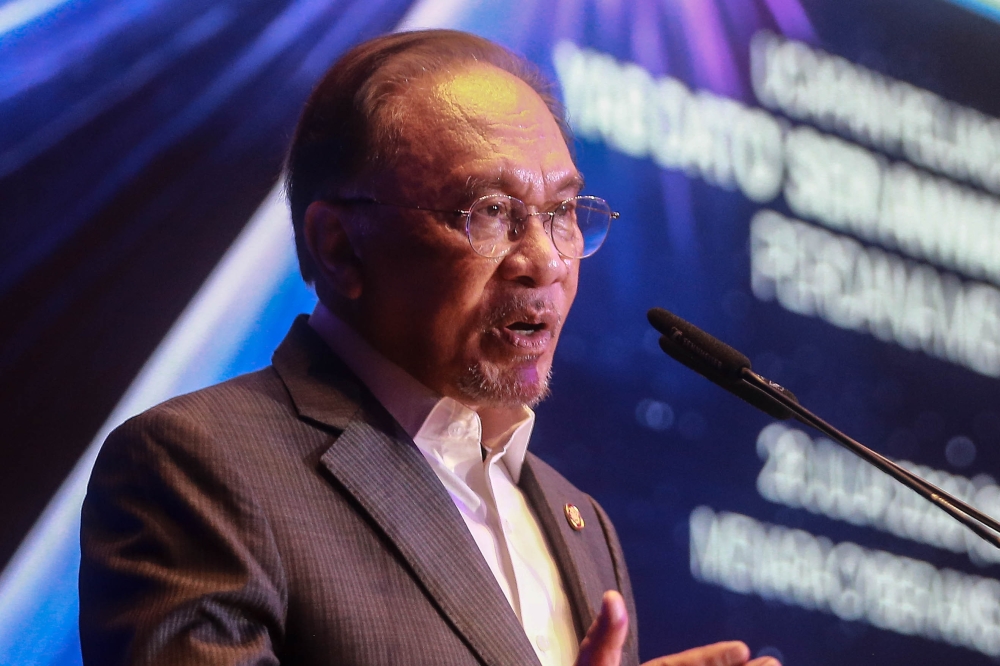
Prime Minister Datuk Seri Anwar Ibrahim has made a direct appeal to the electorate in Negeri Sembilan to cast their votes in the forthcoming state election, positioning a decisive mandate for Pakatan Harapan as critical to sustaining the economic progress and institutional stability that the coalition has worked to establish. Speaking in Seremban, Anwar emphasised that voter participation would be fundamental to the democratic process, while simultaneously framing the choice before constituents as one between continuity and uncertainty.
The timing of the election in Negeri Sembilan holds particular significance for the broader political landscape in Malaysia. The state, nestled between Selangor and Pahang, has emerged as a contested battleground where both the ruling coalition and opposition are competing intensely for ground support. A strong performance by Pakatan in this state would provide psychological momentum heading into other electoral contests and reinforce the coalition's legitimacy at the state level, where it has made substantial policy commitments to infrastructure development and public services.
Anwar's messaging centered on the theme of stability as an economic asset. He argued that political certainty allows businesses to plan investments with confidence, governments to execute medium-term development projects without disruption, and public institutions to function without the paralysis that can result from protracted political contests. This framing reflects the coalition's broader electoral strategy of positioning itself as the custodian of institutional order and economic pragmatism, contrasting implicitly with what it characterises as the instability associated with frequent leadership changes or coalition reshuffles.
The growth argument advanced by the Prime Minister speaks to contemporary concerns among Malaysian voters about cost of living pressures and employment prospects. Anwar linked Pakatan's political mandate to its capacity to pursue coherent economic policies, maintain investor confidence, and direct resources toward job creation and infrastructure. For many voters in Negeri Sembilan, particularly in urban and semi-urban areas dependent on manufacturing, services, and small and medium enterprises, this message resonates as directly relevant to their material circumstances.
Negeri Sembilan's historical political profile also matters. The state has traditionally been competitive, with power shifting between different coalitions over the decades. Its mixed demographic composition—combining rural, agricultural communities with growing urban and suburban populations—makes it a microcosm of broader Malaysian electoral dynamics. A decisive result here would indicate whether Pakatan is gaining or losing traction among both urban professionals and suburban middle-class voters.
The opposition's positioning in this contest cannot be ignored when evaluating Anwar's campaign message. By emphasising the perils of political instability, Anwar was implicitly cautioning voters against supporting opposition parties, which he suggested would bring policy reversals, institutional disruption, and economic uncertainty. Whether this messaging proves persuasive depends on whether voters attribute their current economic anxieties primarily to broader global conditions or to government policy choices—a question that divides Malaysian society along predictable political lines.
Anwar's call for turnout elevation is strategically important because electoral participation patterns often determine election outcomes as much as voter preferences do. Higher turnout in urban areas tends to favour opposition parties, while lower turnout sometimes amplifies rural vote concentration. By urging all voters to participate, Anwar was both expressing democratic principle and implicitly appealing to his coalition's base to mobilise, recognising that complacency among supporters would be costly.
The election also reflects broader questions about state-level governance in Malaysia's federal system. While most media attention focuses on national politics, state governments control significant portfolios including education delivery, local development, land administration, and public health facilities. Anwar's framing of the election as a choice between competent governance and political chaos was partly an attempt to elevate the substantive policy stakes in voters' minds and discourage dismissal of state elections as mere popularity contests.
From a regional perspective, Malaysia's electoral performance matters beyond its borders. Other Southeast Asian democracies watch how Malaysian voters respond to coalition governance, particularly regarding whether multiethnic political alliances can sustain themselves electorally while delivering tangible benefits across diverse communities. A strong Pakatan performance in Negeri Sembilan would send signals about the viability of inclusive coalition politics in the region, though conversely, any setback would bolster arguments that such arrangements struggle to maintain voter confidence.
The economic context underlying this election campaign warrants emphasis. Malaysia's growth projections remain modest by historical standards, inflation affects household budgets, and youth unemployment concerns persist despite overall labour market relative resilience. Against this background, Anwar's pitch for stability reads both as promise and as tacit acknowledgement that transformative change may not be immediately forthcoming. Voters must decide whether incremental improvement under established leadership offers more security than the unpredictability associated with political change.
Anwar's campaign message ultimately distils to a straightforward proposition: vote, back Pakatan, and secure the conditions for continued institutional functioning and economic policy consistency. Whether this resonates sufficiently with Negeri Sembilan voters to translate into a commanding mandate will become apparent when results are announced, but the Prime Minister's emphasis on turnout and stability reflects his calculation that these themes provide his coalition's strongest positioning in a competitive race.

