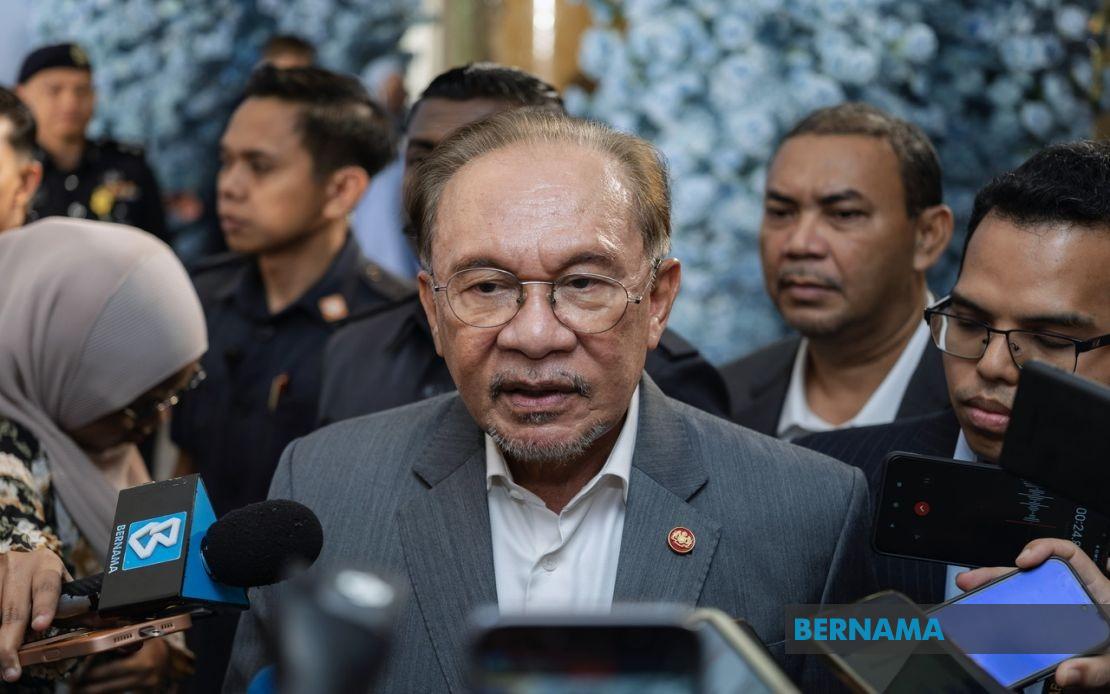
Prime Minister Datuk Seri Anwar Ibrahim indicated on Monday that he has not yet received a comprehensive briefing regarding the circumstances that prompted four Melaka DAP state assemblymen to withdraw from the state administration. Speaking in his capacity as both premier and chairman of the Pakatan Harapan coalition, Anwar acknowledged that the top echelon of the political alliance intends to examine the matter thoroughly and respond with appropriate measures in due course.
The four departing representatives—Allex Seah Shoo Chin from Kesidang, Low Chee Leong from Kota Laksamana, Leng Chau Yen from Banda Hilir, and Kerk Chee Yee from Ayer Keroh—announced their immediate resignation from the Melaka state government shortly after the State Legislative Assembly adopted constitutional amendments. These amendments would enable the appointment of additional assemblymen to the legislature without requiring them to contest elections, a move that triggered the exodus from the coalition's own ranks.
The timing of these resignations struck at the heart of Pakatan Harapan's governance arrangements in Melaka, one of the states where the coalition holds considerable influence. The decision by these four DAP members to step down represented a public rupture within the alliance at a critical moment, signalling internal tensions over constitutional changes that appear to have been implemented without consensus among coalition partners.
The constitutional amendments represent a significant shift in how Melaka's state legislature operates. The introduction of a nominated assembly mechanism diverges from Malaysia's conventional democratic principle that elected representatives should be chosen directly by voters. For DAP, a party that has long championed transparency and democratic accountability, the amendments likely seemed incompatible with the coalition's stated values, particularly given DAP's historical emphasis on anti-corruption and democratic reform.
Anwar's initial public response, issued simultaneously with the assemblymen's announcement, had urged the Melaka DAP branch to reconsider its withdrawal. In that appeal, the Prime Minister emphasised that maintaining stability in the state government would better serve the interests of ordinary Melakans by enabling continued focus on development priorities and public welfare programmes. However, his subsequent acknowledgment that he lacks detailed briefing materials suggests the situation evolved rapidly and may have caught senior coalition leadership somewhat off-guard.
The absence of a prepared briefing for Malaysia's top political leader underscores the speed and unilateralism with which the constitutional amendments were pursued. Typically, major legislative changes affecting governance structures would be coordinated through coalition mechanisms to ensure alignment across different parties and levels of government. The fact that Anwar required further information indicates potential communication breakdowns or deliberate autonomy exercised by Melaka's state administration in pushing through these changes.
For Malaysian politics more broadly, this episode highlights the fragility of multi-party coalitions governing individual states. Pakatan Harapan has faced numerous tests to its unity since returning to power in 2018, with various state-level conflicts occasionally boiling over into national headlines. The Melaka situation demonstrates how technical constitutional matters, when implemented without proper consultation, can rapidly escalate into public political crises that damage coalition credibility.
The Pakatan Harapan leadership's stated intention to follow up soon suggests damage control will be prioritised. Coalition leaders will likely seek to understand whether the Melaka state government acted independently or whether other coalition partners were involved in drafting and passing the amendments. Furthermore, they will need to determine whether the four departing DAP members can be persuaded to reverse their decision or whether their exit will necessitate a restructuring of the state administration.
From a governance perspective, the loss of four state assemblymen from a coalition partner weakens Pakatan Harapan's effective majority in Melaka's State Legislative Assembly, even if the nominated members mechanism is intended to compensate numerically. The symbolic damage of elected representatives publicly quitting the government they helped form may prove more consequential than the raw arithmetic of seats, as it signals internal disagreement and could encourage further defections if underlying issues remain unresolved.
The episode also raises questions about the philosophical direction of Malaysia's electoral and political institutions. The introduction of appointed legislators, regardless of the stated rationale, represents a retreat from the representative model that underpins democratic governance. For a coalition that campaigned partly on democratic renewal and institutional reform, permitting such amendments without robust internal debate risks undermining the coalition's broader political narrative and appeal to reform-minded voters.
Moving forward, Anwar's personal intervention will be crucial in mediating between the departing DAP members, the Melaka state government, and other coalition partners. The Prime Minister's influence as Pakatan Harapan chairman positions him uniquely to broker a resolution that addresses the concerns raised by the four assemblymen while preserving coalition stability. Whether such mediation proves successful will depend on whether the constitutional amendments can be adjusted or whether the philosophical objections raised by the DAP representatives reflect deeper rifts within the coalition's approach to governance.

