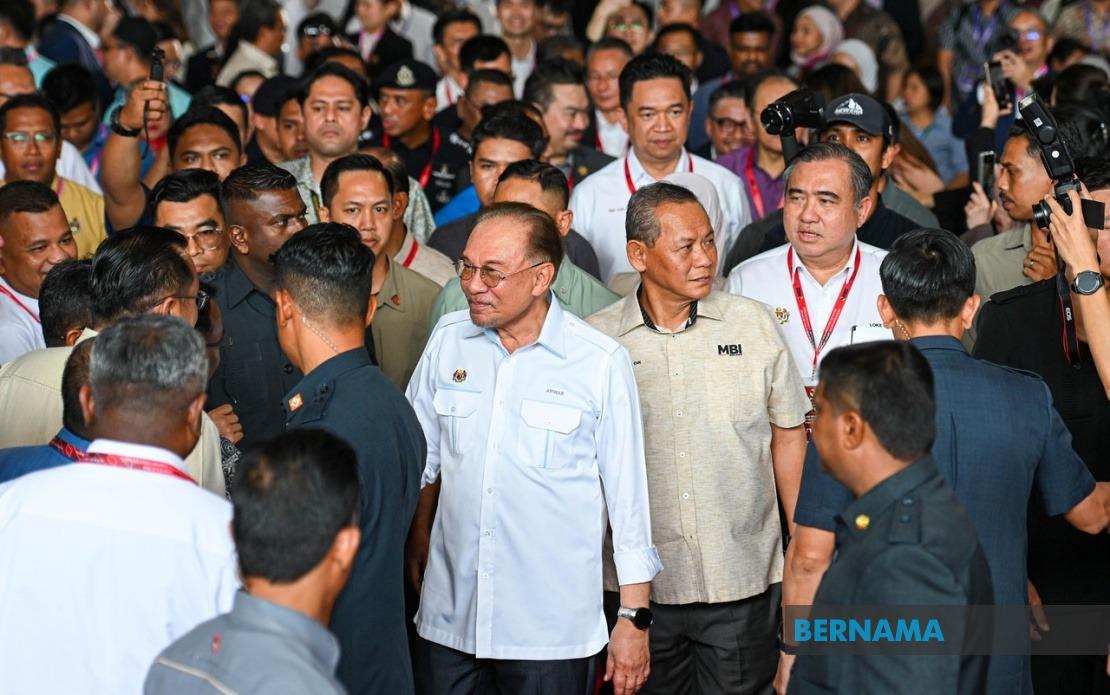
Prime Minister Datuk Seri Anwar Ibrahim has made a direct appeal to Melaka DAP to shelve its decision to leave the state government, arguing that such a move would disrupt the administration's capacity to serve the people and deliver on development projects. Speaking in Port Dickson on July 14, Anwar stressed that maintaining governmental stability in Melaka should take precedence over internal party disputes, at least until the next general election is called.
The intervention came on the same day that Melaka DAP formally announced its immediate withdrawal from the state coalition following the passage of constitutional amendments in the Melaka State Legislative Assembly. The amendments would permit the appointment of nominated assemblymen—a measure that Melaka DAP chairman Khoo Poay Tiong characterised as fundamentally incompatible with democratic principles and electoral integrity. The party's exit represents a significant fracture within the Pakatan Harapan coalition at the state level, just as the broader alliance continues to consolidate power at the federal level.
As both Prime Minister and chairman of Pakatan Harapan, Anwar signalled that he had already engaged directly with DAP secretary-general Anthony Loke and Melaka Chief Minister Datuk Seri Ab Rauf Yusoh to broker a resolution. His call for postponement reflects the delicate balancing act that federal leadership must perform when managing disputes among coalition partners, particularly when such conflicts threaten governance continuity at the state level. Anwar's framing of the issue emphasised negotiation and compromise rather than ultimatums, suggesting an effort to preserve both DAP's concerns and the broader coalition's interests.
The underlying tension centres on the constitutional amendment, which Melaka DAP views as a democratic regression. By allowing state authorities to appoint assemblymen rather than relying solely on electoral representation, the party contends that the mechanism undermines the legitimacy of elected government and concentrates power in fewer hands. This critique resonates with broader concerns in Malaysian politics about the balance between executive discretion and democratic accountability, issues that have animated public discourse for years.
Anwar's response positioned coalition disputes as inevitable but manageable, provided that the fundamental objective—advancing economic growth and citizen welfare—remains paramount. He acknowledged that component parties within any ruling coalition will inevitably disagree on specific issues, but argued that such disagreements need not paralyse governance or force dramatic reshuffling of alliances. This pragmatic stance reflects his experience managing multiple parties with distinct ideological perspectives and constituencies within Pakatan Harapan.
The timing of Melaka DAP's withdrawal carries particular significance given the broader political calendar. With no general election currently scheduled, the party's decision to exit immediately rather than maintain a holding position until an election approaches suggests deep frustration rather than tactical maneuvering. Yet Anwar's plea suggests room for compromise—the postponement he requested would allow both parties to pursue their positions without the immediate destabilisation that a coalition departure creates. For Melaka citizens, such instability directly impacts service delivery and policy implementation at the state level.
From a Malaysian perspective, the episode illustrates a persistent challenge within Pakatan Harapan's coalition structure. Unlike traditional ruling coalitions that operate from a position of unchallenged dominance, Pakatan Harapan must contend with multiple parties that retain strong ideological commitments and distinct political bases. DAP, with its urban, Chinese-majority voter base and secular orientation, frequently finds itself at odds with coalition partners over issues of democratic procedure and constitutional interpretation. Managing these differences while governing effectively requires continuous negotiation and compromise.
The Melaka constitutional amendment itself reflects local political dynamics that extend beyond the immediate coalition dispute. The nominated assemblymen provision echoes longstanding debates in Malaysian federalism about the appropriate relationship between elected representation and appointed institutions. Similar arrangements exist at the federal level through the Senate, but their application at the state legislative level remains more contentious and less settled as a principle.
Anwar's intervention also suggests that federal Pakatan Harapan leadership views Melaka as strategically important enough to warrant direct prime ministerial engagement. The state, while smaller than Selangor or Penang, carries symbolic weight within the coalition and serves as a testing ground for governance approaches. A successful Melaka state government under Pakatan Harapan stewardship is valuable for demonstrating the coalition's capability to deliver across different state contexts and political configurations.
The wider implication for Southeast Asian observers is that managing ideologically diverse coalitions while governing remains one of Malaysia's most pressing democratic challenges. Unlike single-party systems or narrow two-party competitions, coalition governments require constant negotiation, and those negotiations become visible and contentious when fundamental questions about democratic legitimacy arise. Anwar's attempts at mediation represent an effort to sustain a governing model that is pluralistic but also functional—a balance that becomes increasingly difficult under pressure.
For DAP specifically, the decision to withdraw suggests that the constitutional amendment crossed a threshold beyond which routine coalition management could contain party discontent. Yet Anwar's reasoned appeal, rather than strong-arming or ultimatums, leaves space for face-saving retreats by either party. Whether such a compromise emerges will depend on whether Melaka DAP views the constitutional change as a point of principle or a point of leverage in broader coalition negotiations.
The resolution of this dispute, or its continuation, will likely shape how Pakatan Harapan manages similar conflicts in other state governments and in the federal sphere. Coalition governance in Malaysia depends on institutional mechanisms for dispute resolution, but ultimately relies on political will to compromise. Anwar's public intervention suggests that will remains present, at least from the federal leadership's perspective, even as the specific contours of acceptable compromise remain contested.

