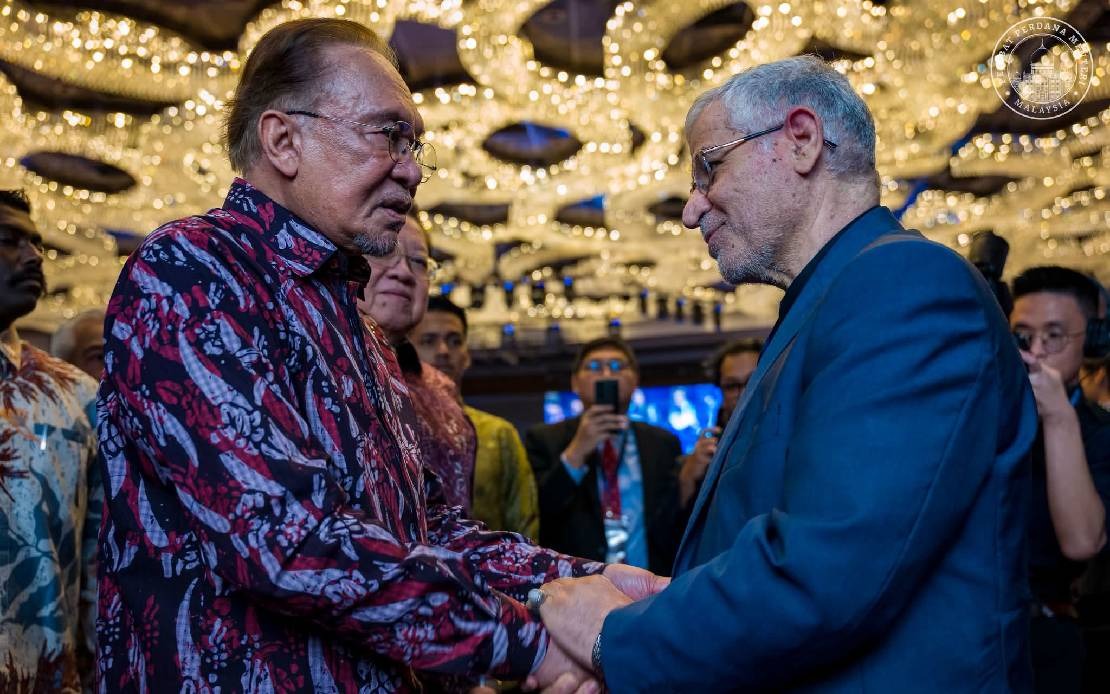
Prime Minister Datuk Seri Anwar Ibrahim has formally conveyed Malaysia's regrets to the Iranian Government over his inability to participate in the state funeral and farewell ceremonies honouring Iran's Supreme Leader, the late Ayatollah Ali Khamenei. The apology was delivered during a bilateral meeting with Iranian Ambassador to Malaysia Valiollah Mohammadi at the 39th Asia-Pacific Roundtable conference in Kuala Lumpur on Tuesday, with Anwar publicly confirming the exchange through a Facebook statement.
The Malaysian leader's absence reflects the competing demands facing national leadership during periods of significant international mourning. Anwar explained that pressing domestic and official duties prevented him from travelling to Iran for the ceremonies, a common diplomatic challenge when major global events coincide with critical state business. His decision to send a senior cabinet minister in his stead demonstrates Malaysia's commitment to maintaining bilateral relations with Tehran despite the scheduling conflict.
Agriculture and Food Security Minister Mohamad Sabu has been designated to represent Malaysia at the upcoming funeral proceedings, underscoring the importance both governments place on the bilateral relationship. The choice of ministerial representation—rather than a lower-ranking official or diplomat—signals respect for Khamenei's significance within the Islamic world and acknowledges Iran's geopolitical weight in regional affairs.
Ayatollah Ali Khamenei, who was 86 years old, passed away at his residence in central Tehran on February 28 following what multiple reports attributed to coordinated military strikes involving both United States and Israeli forces. His death marked a watershed moment for Iran's political system and rippled across the broader Middle East, given his role as the nation's supreme arbiter of power for nearly four decades.
The state farewell ceremonies are scheduled as an extended observance spanning six days commencing July 4, reflecting the ceremonial significance accorded to Iran's highest religious and political authority. The proceedings will follow a carefully choreographed schedule beginning with funeral processions through Tehran and Qom—two cities central to Iranian Shiite religious identity—before concluding with Khamenei's interment at the Imam Reza Shrine in Mashhad on July 9. This timeline provides a structured framework for international delegations to participate and honour the departed leader.
For Malaysia, the moment carries particular relevance given the nation's position as a significant Muslim-majority country and active participant in regional diplomatic networks. Iran has historically maintained strong cultural and religious ties with Southeast Asian Muslim communities, and Malaysia's engagement with Iran extends across trade, energy, and ideological dimensions. The attendance of high-level representation, even if not the Prime Minister himself, maintains these carefully cultivated relationships.
Anwar's apology reflects modern diplomatic protocol, whereby national leaders acknowledge scheduling limitations with candour rather than remaining conspicuously absent without explanation. The public communication of regrets through social media demonstrates contemporary approaches to diplomatic messaging, allowing direct audience engagement while formally documenting Malaysia's position for the Iranian government and international observers.
The broader context surrounding Khamenei's death has geopolitical implications for Malaysia's engagement with Iran. The circumstances of his passing—attributed to foreign military action—heighten sensitivities around Iran's sovereignty and international standing. By ensuring ministerial-level representation at the funeral, Malaysia signals solidarity with Iran's Muslim identity and institutional continuity, even while maintaining its broader strategic partnerships in the region.
Mohamad Sabu's assignment to lead the Malaysian delegation carries symbolic weight beyond ceremonial duties. As the minister responsible for agriculture and food security, his presence links Malaysia's economic and development interests to the bilateral relationship, suggesting that funeral representation serves broader diplomatic purposes. His participation may also provide opportunities for substantive bilateral discussions during the extended ceremonial period.
For Malaysia's policymakers, Khamenei's succession signals a potential inflection point in Iran's regional strategy and internal governance. The funeral ceremonies provide an informal venue for assessing shifts within Iranian power structures and gauging how the new leadership may recalibrate relationships with countries like Malaysia. Such gatherings frequently facilitate back-channel discussions alongside official ceremonies.
The incident underscores the challenge facing contemporary national leaders: balancing symbolic participation in international mourning with domestic governance responsibilities. Anwar's transparent communication of his regrets, coupled with the dispatch of a credible ministerial representative, represents an effort to navigate this tension while preserving diplomatic goodwill. For Malaysian observers, the episode illustrates how even expressions of regret carry strategic diplomatic importance in maintaining multilateral relationships.

