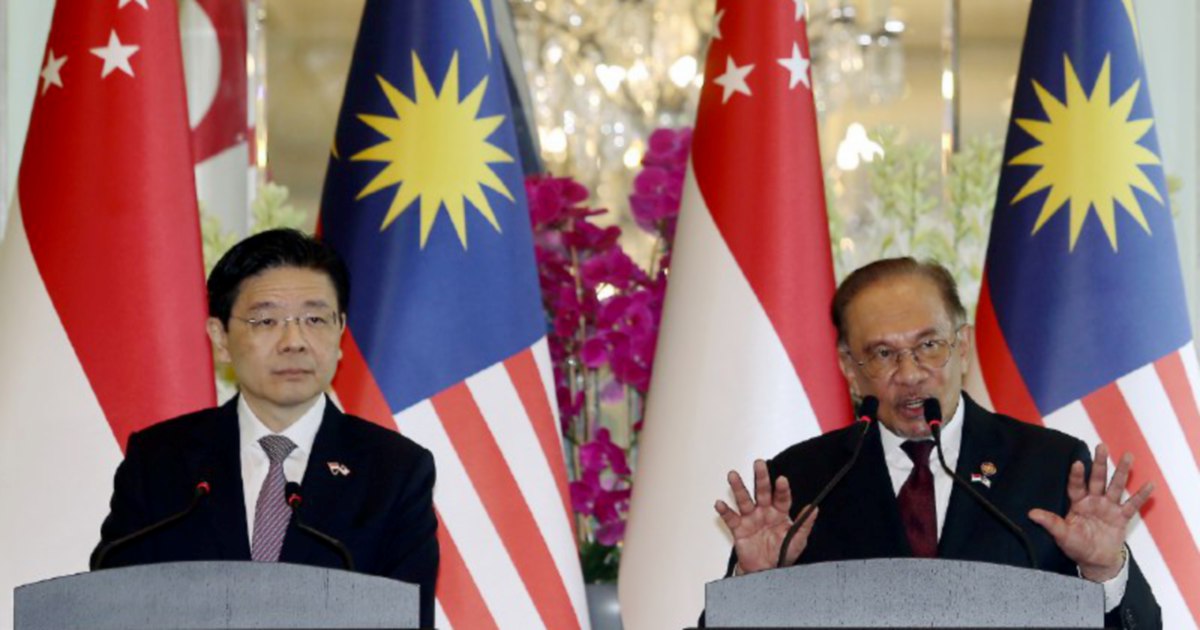
Prime Minister Datuk Seri Anwar Ibrahim and Singapore Prime Minister Lawrence Wong are poised to present the master plan for the Johor-Singapore Special Economic Zone during the Annual Leaders' Retreat scheduled for December, marking a significant milestone for the cross-border economic initiative that has been in development for several years.
The unveiling of the JS-SEZ master plan represents a culmination of extensive bilateral negotiations and technical groundwork between Malaysia and Singapore, two of Southeast Asia's most economically developed nations. The special economic zone is envisioned as a transformative project that will leverage the complementary strengths of both countries, with Johor positioned as a manufacturing and logistics hub while Singapore provides financial services, advanced technology, and established global networks.
The timing of the announcement during the Annual Leaders' Retreat carries symbolic weight, as it demonstrates both governments' commitment to deepening regional economic integration. Such retreats typically serve as venues for senior leaders to discuss strategic priorities and sign off on major policy initiatives, suggesting that the JS-SEZ has reached a stage where broad political agreement has been secured at the highest levels.
For Malaysia, the JS-SEZ presents substantial opportunities for Johor's economic transformation. The state has long positioned itself as an alternative investment destination to traditional manufacturing hubs, and the special zone could accelerate the diversification of Johor's industrial base. The project promises job creation across multiple sectors, from advanced manufacturing to high-value services, addressing persistent challenges around youth unemployment and skills mismatches in the southern corridor.
The strategic location of the zone at the northern gateway of Singapore creates natural advantages for cross-border commerce and regional supply chain networks. Companies operating within the JS-SEZ would benefit from coordinated regulatory frameworks, streamlined customs procedures, and enhanced connectivity that neither country could easily provide independently. This integrated approach reflects evolving models of economic cooperation in Southeast Asia, where shared prosperity takes precedence over purely national economic considerations.
Singapore's participation underscores the city-state's continued reliance on deeper regional integration to supplement its limited domestic resource base. For Singapore, the JS-SEZ offers access to lower-cost production capacity and expanding regional markets while maintaining quality control through joint governance arrangements. This mutually beneficial arrangement addresses longstanding concerns about Singapore's economic sustainability and validates the broader philosophy of regional connectivity that has guided ASEAN economic policy.
The master plan's release will likely detail institutional frameworks governing the zone, including dispute resolution mechanisms, investment incentives, and operational standards. Malaysian investors have expressed particular interest in understanding the tax structures and labour provisions that will apply within the zone, while Singapore companies will scrutinise property rights protections and repatriation of profits. These technical specifications will substantially influence the zone's attractiveness to multinational corporations seeking to establish or relocate operations.
Regional implications extend beyond bilateral relations between Malaysia and Singapore. The JS-SEZ could establish a template for sub-regional economic zones elsewhere in Southeast Asia, demonstrating how ASEAN members can deepen integration while respecting national sovereignty. Other border regions—such as the Mekong region and the Philippines' northern corridors—may look to the JS-SEZ model as a blueprint for accelerating development and facilitating cross-border trade flows.
The project's launch also reflects Malaysia's broader economic policy direction under the current administration. Prime Minister Anwar Ibrahim has consistently prioritised foreign direct investment and economic competitiveness as drivers of national development, positioning Malaysia as a gateway for companies seeking to access ASEAN markets. The JS-SEZ aligns with this vision by attracting multinational corporations that might otherwise concentrate investments in Singapore or Thailand.
Infrastructural development will likely form a critical component of the master plan, addressing transportation networks, digital connectivity, and utilities that must be upgraded to support the anticipated investment inflows. The success of the JS-SEZ depends substantially on seamless connectivity between Johor and Singapore, requiring coordinated infrastructure investment that transcends traditional national boundaries. Both governments have signalled willingness to support such projects through various mechanisms including public-private partnerships.
The December announcement timing also allows stakeholder consultation periods before formal implementation begins. Malaysian state agencies, private sector associations, and labour organisations will require adequate time to adjust policies and prepare for the operational transition. Similarly, Singapore's regulatory bodies need to establish mechanisms for supervising zone activities and ensuring compliance with both countries' legal frameworks.
Longer-term success will depend on how effectively the two governments address persistent challenges including regulatory harmonisation, currency exchange volatility, and political sensitivities around sovereignty. The master plan's specifics on these governance issues will prove decisive in determining whether the JS-SEZ attracts the anticipated investment or faces the delays and complications that have affected other bilateral projects in the region.
The December unveiling signals that bilateral cooperation on the JS-SEZ has transcended preliminary planning phases and entered implementation stages. Both Prime Ministers' personal involvement in the announcement reflects the project's political significance and their confidence that the master plan provides a credible roadmap for transforming Johor and strengthening the Malaysia-Singapore economic partnership during a period of regional uncertainties and shifting global investment patterns.

