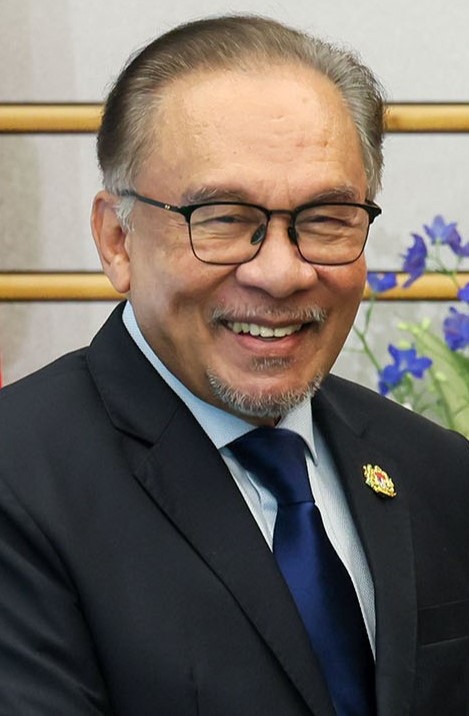
Prime Minister Anwar Ibrahim travelled to Kuala Lumpur to hold discussions with Johor Regent Tunku Mahkota Johor (TMJ), during which both leaders reaffirmed their dedication to preserving harmonious relations between the state and federal governments. The meeting underscores the importance both administrations place on cooperative governance at a time when Malaysia's political landscape continues to evolve following recent electoral shifts.
The encounter reflects a broader pattern of engagement between federal leadership and key state figures, particularly in politically significant states like Johor. As Malaysia's most populous state with substantial economic output, Johor's relationship with the federal government carries considerable weight in national governance and policy implementation. The voluntary initiative by Anwar to seek an audience with the regent demonstrates recognition of the ceremonial and constitutional importance of the Johor royal institution.
Maintaining cordial state-federal relations represents a pragmatic approach to governance in Malaysia's federal system, where states retain significant constitutional autonomy over certain policy areas including land, agriculture, and local administration. When political tensions arise between different levels of government, they can impede development projects, create confusion in policy implementation, and undermine public confidence in institutions. The commitment articulated during this meeting suggests both parties are conscious of these dynamics and intent on avoiding such friction.
Johor's political configuration has traditionally held considerable sway in national politics. The state government's cooperation with federal initiatives is essential for implementing countrywide programmes and development schemes. Similarly, federal support is crucial for Johor's infrastructure and economic development aspirations. The goodwill gesture from Anwar's camp toward the regent indicates an understanding that personal relationships and mutual respect between leaders can facilitate smoother governance across administrative boundaries.
For Malaysian readers, particularly those in Johor, this development suggests continuity in the state's governance framework and a reduced likelihood of the kind of administrative gridlock that sometimes emerges when federal and state authorities are at loggerheads. Such cooperation typically translates into faster project implementation, clearer policy directives, and more effective resource allocation at the state level. It also reflects well on institutional stability, an asset that attracts business investment and public confidence.
The broader significance of this engagement extends to Southeast Asia's political observers, who increasingly scrutinise Malaysia's internal dynamics as a barometer for regional stability. A country managing its federal structure effectively, with clear lines of communication between different tiers of government, projects an image of institutional maturity and predictability—qualities that matter to international partners and investors assessing the region's investment climate.
From a constitutional perspective, the relationship between the federal government and state authorities in Malaysia operates within a framework established by the Federal Constitution. While the prime minister heads the federal executive, state rulers and their representatives retain important ceremonial and custodial roles within their domains. Anwar's approach of directly engaging with the Johor regent demonstrates respect for this constitutional arrangement and acknowledgement that effective governance requires working within—and through—these established channels.
Historically, tensions between federal and state governments in Malaysia have occasionally surfaced over issues ranging from revenue distribution to the implementation of federal policies within state jurisdictions. Educational policy, healthcare administration, and infrastructure development sometimes become flashpoints when philosophical differences or political rivalries colour interactions between different levels of government. By proactively addressing state-federal relations at the leadership level, Anwar appears to be attempting to prevent such tensions from crystallising.
The timing of this meeting also carries contextual importance. Malaysia's political landscape has undergone considerable realignment in recent years, with shifting electoral fortunes altering the composition of both federal and state governments. States where the ruling federal coalition enjoys strong support tend to enjoy smoother administrative relationships, while states governed by different political coalitions sometimes experience more fraught interactions. Johor's current political configuration makes the federal government's cultivation of this relationship strategically significant.
For the general Malaysian public, the most tangible benefits of improved state-federal coordination typically manifest in improved service delivery, faster resolution of administrative issues affecting citizens, and more efficient use of public resources. When state and federal authorities cooperate effectively, passport applications move faster, development permits are processed more smoothly, and coordinated responses to public health or natural disasters become more coherent and effective.
Looking ahead, the commitment made during this meeting will likely be tested through concrete interactions on policy matters and resource allocation decisions. Both leaders have signalled their intention to maintain constructive channels of communication, a foundation upon which ongoing cooperation can be built. Whether this translates into sustained harmony or merely temporary goodwill remains to be seen, but the public reaffirmation of these principles establishes important baseline expectations for how both administrations should conduct their relationship moving forward.