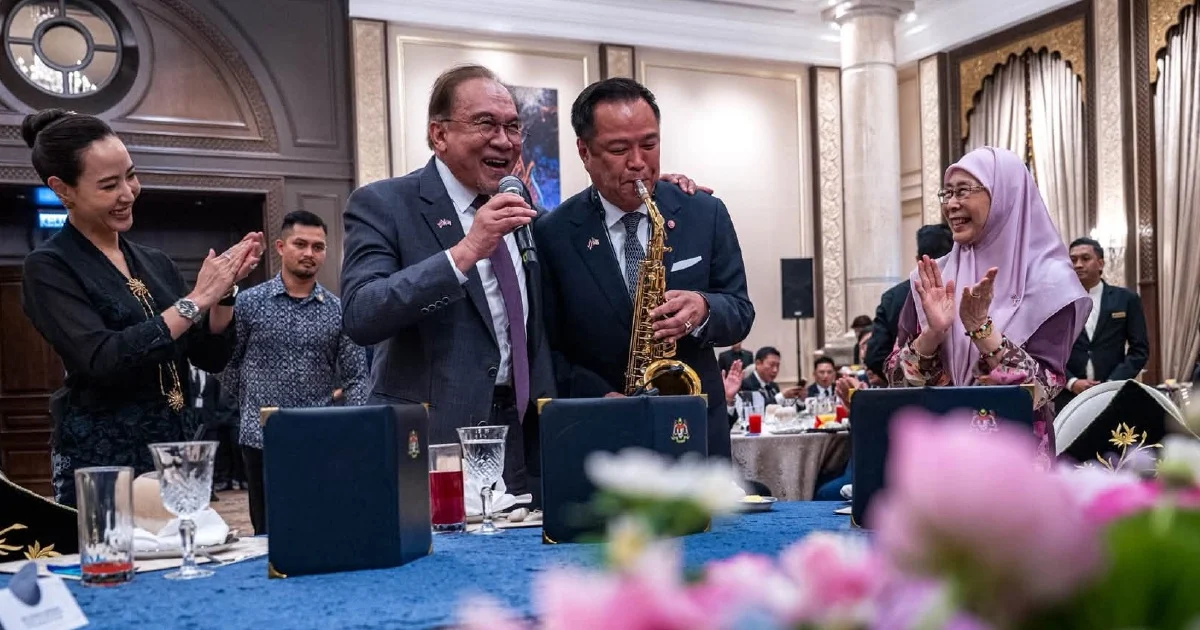
Prime Minister Datuk Seri Anwar Ibrahim and Thai counterpart Anutin Charnvirakul injected an unexpected burst of levity into formal diplomatic proceedings when they performed together at an official luncheon in Putrajaya following their bilateral talks. The spontaneous rendition of Frank Sinatra's classic 'My Way' provided a memorable interlude that punctuated what had been a substantive working visit, revealing the personal rapport that can develop between Southeast Asian leaders engaged in regional governance.
Such moments during high-level state visits carry significance beyond mere entertainment value. The decision to perform together signals to domestic audiences and regional observers alike that diplomatic relations are grounded not simply in transactional negotiations, but in genuine interpersonal connection. For Malaysia and Thailand, two major Southeast Asian economies with deeply intertwined histories and shared challenges, these lighter interactions reinforce the foundation upon which more serious matters of trade, security, and regional cooperation are built.
Anutin Charnvirakul's contribution on the saxophone demonstrated that Thailand's Deputy Prime Minister maintains diverse talents beyond his portfolio responsibilities. Such displays of cultural expression at state functions offer a departure from the often rigid protocols that typically govern bilateral meetings between national leaders, humanising the figures who shape regional policy and helping to contextualise their decision-making within broader personal characteristics.
The Putrajaya setting provided an appropriately ceremonial backdrop for the bilateral engagement. As Malaysia's administrative capital, the venue carries symbolic weight, representing the modern institutional framework through which Malaysian governance operates. Official luncheons serve as crucial informal spaces where leaders can discuss matters beyond the formal agenda, and musical interludes like this one facilitate the kind of relaxed conversation that often proves most productive in resolving outstanding issues.
For Malaysian observers, the performance underscores Anwar Ibrahim's capacity to balance the demands of high office with personal authenticity. The choice of 'My Way'—a song about individual agency and self-determination—perhaps carried unintended resonance given the Prime Minister's own political journey and the circumstances that brought him to his current position. The willingness to participate in such a spontaneous display suggests a leader comfortable with his standing and willing to take minor personal risks for the sake of diplomatic warmth.
Thailand's representation through Anutin Charnvirakul reflects Bangkok's emphasis on maintaining productive bilateral relationships across the region. As Deputy Prime Minister and a significant political figure in Thai governance, his participation in this cultural moment serves as an endorsement of Malaysia-Thailand ties at the highest levels. The Thai side's commitment to musical performance also demonstrates the cultural confidence that characterises Thai diplomatic engagement, where traditional and contemporary forms of expression are deployed strategically to build bridges.
The luncheon itself represented the culmination of more substantive bilateral discussions. Whenever leaders from neighbouring countries meet, typically on the agenda are matters of mutual economic interest, security cooperation, border management, and regional coordination within frameworks like ASEAN. The informal atmosphere following formal talks provides an ideal setting for leaders to address any remaining sensitivities or to explore areas where deeper cooperation might be possible beyond official statements and joint communiqués.
From a Malaysian perspective, strengthening ties with Thailand carries particular relevance. The two countries share the Strait of Malacca, one of the world's most critical maritime passages; coordinate on counterterrorism and maritime security; maintain significant two-way trade; and face similar challenges in managing diverse populations and balancing development with sustainability. Moments of genuine diplomatic warmth between leaders can translate into more effective cooperation on these practical matters.
The incident also reflects broader regional diplomatic trends. Southeast Asian states have increasingly moved away from the formality that once dominated official state functions, recognising that personal relationships between leaders facilitate more effective problem-solving. ASEAN's emphasis on consensus and informal dialogue has created space for such informal moments to become part of the diplomatic toolkit, helping to lubricate what might otherwise be purely transactional relationships.
For Thai audiences, the performance reinforces their country's role as an active participant in shaping Southeast Asian affairs. By engaging in such informal cultural exchange, Thailand positions itself as a nation comfortable with its place in regional affairs and willing to engage peers on terms of genuine equality and friendship. This carries particular importance given Thailand's ongoing efforts to normalise its diplomatic relationships following periods of internal political turbulence.
The spontaneous nature of the performance suggests it was not a staged element of the bilateral visit, but rather an organic moment that emerged from genuine goodwill between the two leaders. Such unscripted moments often resonate more powerfully with public audiences than carefully choreographed diplomatic events, suggesting authenticity and comfort with one's counterpart. Media coverage of such interactions helps project an image of stable, collegial regional relationships that can reassure investors, citizens, and neighbouring states alike.

