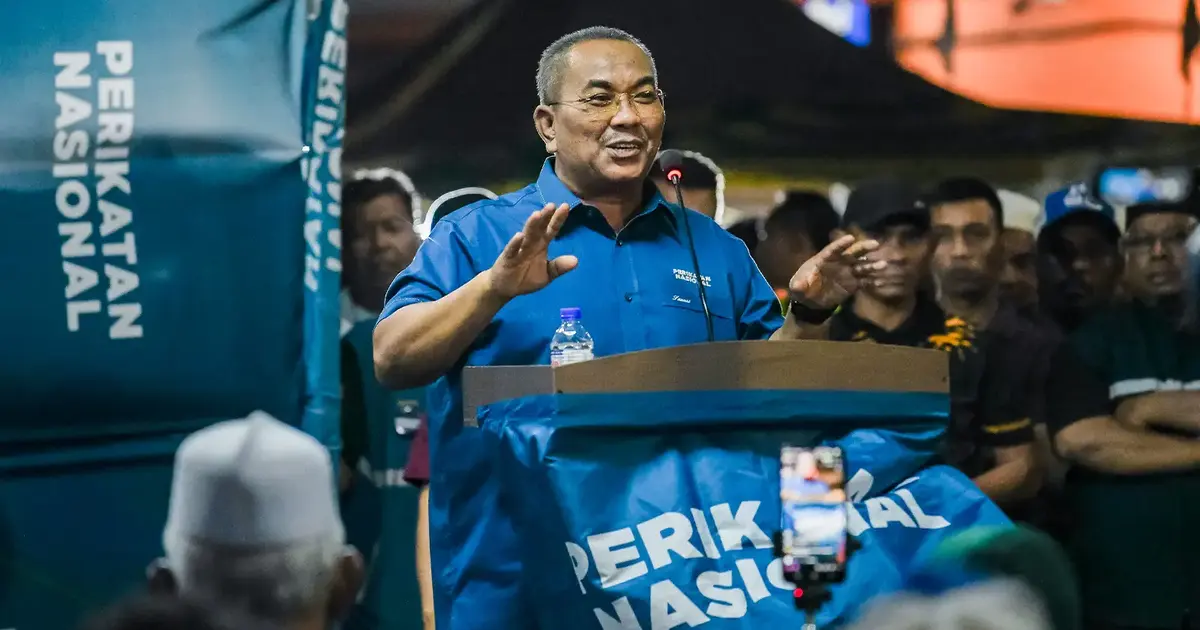
Kedah Menteri Besar Sanusi Md Nor's recent statement has triggered considerable discussion within Malaysia's political corridors, prompting observers to weigh whether the remarks represent a genuine fracture in the BN-PN alliance or merely temporary political turbulence. The controversy has forced a reassessment of how fragile the broader governing coalition truly remains, particularly as both blocs navigate competing interests ahead of potential electoral contests.
The tension between Barisan Nasional and Perikatan Nasional, two separate but interdependent political forces, has long simmered beneath surface-level cooperation. Sanusi's words, whether intentional or misstated, appear to have exposed underlying fault lines that many analysts believe were always present but deliberately downplayed by leadership. This development underscores how coalition politics in Malaysia remains remarkably delicate, dependent heavily on personalities, regional calculations, and the willingness of rival party structures to suppress internal grievances for the sake of governmental continuity.
Political analysts across Malaysia's academic and consulting spheres have responded with notably divergent interpretations. Some argue that Sanusi's remarks, regardless of their content or tone, are unlikely to substantially shift voter perception in the near term. These observers contend that Malaysian electoral behaviour is driven primarily by bread-and-butter economic concerns, local infrastructure delivery, and entrenched party loyalties rather than by high-level political disputes that rarely penetrate grassroots consciousness. From this perspective, the controversy amounts to elites sparring while ordinary citizens remain focused on employment, cost of living, and access to services.
Conversely, a competing school of thought suggests that such statements carry symbolic weight precisely because they reflect broader institutional tensions. Analysts in this camp argue that public displays of coalition friction erode voter confidence in government stability and suggest that decision-making may become paralysed by inter-party negotiation and brinkmanship. This perspective views political discord not as isolated incidents but as indicators that the governing arrangement lacks genuine ideological coherence or shared purpose, potentially damaging electoral prospects across both BN and PN in constituencies where voter margins remain tight.
The Kedah context carries particular significance within this debate. Kedah has long served as a proving ground for different political arrangements, and Sanusi's position as menteri besar grants his statements amplified resonance within state-level politics and among Perikatan's core support base in northern Malaysia. Any perceived challenge to BN's partnership with PN therefore carries implications beyond Kedah itself, potentially reverberating through similar coalition arrangements in other states where the two blocs share power or coordinate electoral strategy.
Historically, Malaysian political partnerships have demonstrated considerable resilience despite periodic public friction. Coalition members have repeatedly threatened to withdraw, aired grievances publicly, and made rhetorical jabs at alliance partners, yet continued working together when electoral calculations demanded it. The current BN-PN arrangement follows this established pattern, with both sides seemingly committed to preventing the partnership's collapse while simultaneously jockeying for advantage and protecting their respective constituencies' interests.
The timing of Sanusi's remarks invites additional scrutiny. Political commentators note that such controversies often emerge when parties sense shifting electoral momentum, when factional struggles intensify within individual parties, or when coalition partners fear being marginalised in policy decisions. Understanding whether Sanusi's statement emerged from genuine policy disagreement, factional manoeuvring within Perikatan Nasional, or calculated positioning for future negotiations requires examining the broader political context that produced the remarks.
Voter sentiment, ultimately, remains difficult to predict. Malaysian constituencies exhibit diverse political consciousness, with some populations highly attuned to elite-level party politics and others primarily concerned with material outcomes and service delivery. Across different demographic groups and geographical regions, the impact of Sanusi's controversy will likely vary considerably. Urban, educated voters with regular news consumption habits may interpret the remarks as signals of coalition instability, while rural communities and less politically engaged populations may remain largely unaware of or indifferent to the controversy.
The longer-term implications depend substantially on whether additional friction emerges or whether BN and PN leadership successfully manage the controversy through quiet diplomacy and reassuring public statements. Political operators understand that perpetual coalition tension becomes self-fulfilling: if leadership consistently emphasises partnership discord, voters increasingly internalise doubts about governmental viability. Conversely, swift reconciliation and renewed emphasis on shared accomplishments can quickly rehabilitate coalition standing with electorates accustomed to accepting political disunity as a normal feature of Malaysian governance.
Fundamentally, this episode illustrates the precarious nature of post-2022 Malaysian politics, where no single political coalition commands overwhelming parliamentary dominance and where maintaining governmental stability requires constant negotiation between ideologically distinct partners. Whether Sanusi's remarks prove consequential ultimately depends less on their content than on how senior leadership in both BN and PN chooses to frame and respond to them in coming weeks and months.

