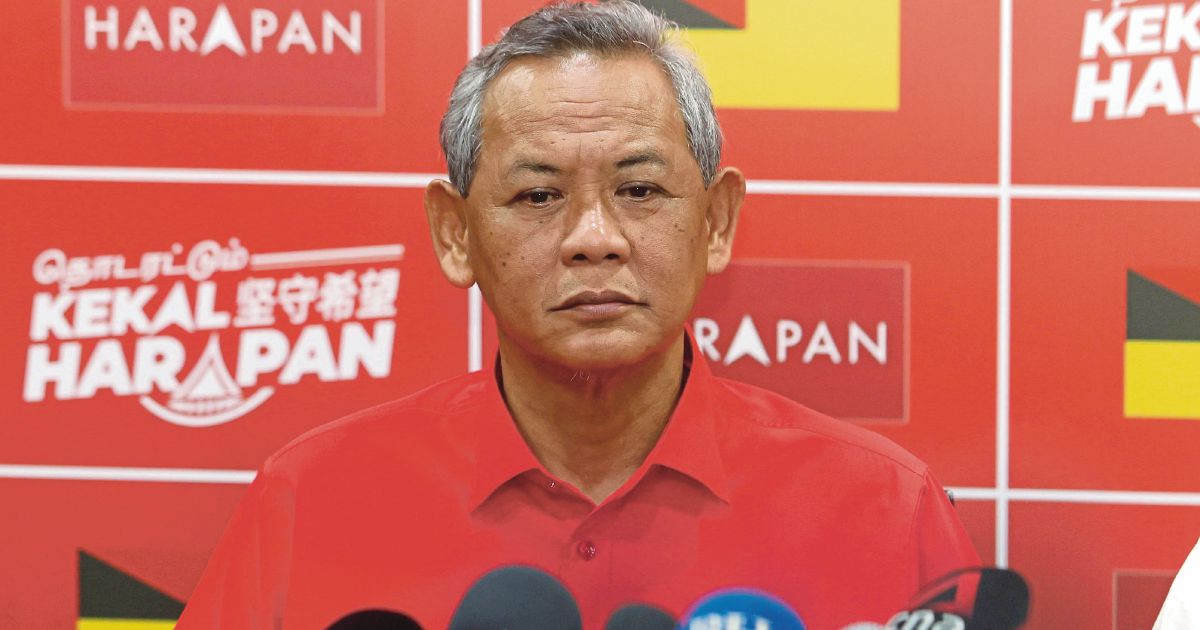
Former Negri Sembilan menteri besar Datuk Seri Aminuddin Harun has indicated he is prepared to vacate his position as Parti Keadilan Rakyat state chairman, marking a significant development in the party's leadership following disappointing results in the most recent state election. The announcement reflects the evolving dynamics within PKR's state apparatus and underscores the broader challenges the opposition party faces in consolidating support across peninsular Malaysia.
Aminuddin's willingness to step down represents an acknowledgement of the electoral difficulties PKR encountered in Negri Sembilan, though the exact magnitude of the party's setback remains a subject of intense political discussion within PKR circles. The move suggests a recognition that leadership transitions may be necessary to recalibrate the party's strategic direction and restore momentum in a state that has been contested terrain in recent years.
The former menteri besar's potential departure carries implications beyond Negri Sembilan's immediate political landscape. As a senior PKR figure with considerable experience in state governance, Aminuddin's repositioning could influence the party's broader institutional architecture and succession planning at both state and national levels. His tenure as menteri besar, while marked by notable policy initiatives, ultimately did not translate into sustained electoral advantage for the party.
In the Malaysian political context, where the opposition remains fragmented across multiple parties and constantly navigates challenges in maintaining unity, the resignation of senior leadership figures following electoral defeats has become a recurring pattern. For PKR specifically, managing generational transitions and acknowledging accountability through leadership changes represents a critical test of institutional credibility, particularly among party members who expect consequences for underperformance at the ballot box.
Negri Sembilan's political significance extends beyond its relatively modest population size. The state has served as a barometer of voter sentiment in central Peninsular Malaysia, and PKR's performance there reflects broader patterns of support or erosion across the region. Recent elections have demonstrated the volatility of state politics and the difficulty opposition coalitions face in converting organisational structures into reliable vote-winning machines.
The PKR's situation in Negri Sembilan mirrors challenges the party confronts nationally. Despite positioning itself as a reformist alternative to establishment politics, the party has struggled to maintain consistent support across multiple election cycles. Internal party management, leadership credibility, and the ability to deliver tangible governance outcomes remain persistent friction points that affect voter perceptions.
Aminuddin's readiness to relinquish his position may expedite the party's process of identifying alternative leadership that could potentially resonate more effectively with Negri Sembilan voters. The state party machinery will require renewed direction and possibly fresh faces to rebuild confidence among supporters and sympathisers who may have voted differently in the recent election.
From a regional perspective, developments within PKR reverberate across Southeast Asian opposition politics. Malaysia's democratic system, while functioning, operates within specific constraints, and the opposition's ability to renovate itself through managed transitions—rather than remaining rigid or fractious—carries relevance for democratic renewal arguments across the region.
The timing of Aminuddin's signalling is noteworthy. Leadership transitions in Malaysian political parties often require careful choreography to avoid appearing like contested power struggles that could further demoralise rank-and-file members. A planned, dignified transition may serve PKR's broader interests better than a prolonged period of uncertainty or public disputes over the party leadership.
Looking forward, the PKR's handling of this transition will test whether the party can demonstrate institutional maturity and strategic learning capacity. The selection of Aminuddin's successor and the broader reshaping of the state party structure will offer signals about PKR's commitment to renewal and its ability to address the substantive issues that may have contributed to the recent electoral outcome.
For Malaysian voters and political observers, Aminuddin's readiness to step aside may represent a positive indicator of accountability within opposition politics, though the ultimate measure of success will be whether such leadership transitions translate into improved electoral performance and more effective governance contributions in future cycles.

