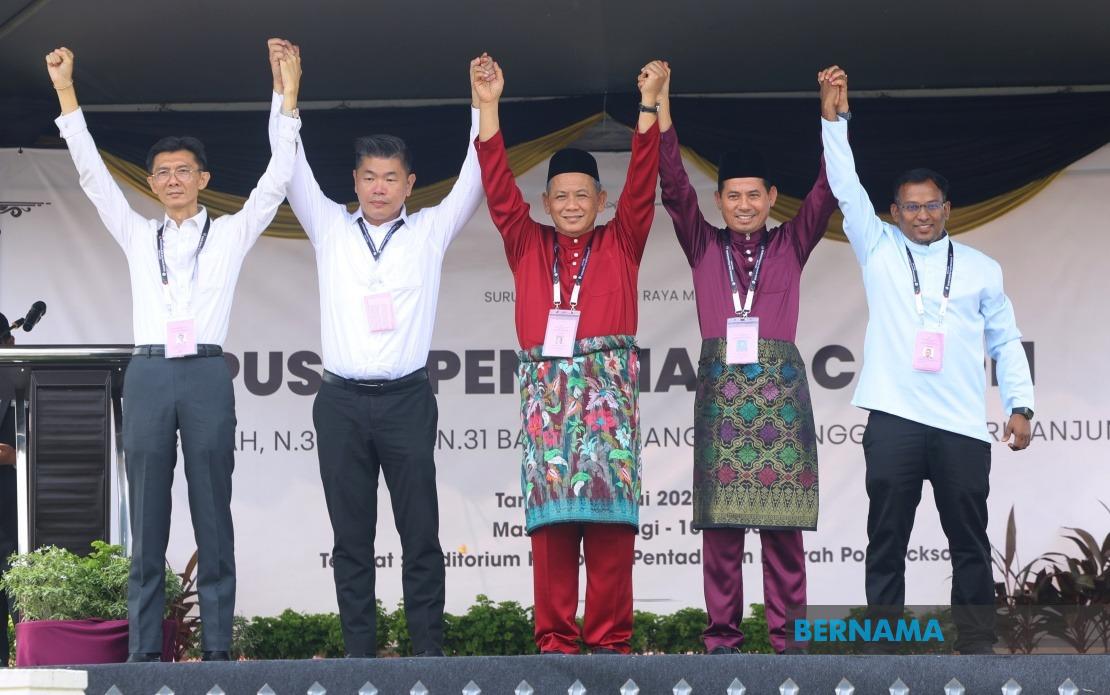
In a significant campaign move, Negeri Sembilan Menteri Besar Datuk Seri Aminuddin Harun unveiled ambitious infrastructure development plans for the Linggi state constituency as he prepares to contest the hotly anticipated 16th state election. Speaking at the nomination ceremony held at the District Administration Complex Auditorium in Port Dickson on July 18, Aminuddin detailed proposals for a new port facility and dedicated industrial area that would anchor economic growth in the region and generate fresh employment opportunities for constituents.
The announcement represents a direct appeal to voters by emphasizing tangible development benefits that would flow from a Pakatan Harapan victory in a constituency long regarded as a fortress for the Barisan Nasional coalition. As Negeri Sembilan Pakatan Harapan chairman, Aminuddin positioned these infrastructure investments as central pillars of a comprehensive strategy to modernize Linggi's economic landscape and improve the quality of life for residents. The proposed developments signal the opposition coalition's intent to compete seriously for a seat that has historically resisted their advances at the ballot box.
Aminuddin acknowledged the formidable challenge he faces in contesting against the incumbent Datuk Mohd Faizal Ramli, a Barisan Nasional representative in a constituency where the ruling coalition maintains deep organizational roots and traditional voter loyalty. Rather than minimize the difficulty of the undertaking, the Menteri Besar chose to frame the contest as an opportunity to demonstrate political courage and conviction, emphasizing his personal commitment to delivering change to constituents weary of the status quo. He publicly credited the Pakatan Harapan leadership with endorsing his proposal, suggesting that the development vision emerged from grassroots engagement and internal party deliberation rather than top-down imposition.
The competitive landscape in Linggi has grown considerably more complex with the entry of Datuk Zamri Md Said representing Bersatu, creating a three-cornered contest that could fundamentally alter the electoral mathematics in the constituency. This split in the anti-BN vote presents both opportunity and risk, potentially allowing Barisan Nasional to secure victory with a reduced vote share if opposition supporters fragment their backing between Pakatan Harapan and Bersatu candidates. Conversely, should opposition momentum prove sufficiently strong, the competition between the two anti-establishment contenders could incentivize both to sharpen their campaign messages and developmental pledges.
Meanwhile, the Barisan Nasional incumbent Mohd Faizal struck a notably cautious tone in his public statements, warning against complacency despite Linggi's historical standing as a coalition stronghold. His comments suggest that internal BN analysis indicates tightening margins and heightened electoral volatility, necessitating a disciplined and well-resourced campaign effort rather than the passive reliance on traditional voting patterns that might have sufficed in previous contests. The incumbent's appeal for a campaign conducted with civility and factual substance reflects broader concerns about electoral discourse quality and the potential for escalation into personal attacks that could alienate moderate voters.
The infrastructure development narrative advanced by Aminuddin taps into legitimate aspirations for economic diversification and job creation in Negeri Sembilan, a state that has historically relied heavily on tin mining, palm oil, and agricultural production. A port facility in Linggi would strategically position the constituency to benefit from regional maritime trade flows and containerized shipping networks that have expanded dramatically across Southeast Asia. The complementary industrial zone would create agglomeration advantages for manufacturers and logistics operators seeking proximity to port facilities, potentially catalyzing private investment and generating sustained employment across multiple sectors.
For Malaysian voters in Negeri Sembilan and across the broader Southeast Asian region observing these electoral dynamics, the contest in Linggi exemplifies the shifting nature of sub-national politics in Malaysia, where local development priorities increasingly compete with national political narratives for voter attention. The 16th state election, scheduled for polling on August 1, will test whether opposition parties can translate infrastructure promises into electoral gains in constituencies traditionally controlled by establishment coalitions. This contest will provide important indicators of voter sentiment regarding economic management, infrastructure investment priorities, and political alternatives to Barisan Nasional rule.
The two-week campaign period preceding polling day will prove critical for both the ruling coalition and the opposition in consolidating their messages and mobilizing ground-level organization. Barisan Nasional must energize its traditional support base while persuasively countering accusations of complacency and stunted development in long-held constituencies. Pakatan Harapan, meanwhile, must convince voters that their development proposals represent realistic, deliverable commitments rather than electoral promises destined for abandonment after polling day. The involvement of Bersatu adds an additional variable that could either fragment opposition support or, if Bersatu ultimately aligns with other anti-establishment forces, create a more unified challenge to the incumbent administration.
The economic significance of port and industrial development extends beyond immediate constituency boundaries, potentially reshaping trade patterns and investment flows throughout Negeri Sembilan and neighboring Selangor. Malaysian policymakers at both state and federal levels are increasingly attentive to demands for infrastructure modernization and economic diversification beyond traditional sectors, recognizing that competitiveness in regional and global markets depends upon investments in connectivity, logistics, and manufacturing clusters. Electoral success in competitive seats like Linggi may therefore hinge not merely on partisan tribalism but on which political actors demonstrate credible commitment to contemporary economic development priorities.
As the campaign intensifies, both coalitions will refine their messaging based on early feedback from constituents and internal tracking data regarding shifting sentiment. Aminuddin's boldness in articulating specific infrastructure proposals provides a concrete platform for Pakatan Harapan's pitch to voters, moving beyond generic anti-corruption and accountability messaging toward tangible economic benefits. However, such commitments also create accountability expectations; voters will scrutinize the feasibility of proposed projects and assess whether they represent realistic investments aligned with state budgetary capacity and federal developmental priorities, or merely aspirational rhetoric designed to mobilize campaign enthusiasm without serious implementation intent.

