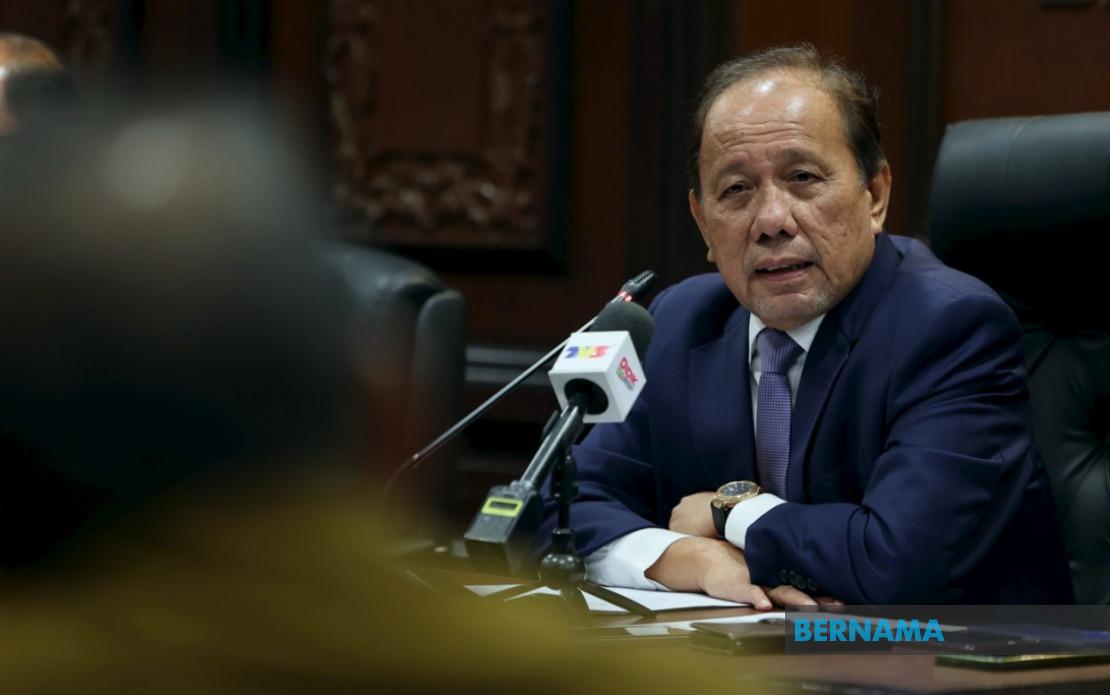
The accountability audit of Negeri Sembilan's Pakatan Harapan government following the state assembly dissolution has revealed a stark disparity in how former assemblymen are handling their financial obligations to the state. Menteri Besar Datuk Ismail Lasim disclosed on August 27 that Datuk Seri Aminuddin Harun, the previous menteri besar, stands alone as the only ex-PH state assemblyman to have settled his allocations in their entirety, a distinction that underscores broader questions about fiscal responsibility across the political transition.
The situation emerged after the state assembly was dissolved on June 5, prompting Ismail to demand that all former PH representatives and their state constituency coordinators remit allocations designated for the July to September period within a month's timeframe. While several former assemblymen have initiated repayment processes since June 30, Ismail emphasised that their contributions remain incomplete, leaving outstanding balances unresolved. The coordinators for Paroi and Labu constituencies are among those who have commenced partial refunds but have yet to discharge their full liabilities.
Ismail's remarks highlight the complexity of disentangling personal expenditure from public funds during transitional periods. He indicated that the Menteri Besar's Office cannot yet determine with precision which former assemblymen owe outstanding amounts, as the initial disbursements varied substantially across different state constituencies. This administrative uncertainty suggests that systematic record-keeping may have been inconsistent under the previous administration, complicating the current reconciliation efforts. The forthcoming demand letters to individual assemblymen will therefore differ according to each representative's verified balance and expenditure profile.
A critical distinction in the accountability framework concerns the status of former state executive councillors, a category into which Aminuddin fell as previous menteri besar. The government has determined that such councillors retained ex-officio membership privileges extending through July 31, thereby legitimating their allocation usage for that final month. Aminuddin's complete repayment thus encompasses this extended period, a nuance that may explain his full settlement compared to ordinary assemblymen whose entitlements concluded earlier.
The reimbursement deadline and audit process remain works in progress. Ismail announced that the Menteri Besar's Office is systematically reviewing allocation records for each former PH assemblyman to calculate exact outstanding liabilities. This verification phase must precede the dispatch of formal demand letters, which cannot proceed until the office completes its financial reconciliation. The temporal gap between the June 5 dissolution and the emerging accounting reality illustrates the administrative friction inherent in government transitions across Malaysian states.
Defending the previous administration's expenditure practices, Nilai assemblyman J. Arul Kumar asserted that allocated funds utilised before the assembly's dissolution were legitimately channelled toward constituent welfare rather than partisan political activities. The DAP legislator further contended that all unused balances had been returned to the Menteri Besar's Office by July 10, accompanied by comprehensive financial documentation for each state constituency. This defence positions the outstanding allocation issue as merely a technical accounting matter rather than evidence of financial impropriety, though the incomplete repayments by his former colleagues complicate this narrative.
The allocation recovery situation in Negeri Sembilan reflects patterns observed elsewhere in Malaysian political transitions. When state governments change hands—particularly following assembly dissolutions—incoming administrations frequently scrutinise their predecessors' financial management. Such reviews often uncover discrepancies between allocated and returned funds, sometimes attributable to genuine administrative complexity and occasionally suggesting inadequate fiscal controls. The Negeri Sembilan case demonstrates how allocation systems remain vulnerable to ambiguity regarding what constitutes proper utilisation versus what should be refunded.
The prominence of Aminuddin's complete repayment carries political implications beyond mere accounting compliance. As the previous menteri besar, his full settlement signals either exceptional financial discipline, access to superior personal resources to cover any shortfalls, or simply more meticulous record-keeping during his tenure. Conversely, the partial or incomplete refunds by other former assemblymen invite scrutiny regarding whether they genuinely expended funds on constituency services or encountered genuine difficulties in accurately tracking expenditures. This asymmetry between Aminuddin and his colleagues inevitably shapes public perception of fiscal probity within the former PH state government.
For Malaysian readers monitoring state-level governance, the Negeri Sembilan allocation controversy exemplifies recurring challenges in ensuring transparent public fund management across different political administrations. The necessity for systematic auditing and formal demand procedures suggests that allocation frameworks require strengthening to prevent similar situations from recurring. The involvement of multiple constituencies with varying repayment timelines also indicates that standardised accountability mechanisms may be lacking at the state level.
The outstanding question now centres on how quickly and completely the remaining former assemblymen will settle their obligations. Ismail's commitment to completing the review process and dispatching individualised demand letters suggests this matter will extend into the coming months. The ultimate resolution may depend on whether former representatives can satisfactorily document their expenditures or must acknowledge shortfalls, with potential legal consequences if liabilities remain unpaid beyond the stipulated deadline. This evolving situation warrants continued monitoring as an indicator of institutional accountability standards within Negeri Sembilan's administration.

