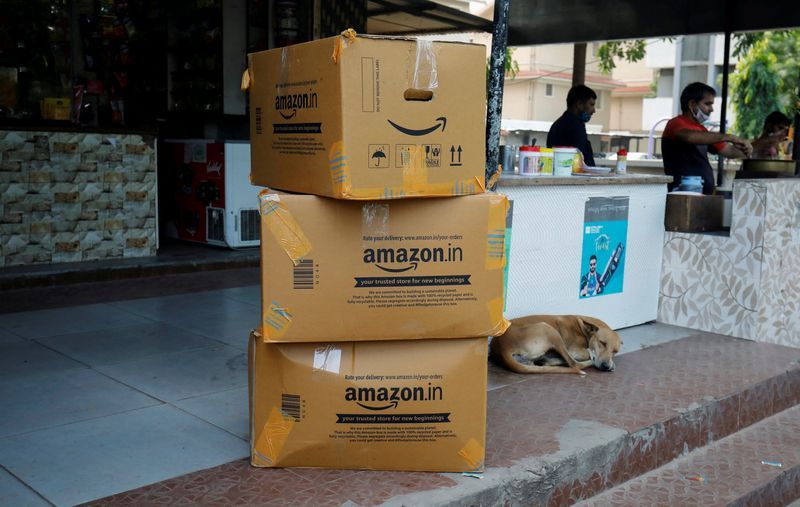
Amazon stated on Thursday that it will implement "appropriate action" against one of its third-party logistics providers in India following the conclusion of a police investigation into a warehouse fire that claimed two workers' lives. The e-commerce giant has simultaneously launched its own internal inquiry into the incident, according to a person familiar with the matter who requested anonymity due to confidentiality constraints surrounding the investigation.
The tragic incident occurred on June 5 at a facility operated by M&M Logistics Solutions in Uttarakhand, a state in northern India. According to official police documentation examined by Reuters, the building where the fire broke out exhibited multiple critical safety deficiencies that likely contributed to the catastrophic outcome. Authorities found that the structure lacked current fire safety certification, functional fire alarms, smoke detection systems, and adequate emergency evacuation routes—a combination of failures that underscores the gravity of workplace hazards at the facility.
Amazon's statement to Reuters indicates the company will determine and impose consequences once the local law enforcement investigation concludes, with the company emphasizing its commitment to operational standards. The delivery partner M&M Logistics Solutions and state police authorities in Uttarakhand have not responded to requests for comment regarding the incident or ongoing inquiries.
This incident represents the latest in a series of workplace safety challenges that have drawn regulatory scrutiny to Amazon's Indian operations. Earlier in 2024, the National Human Rights Commission, India's apex human rights body, initiated proceedings against Amazon following complaints of labour law breaches during an extreme heatwave at a warehouse facility outside New Delhi. Those allegations centred on inadequate worker protections during hazardous weather conditions. Subsequent reports indicated that state authorities had initiated formal legal proceedings against the company under applicable labour legislation in response to the commission's findings.
The company has repeatedly asserted that safeguarding worker wellbeing and security remains fundamental to its corporate mission and operational priorities. However, such public commitments have faced increasing pressure from worker advocacy groups and human rights organisations operating across India's rapidly expanding e-commerce sector.
The Amazon India Workers Union has taken an aggressive stance regarding the Uttarakhand tragedy, demanding that an independent judicial investigation be conducted into the June 5 deaths. The union characterised the incident as emblematic of systematic failures in workplace safety infrastructure and worker protection measures within Amazon's supply chain operations. Their statement explicitly framed the incident as representing a "grave failure" of both occupational safety standards and human dignity protections.
M&M Logistics Solutions operates a substantial portion of Amazon's last-mile delivery network across northern India, managing 45 separate delivery facilities distributed across 21 cities, according to information disclosed by Amazon in a 2023 corporate announcement. The company's role as a critical node in Amazon's distribution infrastructure means that any operational disruption or regulatory action against it could have ripple effects on delivery capabilities across the region.
Despite M&M Logistics Solutions operating as an independent third-party vendor rather than a direct Amazon subsidiary, Amazon maintains contractual authority over partner conduct through comprehensive supplier governance frameworks. Amazon's internal code of conduct for third-party logistics providers explicitly prohibits unsafe working environments and specifies that uncontrolled fires represent intolerable occupational hazards. The code establishes mechanisms allowing Amazon to suspend or terminate relationships with vendors who breach these fundamental safety standards.
The fire raises important questions about accountability structures within India's e-commerce supply chain. Third-party logistics arrangements, while providing operational flexibility for platforms like Amazon, have created regulatory grey zones where responsibility for worker safety can become contested between principal companies and contracted service providers. The incident demonstrates how cost pressures and fragmented operational structures can compromise safety when oversight mechanisms prove inadequate.
For Malaysian and Southeast Asian readers, this situation illustrates broader challenges emerging across the region's rapidly expanding e-commerce sectors. As online retail platforms expand delivery networks through third-party partnerships, ensuring consistent safety standards across fragmented supply chains remains an ongoing policy challenge. India's experience may foreshadow similar tensions in Malaysia, Singapore, and other countries where e-commerce penetration is accelerating and regulatory frameworks are still evolving.
The outcome of this investigation will likely influence how Amazon approaches vendor management across South Asia and may set precedents for regulatory expectations regarding platform accountability for partner operations. Whether Amazon's response extends beyond cosmetic changes to systemic improvements in contractor oversight will be scrutinised by Indian labour regulators, international human rights organisations, and worker advocacy movements seeking stronger protections within the digital economy.

