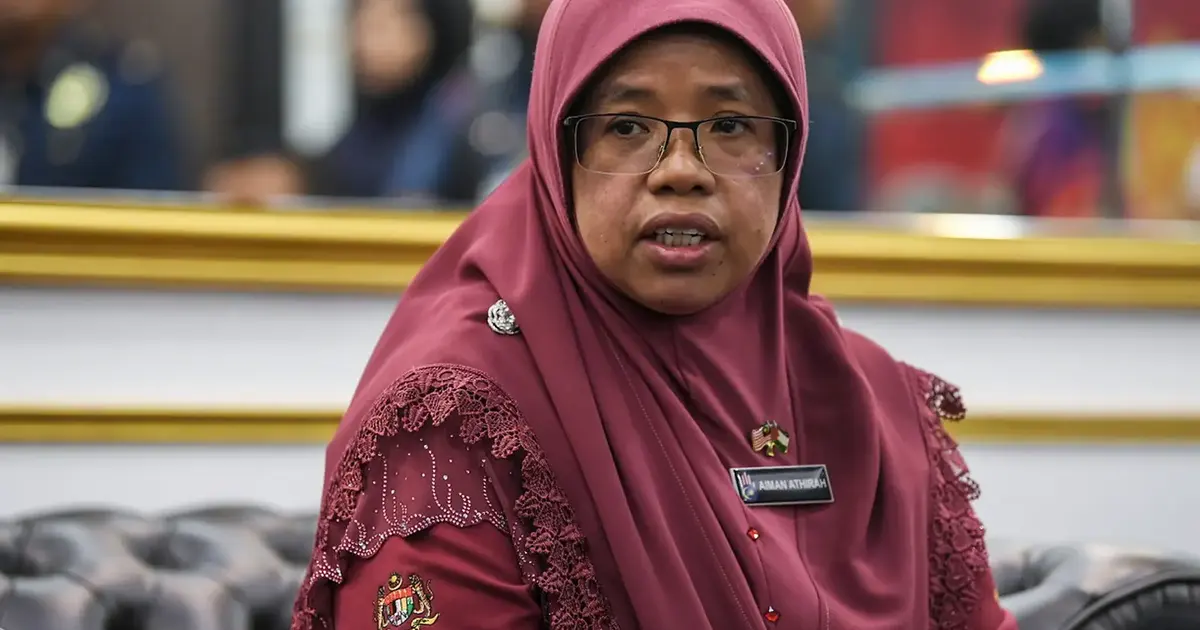
In a pointed rebuke to the leadership of PAS, Amanah deputy president Aiman Athirah Sabu has called on PAS president Hadi Awang to either substantiate his recurring allegations that the Democratic Action Party harbours anti-Islam sentiments or abandon the accusation altogether. The demand marks an escalation in tensions between coalition partners within Malaysia's fractious political landscape, where religious rhetoric has increasingly become a flashpoint in disputes between moderate and conservative Islamic parties.
Aiman Athirah's intervention underscores growing frustration among PKR and Amanah leaders at what they characterise as unfounded charges levelled by PAS without supporting documentation or legal backing. The Amanah figure explicitly invited Hadi to initiate court proceedings should he possess credible evidence, framing the challenge as a test of the PAS president's conviction in his own statements. This strategic move puts Hadi in a difficult position: either producing substantiation or remaining silent, both outcomes potentially damaging to PAS's credibility in the eyes of undecided voters.
The exchange reflects deeper divisions within the Pakatan Harapan coalition, which has struggled to maintain unity since the 2022 elections. While DAP has consistently denied harbouring any hostility toward Islam or Muslim interests, the party's secular orientation and advocacy for constitutional protections for religious minorities have frequently become targets for PAS accusations. These allegations resonate particularly strongly in rural constituencies where PAS maintains significant support, making them a persistent electoral weapon despite their contested accuracy.
Historically, PAS has employed religious polarisation as a mobilisation strategy, seeking to consolidate votes among conservative Muslim segments of the electorate. The tactic intensified after PAS withdrew from Pakatan Harapan in 2015 and subsequently forged alliances with UMNO and other conservative movements. By portraying DAP as fundamentally opposed to Islamic interests, PAS attempts to position itself as the sole credible defender of Muslim concerns—a narrative that has proven electorally effective in some quarters, particularly in states like Terengganu and Kelantan where PAS holds significant political leverage.
For Malaysian readers observing coalition politics, the significance of Aiman Athirah's challenge extends beyond inter-party bickering. It highlights how accusations rooted in religious sentiment can dominate public discourse even when substantive evidence remains absent. In a democracy where many voters base electoral choices on perceptions of which parties best protect their religious and communal interests, unsubstantiated claims can nevertheless shape political outcomes and policy directions. The willingness of opposition figures to demand proof rather than accept allegations at face value demonstrates efforts to inject greater accountability into public political debate.
DAP's positioning within Pakatan Harapan has always involved negotiating sensitivities around religious matters. The party has repeatedly attempted to clarify that opposing certain Islamist policy proposals does not constitute opposition to Islam itself, and that defending secular constitutional principles serves all Malaysians regardless of faith. However, these clarifications often fail to penetrate the echo chambers where PAS messaging reverberates, leaving DAP in a position of perpetually defending itself against charges it considers fundamentally misrepresentative of its actual positions and values.
The challenge from Amanah also reveals internal coalition dynamics at play. Amanah, which split from PAS in 2015 over disagreements about the party's direction and governance approach, occupies a middle ground—advocating for Islam's role in public life while opposing theocratic models and insisting on democratic accountability. By demanding that Hadi substantiate his claims, Amanah positions itself as a voice for evidence-based discourse and against what it views as inflammatory rhetoric divorced from fact. This positioning serves multiple purposes: it reinforces Amanah's identity as a moderate Islamic party, distinguishes it from PAS's approach, and signals to voters that not all Islamist-oriented parties accept baseless accusations.
Regionally, Malaysia's political experience with religiously charged allegations offers cautionary lessons for other Southeast Asian democracies grappling with polarisation. When major political parties resort to unfounded religious accusations rather than substantive policy debate, the result is often democratic degradation, reduced space for nuanced discussion, and increased communal tensions. The fact that senior figures within Malaysia's government coalition feel compelled to demand evidence for religious claims reflects the stakes involved in allowing such rhetoric to circulate unchallenged.
Looking forward, whether Hadi chooses to respond substantively to Aiman Athirah's challenge will signal important messages about PAS's willingness to engage in evidence-based political competition. A failure to provide documented proof would suggest the allegations function primarily as electoral messaging rather than reflecting genuine policy concerns. Conversely, if PAS does attempt to marshal evidence, Malaysian voters would gain clearer insight into the actual substantive differences between the parties on Islam-related issues. Either outcome would represent progress toward more transparent political discourse, even if the immediate effect might be heightened rather than reduced tension within the coalition.

