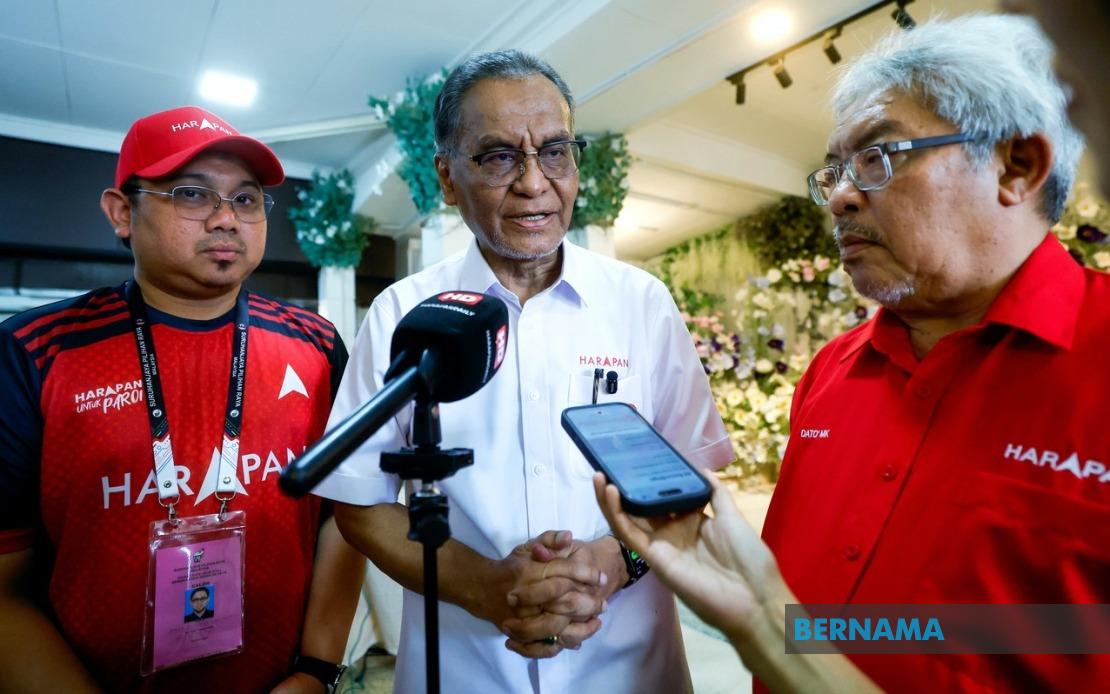
Amanah will contest nine constituencies in the 16th Negeri Sembilan state election with a campaign centred on the Pakatan Harapan government's administrative accomplishments and a commitment to grassroots service delivery. The strategy reflects a shift toward emphasising proven performance rather than rhetorical flourish, with each component party of the coalition tasked with demonstrating its value within designated constituencies across the state.
Datuk Seri Dr Dzulkefly Ahmad, Amanah's vice-president, outlined the coalition's broader electoral philosophy during a campaign event in Seremban, stressing that voter confidence derives from tangible results and problem-solving capacity rather than volume of campaign messaging. Within Pakatan Harapan's allocation of 36 seats, Amanah will contest nine, while Parti Keadilan Rakyat fields 16 candidates and the Democratic Action Party (DAP) presents 11. This distribution, agreed upon by coalition partners, represents Amanah's positioning within the multiparty alliance.
The nine Amanah candidates are rooted in their respective communities with established records of engagement. Incumbent Datuk Bakri Sawir will defend the Klawang state seat, whilst Yaacob Mahmood seeks the Serting constituency. The party has also nominated Zarrina Abu Zarin for Lenggeng, Mohd Hanis Alimin for Senaling, Mohd Zailan Mohd Munawar for Johol, Muhammad Allif Ibrahim for Kota, Nasir Raman for Bagan Pinang, and Abd Latif A. Tambi for Gemencheh. Each candidate brings documented experience in community outreach and local issue resolution.
Amanah's campaign methodology prioritises direct engagement over mass broadcasting. The party emphasises small-group discussions, residential door-to-door visits, and digital communication through social media platforms to establish meaningful dialogue with voters. This approach enables candidates to identify pressing concerns within constituencies and coordinate responses through relevant government agencies and local authorities, addressing the pragmatic needs of residents rather than abstract political messaging.
Paroi state constituency, where Ahmad Shahir Mohd Shah is Pakatan Harapan's candidate, exemplifies the scale of engagement required. The constituency encompasses over 65,000 registered voters and approximately 140,000 residents, making effective coordination with local bodies essential for addressing infrastructure, service delivery, and livelihood concerns. Ahmad Shahir has identified support for small traders as a key priority, proposing streamlined licensing procedures, basic amenity provision, and business area upgrades conducted collaboratively with local authorities. Such initiatives reflect the coalition's focus on enabling economic participation at the grassroots level.
The emphasis on administrative track record responds to Negeri Sembilan's recent electoral history. In the 15th state election held in 2023, Pakatan Harapan secured 17 seats, Barisan Nasional won 14, and Perikatan Nasional captured five. The coalition's plurality, though not commanding a supermajority, positioned it to form government and implement policy over the intervening period. This election therefore provides voters with concrete evidence of PH's governance capacity, distinguishing the coalition's claims from those of opposition parties.
Dzulkefly's framing of the election as a verdict on performance rather than campaign intensity reflects broader shifts in Malaysian electoral dynamics. Voters increasingly evaluate party pledges against demonstrated delivery, particularly in matters affecting daily life such as traffic management, refuse collection, business licensing, and social services. Candidates with visible community presence and documented problem-resolution experience carry greater credibility than those emerging solely during election periods. Amanah's strategy capitalises on this expectation by highlighting candidates' pre-existing community relationships and administrative experience.
The timing of the election itself carries strategic implications. Early voting is scheduled for July 28, with general polling on August 1. This compressed campaign window favours parties with existing organisational infrastructure and candidate recognition, potentially benefiting Pakatan Harapan incumbents over challengers. However, the brevity also emphasises the importance of efficient voter outreach, where social media engagement and targeted house-to-house canvassing become crucial tools for reaching dispersed populations across constituencies.
For Malaysian voters observing this contest, the Negeri Sembilan election serves as a test case for how coalitions balance internal party interests with collective electoral performance. The agreed seat allocation among PH components—nine for Amanah, 16 for PKR, and 11 for DAP—reflects negotiated power-sharing that influences candidate quality and campaign resources. The outcomes will signal whether voters reward coalitional governance or prefer to fragment support across competing parties, with implications for federal politics if similar patterns emerge in other state contests.
The coalition's vulnerability to Perikatan Nasional's presence, which secured five seats in 2023, suggests opportunities for opposition consolidation, particularly if dissatisfaction with PH governance materialises. Amanah's emphasis on track record and service delivery represents a defensive posture designed to retain voter confidence whilst forestalling defection to rival coalitions. Success will depend on whether the party's nine candidates can articulate governance achievements clearly whilst avoiding complacency in areas where PH's previous performance disappointed constituents.

