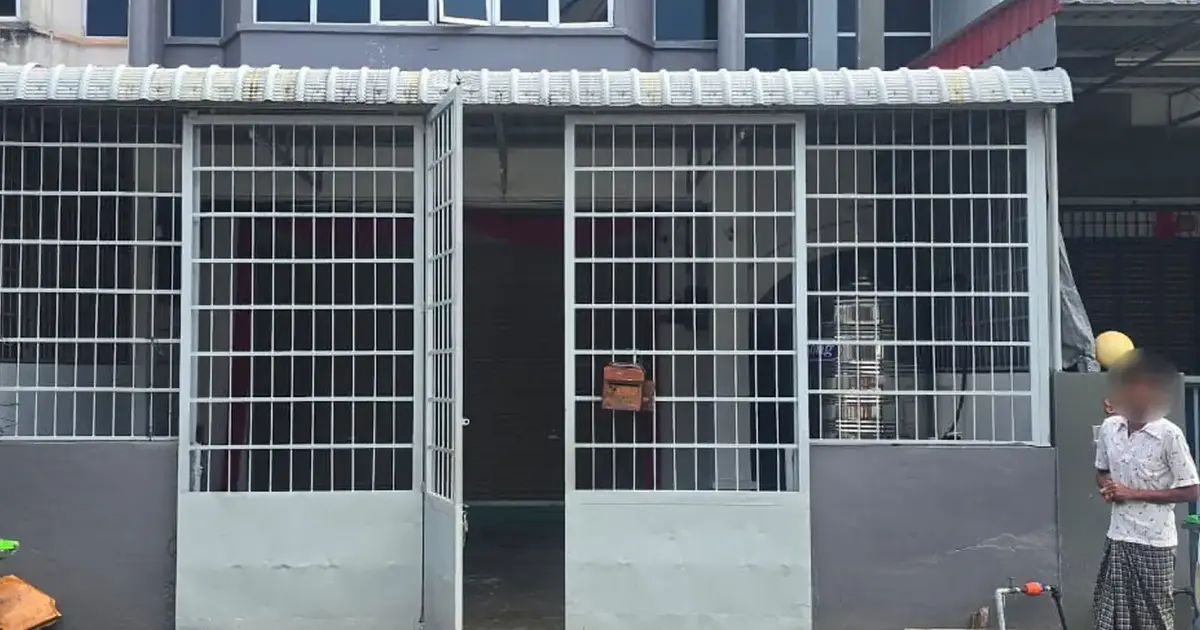
Alor Setar City Council enforcement officers have raided an industrial premises discovered to be operating as an unauthorised educational institution serving Rohingya refugee children, sparking a formal investigation into multiple regulatory breaches affecting the state capital's management of both land use and informal settlements.
The enforcement action represents the latest flashpoint in the delicate issue of Rohingya populations across Malaysia's northern states. For several years, refugee communities from Myanmar have established informal settlements and self-help educational arrangements in various locations throughout Peninsular Malaysia, creating complex governance challenges for local authorities who must balance humanitarian concerns with municipal regulations designed to protect public safety and maintain zoning integrity.
Investigators are pursuing two primary violations stemming from the discovery. The most straightforward charge concerns the misuse of industrial-designated premises for purposes fundamentally incompatible with their zoning classification. Industrial zones in Malaysian municipalities are strictly regulated to prevent residential, commercial, and educational activities that could disrupt manufacturing operations, compromise worker safety, or create inadequate facilities for vulnerable populations such as children. The unauthorised conversion of factory or warehouse space into a classroom represents a direct violation of Alor Setar's spatial planning framework.
The second and more complex investigation strand centres on the operation of an unregistered education facility. Malaysia's Ministry of Education maintains comprehensive oversight of all formal and informal educational institutions, requiring registration, curriculum compliance, teacher qualifications, and infrastructure standards that safeguard student welfare. The discovery of a school functioning entirely outside this regulatory apparatus raises questions about curriculum content, instructor credentials, and whether the learning environment met minimal safety benchmarks.
The Rohingya situation in Malaysia reflects a broader regional humanitarian challenge with profound governance implications. Approximately 180,000 Rohingya have sought refuge in Malaysia since a 2017 military crackdown in Myanmar's Rakhine State displaced over 700,000 people to neighbouring Bangladesh. Unlike some Southeast Asian nations, Malaysia has not formally signed the 1951 Refugee Convention, meaning Rohingya populations technically lack legal status and access to many public services including formal education. This legal lacuna has created conditions where informal alternatives develop organically within refugee communities.
Educational deprivation among Rohingya children represents a serious humanitarian and long-term integration concern. Children born or raised in displacement camps face generational setbacks in literacy, numeracy, and skill development that compound economic vulnerability and social marginalisation. Community-led initiatives to provide basic schooling, whilst often well-intentioned, frequently lack qualified instructors, adequate materials, and safe facilities. The Alor Setar discovery illustrates how informal solutions, born from necessity, inevitably collide with municipal enforcement responsibilities.
For Alor Setar specifically, the enforcement action reflects municipal priorities around industrial zone management and property standards. Industrial areas serve crucial economic functions, hosting manufacturing enterprises, warehousing operations, and logistics facilities that employ local residents and contribute to tax revenue. Unauthorised conversions of such premises can attract code violations, fire safety infractions, and liability concerns that expose municipal authorities to accountability challenges if incidents occur. Protecting industrial zone integrity remains a legitimate municipal priority.
The investigation into operational specifics will likely examine how long the facility had operated undetected, who managed the premises, how many children attended, what curriculum was taught, and whether any safety violations existed. Authorities will determine whether voluntary compliance can be achieved or whether enforcement closure becomes necessary. These determinations will have cascading effects on the dozens of Rohingya refugee children who lost access to educational programming.
The broader policy question emerging from this incident concerns Malaysia's approach to Rohingya populations in the medium term. Current arrangements effectively acknowledge their physical presence whilst denying formal rights and services, creating administrative grey zones where informal institutions inevitably develop. This approach has generated ongoing tensions between humanitarian obligations, municipal governance responsibilities, and the legal status ambiguities surrounding refugee populations lacking bilateral agreements with their governments of origin.
For Malaysian policymakers, the Alor Setar case exemplifies mounting pressures to develop more coherent frameworks addressing refugee populations. Regional alternatives vary considerably: some nations maintain stricter enforcement stances, whilst others have negotiated bilateral arrangements enabling greater formalisation of refugee services. Malaysia's approach remains notably restrictive compared to host nations bearing larger refugee burdens in South Asia and East Africa, yet the practical reality of refugee presence demands administrative responses that transcend simple enforcement.
The investigation outcome will shape how similar cases proceed across other Malaysian municipalities where Rohingya populations have established informal communities. Authorities must balance regulatory compliance with recognition that displaced populations require basic services, particularly education for children representing future generations regardless of migration status. How Alor Setar resolves this tension will provide guidance for other local governments confronting identical dilemmas in their jurisdictions.
Moving forward, resolving such situations demands sustained engagement between municipal authorities, the Ministry of Education, humanitarian organisations, and refugee community leaders to identify sustainable alternatives. Purely enforcement-based approaches that eliminate informal arrangements without establishing authorised substitutes effectively deny services to vulnerable populations. Conversely, permitting unregulated institutional operations undermines legitimate municipal oversight responsibilities. Finding that balance remains one of Malaysia's pressing governance challenges in an era of unprecedented population displacement.

