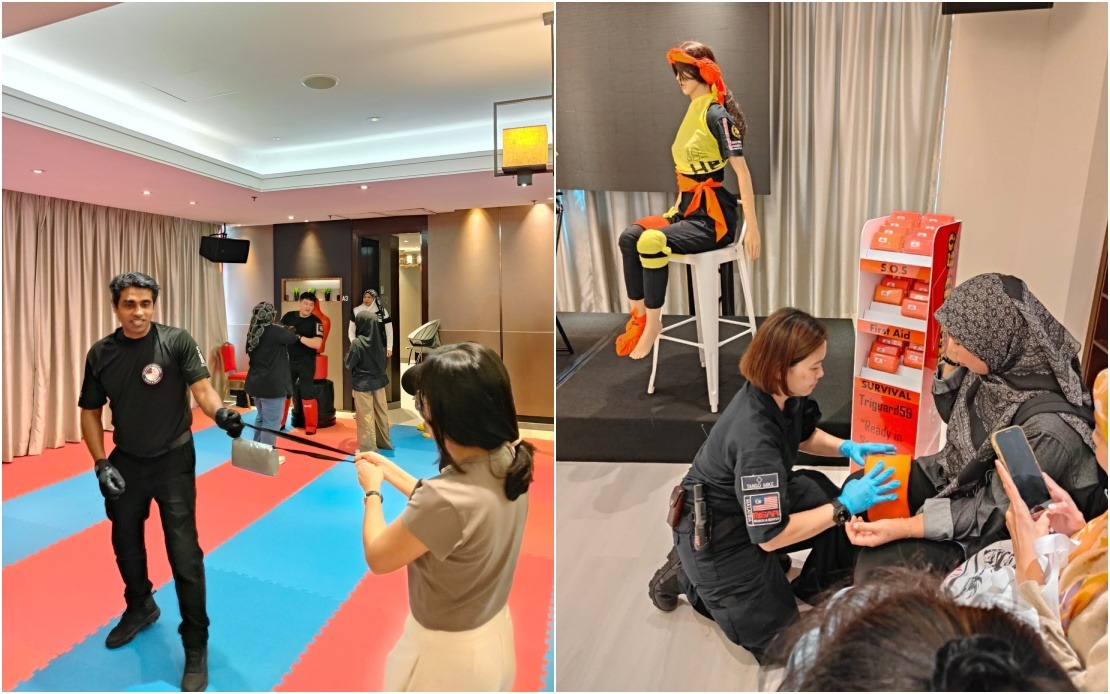
Allianz Malaysia has deepened its commitment to public safety by partnering with Kelab Marshal Keselamatan Jalan Raya Kuala Lumpur (RSMC) for the ninth consecutive year to deliver specialist training on street crime prevention targeting women across the region. The latest iteration of this longstanding collaboration took place at Wisma Huazong YTL Hall in Seri Kembangan, drawing 200 female participants aged 16 and above who engaged in a comprehensive programme combining theoretical instruction with hands-on practical exercises designed to build confidence and competence in high-risk situations.
The insurance firm's corporate social responsibility division has structured this year's programme to address the full spectrum of personal safety concerns that Malaysian women commonly encounter. Participants received detailed guidance on recognising and responding to home invasions, handling aggressive bag-snatching incidents, identifying road-based scams that target drivers and passengers, recognising stalking behaviour, understanding carjacking threats, managing accident scenarios, executing self-defence techniques, and preparing for emergency situations. This breadth of coverage reflects a sophisticated understanding that women's safety encompasses both prevention and reaction strategies across multiple environments—domestic, urban, vehicular, and communal.
A notable evolution in this year's format introduced structured dialogue sessions where participants could discuss their own experiences and concerns directly with RSMC experts. This shift from purely instructional delivery to interactive problem-solving represents a methodological advancement that recognises women's existing knowledge and validates their lived experiences. Rather than treating attendees as passive recipients of safety information, the enhanced approach positioned them as active contributors whose insights shape practical guidance, thereby increasing the relevance and applicability of solutions discussed.
Sean Wang, chief executive officer of Allianz Malaysia, emphasised that the programme's true measure of success extends far beyond attendance figures. He highlighted encouraging interest from community leaders keen to replicate the initiative in their own neighbourhoods, suggesting the campaign is catalysing grassroots safety movements across multiple localities. This multiplication effect—where trained participants become safety ambassadors within their families and broader communities—represents the type of sustainable social impact that CSR programmes aim to achieve. The voluntary interest from local leaders indicates the programme addresses a genuine, widely-felt need for practical safety education.
Captain K. Balasupramaniam, founder and president of RSMC, articulated the philosophical underpinning of the campaign: that street crime awareness fundamentally concerns enabling individuals with both factual knowledge and psychological confidence. When people understand how crimes typically unfold and possess tested techniques for responding, they shift from a posture of vulnerability to one of informed preparedness. This empowerment dimension is particularly significant for women, who often internalise pervasive safety concerns that constrain mobility and autonomy. By providing practical tools and confidence-building experience, the programme counteracts learned helplessness that many women absorb through social messaging about danger.
The programming reflects Malaysia's urban crime realities where street-level offences remain a persistent concern affecting daily life and freedom of movement. Bag-snatching, in particular, constitutes a pervasive crime in metropolitan areas where thieves target distracted pedestrians, often employing motorcycle teams to maximise speed and reduce apprehension risk. Road scams exploit drivers' trust and unfamiliarity with strangers, while carjacking—though less common than other vehicle crimes—represents a serious threat requiring specific awareness and de-escalation knowledge. By addressing these specific Malaysian contexts rather than generic safety principles, the programme demonstrates relevance to participants' actual threat environments.
The ninth iteration of this partnership underscores both institutional commitment and accumulated expertise. RSMC brings specialist knowledge of road safety and crime prevention mechanisms, while Allianz Malaysia contributes resources, reach, and credibility as a major financial services organisation. This combination enables scale and legitimacy that individual community organisations might struggle to achieve independently. The nine-year trajectory also suggests the programme has demonstrated sufficient value to warrant continued investment, particularly given positive participant feedback and the emergent interest from community stakeholders.
For Malaysian women navigating increasingly complex urban environments, such targeted safety training addresses gaps in formal education. Schools typically do not teach practical crime prevention or self-defence, leaving many women to navigate risk through informal social learning or, worryingly, through direct victimisation. Programmes like this attempt to formalise that knowledge transmission, making evidence-based safety strategies accessible to broader populations regardless of socioeconomic background or existing safety networks. The focus on women aged 16 and above recognises that safety concerns begin in late adolescence and persist throughout adulthood.
The dialogue-focused enhancement introduced this year also serves another function: participant feedback can inform programme refinement and identify emerging safety concerns. As criminal methodologies evolve and new threats emerge, having direct communication channels with trained participants enables rapid identification of changing threat landscapes. This feedback loop strengthens the programme's continued relevance and ensures content remains current rather than becoming static historical information.
Beyond the immediate training delivered, the campaign's emphasis on participants becoming community safety advocates addresses a significant gap in public safety approaches. Government resources for crime prevention remain constrained, and police capacity struggles to meet demand across sprawling urban areas. When private sector organisations and community groups mobilise to extend safety education through grassroots networks, they multiply the reach of safety messaging exponentially. A single trained participant who discusses handbag-snatching prevention with family members and neighbourhood friends extends the programme's impact far beyond the formal training environment.
The partnership between Allianz Malaysia and RSMC also highlights how private sector CSR initiatives can address public safety gaps in ways that generate positive community relations while serving genuine social needs. Insurance companies have natural institutional interest in crime prevention—reducing crime reduces claims frequency and severity. This alignment of business interest with social benefit means programmes like this achieve scale and sustainability that purely altruistic initiatives sometimes struggle to maintain. Participants benefit from professional-grade instruction subsidised through corporate investment, while Allianz Malaysia enhances its community relationships and brand reputation.
Moving forward, the demonstrated success and emerging community interest suggest potential for expansion. Replication in other Malaysian states, particularly in other major metropolitan areas experiencing similar street crime patterns, appears feasible. The modular nature of the training content allows customisation for different regional threat profiles while maintaining core competencies. As Malaysia continues urbanisation, safety concerns will likely intensify, making initiatives like this increasingly important for enabling women's full participation in urban economic and social life.

