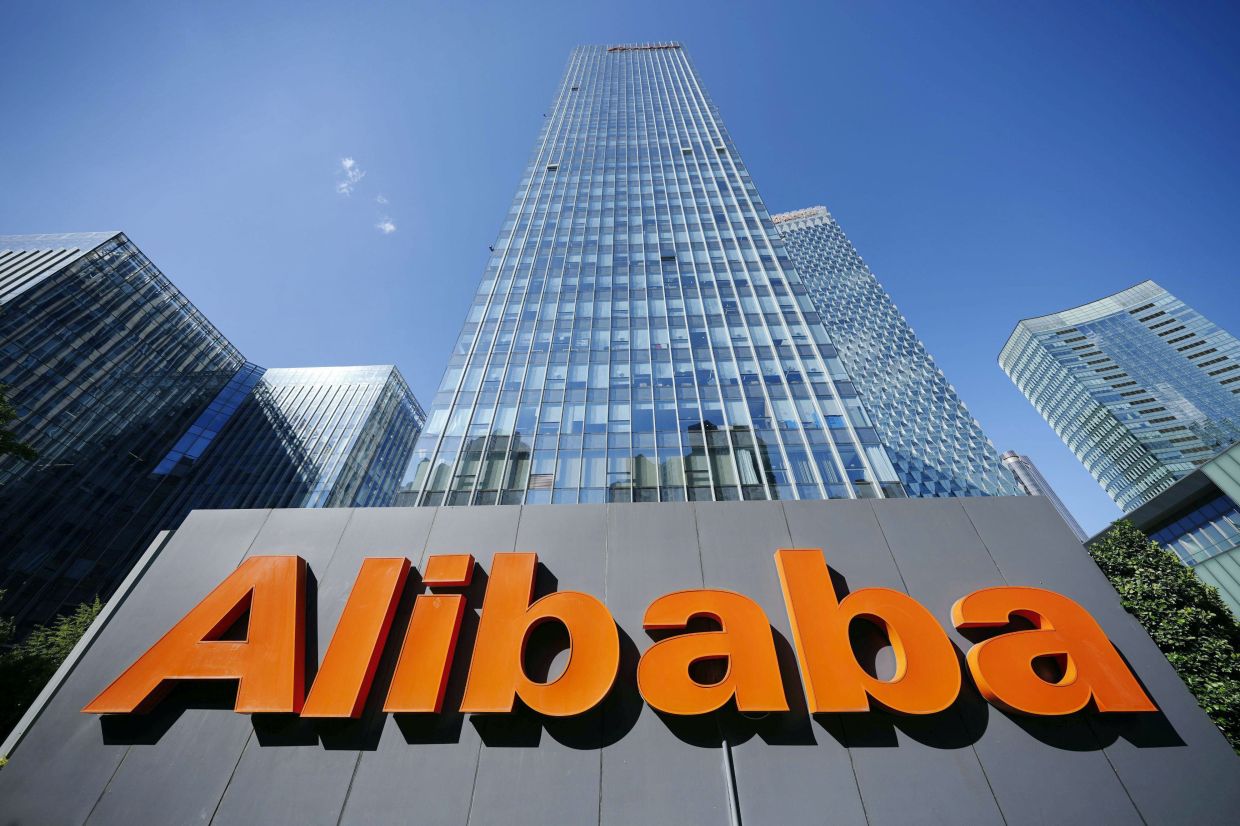
Alibaba Group Holding, the Chinese technology and e-commerce conglomerate headquartered in Hangzhou, has initiated legal proceedings against the US Department of Defence, contesting its classification as a military-affiliated enterprise. The complaint was formally submitted on Tuesday to a district court in San Jose, California, marking an escalation in tensions between American defence officials and one of China's most prominent technology firms. The company argues that the Pentagon's decision violates fundamental constitutional protections, including due process rights and freedom of speech guarantees.
The Pentagon incorporated Alibaba into its "Chinese military companies" list on June 9 under the auspices of Section 1260H of the National Defence Authorisation Act. This administrative action swept in several other major Chinese technology firms, including electric vehicle manufacturer BYD, automotive startup Nio, search engine provider Baidu, robotics company Unitree Robotics, and networking equipment specialist TP-Link. The designation extends across multiple sectors reflective of contemporary technological competition between the two superpowers: artificial intelligence, biotechnology, renewable energy, and advanced manufacturing. While the listing does not automatically impose direct sanctions, it threatens to complicate these companies' access to American financial markets and exclude them from procurement opportunities with the federal government.
Alibaba's official response, delivered through a company spokesperson, flatly refutes the Pentagon's characterisation. The firm maintains that it operates as a purely commercial enterprise with no involvement in military activities or alignment with China's military-civil fusion policies. The company claims the designation represents an arbitrary and unreasonable exercise of administrative power, warranting judicial intervention to restore its commercial reputation and operational capacity. In their legal filing, Alibaba's lawyers specifically contest two central accusations: that the company maintains indirect affiliation with China's State-owned Assets Supervision and Administration Commission and that it contributes to military-civil fusion programmes through connections with the Ministry of Industry and Information Technology.
According to Alibaba's account, engagement with Chinese government ministries amounts to nothing more than ordinary regulatory compliance required of all major technology enterprises operating within China's jurisdiction. The company emphasises that it has no substantive relationship with the SASAC and that any ministerial interactions remain routine and limited in scope. This narrative attempts to distinguish between legitimate business operations subject to national regulations and purported participation in strategic military initiatives. Alibaba further notes that it participated in discussions with Pentagon officials during January, subsequently submitting a detailed written response in March addressing the emerging designation threat, only to find itself formally blacklisted three months later despite these engagement efforts.
Alibaba's position aligns with similar objections raised by other designated firms. Both Baidu and BYD have issued forceful statements opposing the Pentagon's classification. China's diplomatic apparatus has likewise condemned the action through official channels. The Chinese embassy in Washington expressed firm opposition to what it characterises as an expansive and discriminatory application of national security justifications, describing the blacklist methodology as fundamentally unfair and ideologically motivated. These coordinated responses reflect broader Chinese government frustration with American security measures targeting the nation's technology sector.
The lawsuit emerged amid an intensifying cycle of reciprocal economic measures between Washington and Beijing. On Monday, preceding Alibaba's court filing by one day, China's Ministry of Commerce announced its own countermeasures, adding ten American firms to export control restrictions. The targeted companies include defence contractors and advanced technology developers such as Aveox, Red Cat Holdings, Teal Drones, IMSAR, Jaia Robotics, Ball Aerospace & Technologies, Oshkosh Defense, L3Harris Maritime Services, MP Materials, and USA Rare Earth. A ministry spokesperson characterised these additions as necessary responses to what Beijing interprets as malicious American actions targeting Chinese enterprises.
Simultaneously, China's Ministry of Finance implemented additional restrictions on forty-six American corporations, barring them from Chinese government procurement activities with immediate effect. The restriction list encompasses major defence manufacturers and aerospace companies, including Lockheed Martin, Raytheon Missiles & Defense, General Atomics Aeronautical Systems, Boeing Defense Space & Security, General Dynamics Land Systems, and the Javelin Joint Venture partnership between Lockheed Martin and Raytheon. These sanctions notably exempt American firms involved in Sino-American joint ventures operating within Chinese territory, suggesting some strategic discretion in Beijing's approach.
For Malaysian businesses and investors, this escalating confrontation carries significant implications. Many Malaysian technology firms and supply chain operators maintain connections with both American and Chinese technology ecosystems, potentially exposing them to indirect consequences of these disputes. The blacklist mechanism could affect Malaysian companies relying on component suppliers or technology partners from designated firms, creating unpredictable sourcing challenges. Furthermore, the case demonstrates how geopolitical tensions increasingly weaponise commercial regulations, forcing multinational operations to navigate incompatible standards imposed by competing superpowers.
The broader pattern evident in this dispute reflects fundamental structural tensions in the contemporary global economy. American security officials increasingly view Chinese technology dominance in certain sectors as inherently threatening, while Chinese policymakers regard American restrictions as protectionist barriers disguised as security measures. Technology sectors particularly affected—artificial intelligence, robotics, semiconductors, and renewable energy—align with strategic industries essential to both nations' future competitiveness. This legal confrontation therefore transcends corporate interests, embodying competing visions of permissible technological development and legitimate national security concerns.
Alibaba's litigation strategy represents a notable departure from typical Chinese corporate responses to American regulatory actions. Rather than relying solely on government-level diplomatic protests, the company pursues legal remedies within the American judicial system, potentially appealing to constitutional principles and rule-of-law frameworks that might resonate with American courts. Success would establish precedent limiting Pentagon discretion in military company designations, whilst failure would validate the Pentagon's authority and likely embolden similar designations against other Chinese technology firms. The case thus carries consequences extending far beyond Alibaba's specific situation, potentially reshaping how American defence institutions classify and regulate foreign commercial entities.
For Southeast Asian observers, the Alibaba lawsuit illuminates how technological competition between superpowers increasingly entangles smaller nations and their business communities. Malaysian firms operating across both ecosystems face mounting pressure to choose sides or maintain impossible neutrality amid regulatory divergence. The outcome will influence whether Chinese technology companies can successfully challenge American security designations through legal channels or whether such determinations remain largely insulated from judicial review, thereby establishing an asymmetric regulatory environment where Chinese enterprises face American restrictions whilst lacking effective remedies.

