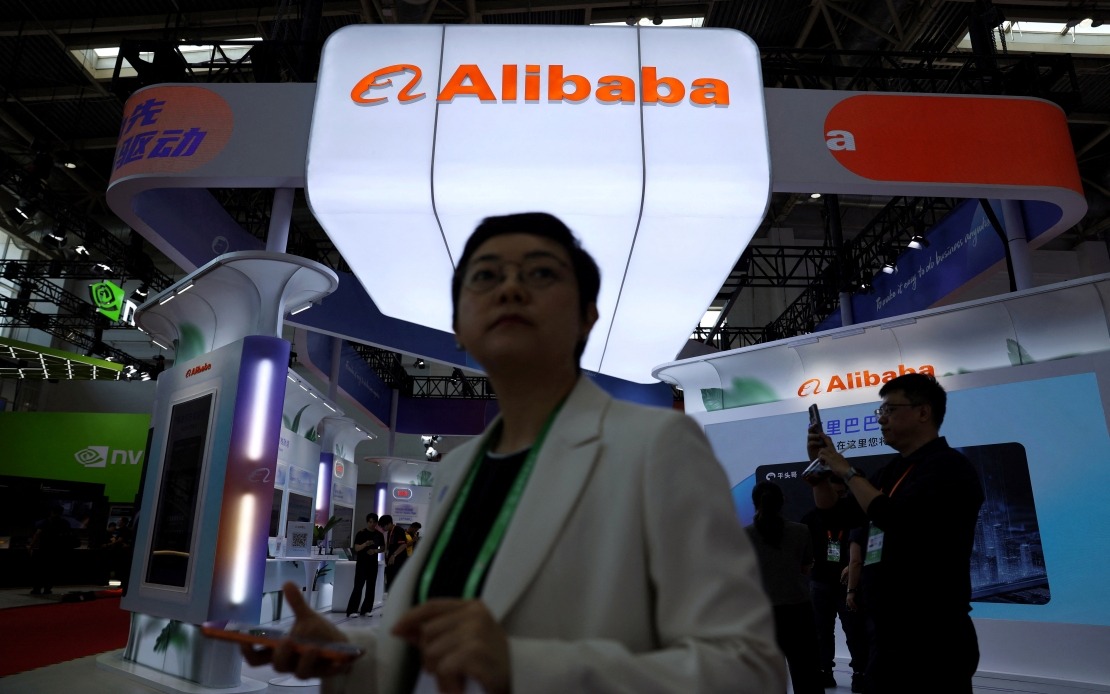
Alibaba, China's dominant e-commerce and cloud computing conglomerate, has escalated its dispute with the United States government by filing a formal lawsuit against the Pentagon over its recent designation as an entity linked to China's military infrastructure. The court documents, made public on Tuesday, represent a significant pushback against what the company describes as an unfounded and legally baseless determination that threatens its international operations and reputation.
The Pentagon's decision in early June to add Alibaba alongside 187 other Chinese firms to its official list of military-connected entities sent shockwaves through global markets and raised fresh tensions between Washington and Beijing over economic competition disguised as national security concerns. The designation carries substantial weight, as it can trigger export restrictions, sanctions, and regulatory obstacles that hamper business operations far beyond Chinese borders where American technology or standards are involved. For Alibaba, which operates sophisticated logistics networks, cloud infrastructure, and digital payment systems across Asia and increasingly beyond, the military label threatens partnerships and market access in the United States and allied nations that respect American security determinations.
In its legal challenge, Alibaba dismantles the Pentagon's characterisation point by point. The company emphasises that its governance structure remains wholly independent, with board members drawn from commercial and professional backgrounds entirely divorced from military institutions or state defence apparatus. This distinction matters legally because genuine military designation typically stems from direct ownership, control, or operational ties to defence entities, not mere suspicion or guilt by association within China's broader industrial ecosystem.
The e-commerce platform further argues that every product and service it provides serves exclusively civilian purposes: retail operations that connect millions of small merchants and consumers, logistics capabilities that route parcels and freight, and enterprise software that helps businesses manage data and operations. These civilian applications are fundamental to modern economies worldwide, and Alibaba contends that offering them domestically or internationally carries no inherent military dimension regardless of the company's nationality.
Critically, Alibaba points to its own internal compliance architecture as evidence of deliberate non-engagement with defence applications. The company states that explicit contractual prohibitions prevent customers from deploying Alibaba infrastructure for military purposes, and that its operational policies actively screen against military use cases. Furthermore, the company lacks military certifications or security clearances that genuinely military-connected enterprises typically maintain—licences that would be necessary if Alibaba actually supported China's defence establishment in any formal capacity.
The broader context matters for understanding why this lawsuit signals shifting dynamics in US-China technology relations. The Pentagon's sweeping additions to its military company list reflect Washington's increasingly expansive interpretation of what constitutes a national security threat, often blurring lines between genuine defence contractors and civilian technology firms that happen to be Chinese. This approach mirrors broader American policy shifts under successive administrations that view strategic technology sectors—from semiconductors to cloud computing to artificial intelligence—as domains where Chinese advancement inherently threatens American security interests.
For Southeast Asian businesses and governments, Alibaba's legal challenge carries direct implications. The region relies heavily on Alibaba's ecosystem for digital commerce, logistics solutions, and financial technology services that undergird increasingly sophisticated e-commerce supply chains. If the Pentagon designation stands and triggers enforceable American sanctions or restrictions, regional companies doing business with Alibaba could face compliance nightmares, compliance costs, or difficult choices about whether to abandon a dominant platform provider.
The company's decision to litigate rather than merely protest administratively suggests confidence that American courts may scrutinise the Pentagon's reasoning more rigorously than political processes would. The legal standard for such designations in American law requires factual basis and proper procedural compliance, and courts have occasionally overturned overly broad government determinations. Alibaba's filing essentially forces the Pentagon to defend its classification with evidence and legal argument rather than simply asserting national security concerns.
This lawsuit also reflects Chinese firms' growing sophistication in challenging American regulatory actions through America's own legal system. Where previous generations of sanctioned Chinese companies accepted designations as inevitable, contemporary enterprises increasingly retain American legal counsel and file formal challenges that impose costs and create delays on US government processes. Whether Alibaba ultimately prevails remains uncertain, but the mere fact of litigation shifts the burden of proof onto American authorities and creates transparency that corporate and political interests alone might not demand.
The outcome will likely influence how other major Chinese technology companies respond to similar designations and how aggressively Beijing responds to American sanctions in future cycles. For Malaysian enterprises and investors with exposure to Alibaba or similar platforms, watching this case closely remains important, as the results will help clarify the practical boundaries of American national security jurisdiction over civilian technology companies.