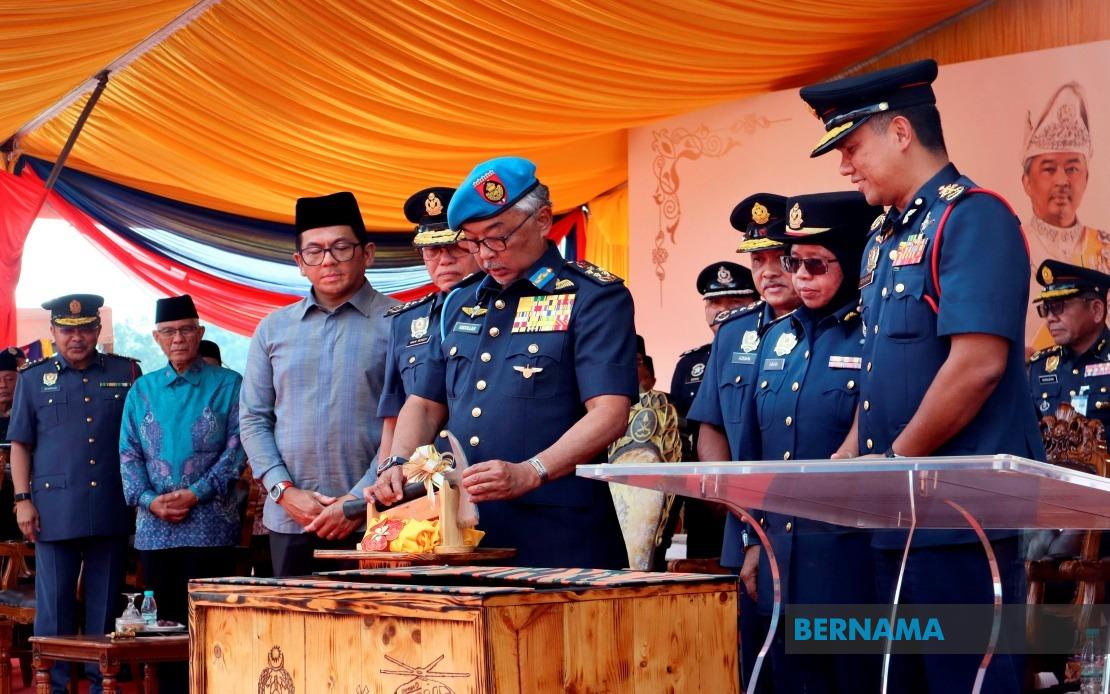
The Sultan of Pahang, Al-Sultan Abdullah Ri'ayatuddin Al-Mustafa Billah Shah, has publicly acknowledged the efforts of both federal and state authorities in channelling resources into infrastructure programmes that directly serve the people's welfare. His remarks came during an official ceremony in Kuantan on July 2, when he inaugurated the Sungai Lembing Fire and Rescue Station, underscoring the monarchy's active engagement with development initiatives across the state.
Flood mitigation emerged as a central theme in the Sultan's address, reflecting the recurring challenge that Pahang faces during monsoon seasons. Sungai Lembing, a town in Kuantan district, holds particular significance in the state's flood risk management strategy, as it frequently becomes inundated during heavy rainfall and serves as an early warning indicator for broader flooding threats downstream. The Sultan's focus on this locality demonstrates an understanding of its role as a barometer for flood conditions affecting larger population centres in the region.
In his remarks, the Sultan specifically acknowledged the substantial financial commitments required for infrastructure projects of this scale. The development of flood mitigation systems demands considerable investment, and his public appreciation signals royal recognition of budgetary priorities set by both Putrajaya and the Pahang state government under Menteri Besar Datuk Seri Wan Rosdy Wan Ismail. This acknowledgment carries symbolic weight in Malaysia's constitutional monarchy, where the ruler's validation of government priorities can influence public perception and political support.
Beyond mere appreciation, the Sultan took a proactive stance by directing authorities to deepen waterways in proximity to residential zones. This directive represents a concrete intervention in flood management strategy, moving beyond ceremonial functions into operational governance. Deepening river channels aims to increase water-carrying capacity, reducing the likelihood of overflow during intense precipitation—a measure that reflects understanding of hydrological engineering principles and their application to local conditions.
The presence of senior officials at the ceremony, including Deputy Housing and Local Government Minister Datuk Aiman Athirah Sabu and Deputy Economy Minister Datuk Mohd Shahar Abdullah, underscore the multi-agency nature of such infrastructure initiatives. The involvement of economic and housing portfolios alongside emergency services demonstrates how flood mitigation integrates across different governmental functions, from urban planning to disaster response.
The Sultan's remarks extended beyond infrastructure to recognise the Fire and Rescue Department's operational contributions. His observation about receiving daily updates regarding emergency services personnel highlighted the pervasive nature of disaster response across Pahang—from structural fires to vehicular accidents to natural calamities. This acknowledgment reflects the demanding nature of emergency services work, particularly in a state frequently affected by seasonal flooding and other environmental hazards.
Central to the Sultan's message was appreciation for the dedication and sacrifice exhibited by frontline personnel. The monarch's reference to checking news each morning about rescue operations underscores the visibility and constancy of emergency response work, often conducted under hazardous conditions. Such public commendation serves to elevate the status of emergency workers within society and validates the importance of resource allocation to these critical services.
The Sultan's commitment to visiting disaster sites personally represents an extension of the monarchy's traditional role as a symbol of national unity during crises. His stated intention to continue accompanying rescue personnel when circumstances permit reflects a hands-on approach to engagement with affected communities. This practice, distinct from ceremonial functions, positions the ruler as an active participant in crisis management and recovery, reinforcing social bonds between the institution of monarchy and ordinary citizens facing adversity.
A notable aspect of the Sultan's address involved his proposal for establishing a volunteer fire brigade in Kampung Bantal, Ulu Tembeling, located in the Jerantut district. This remote locality's isolation creates genuine emergency response challenges, as professional services based in urban centres may require extended response times during critical incidents. The Sultan's identification of this infrastructure gap and advocacy for volunteer-based solutions reflects practical understanding of resource constraints in rural areas and the need for locally-based emergency capacity.
The initiative to establish volunteer firefighting capacity aligns with broader patterns in Southeast Asia, where rural communities increasingly recognise the necessity for distributed emergency infrastructure. Such volunteer systems require training, equipment provision, and ongoing coordination with professional services—investments that fall within the Sultan's implied advocacy framework. The proposal's formal articulation during an official ceremony suggests potential pathway toward implementation through appropriate state and federal channels.
For Malaysian readers, particularly those in Pahang, the Sultan's statements carry implications regarding future infrastructure investment trajectories. The emphasis on flood mitigation reflects acknowledgment that climate variability and seasonal patterns necessitate ongoing adaptation of physical infrastructure. The ordering of river deepening and the proposed volunteer fire brigade suggest a proactive rather than reactive approach to disaster management—a shift that could influence resource allocation decisions across multiple government agencies.
The ceremony illustrates how constitutional monarchs in Malaysia function as institutional voices supporting development priorities and public service excellence. Through public acknowledgment and directive action, the Sultan influences political economy of state governance while operating within constitutional constraints. The convergence of appreciation, directive action, and public engagement demonstrates how the institution of monarchy continues to engage substantively with contemporary governance challenges while maintaining ceremonial functions.
Moving forward, the Sultan's directives regarding river deepening and volunteer fire brigade establishment will likely be transmitted through administrative channels to relevant authorities. Implementation timelines, funding allocations, and technical specifications remain matters for executive departments. Nevertheless, the royal imprimatur provides political momentum that may accelerate decision-making processes and resource commitments, illustrating the enduring influence of constitutional monarchy in Malaysia's governance structures.

