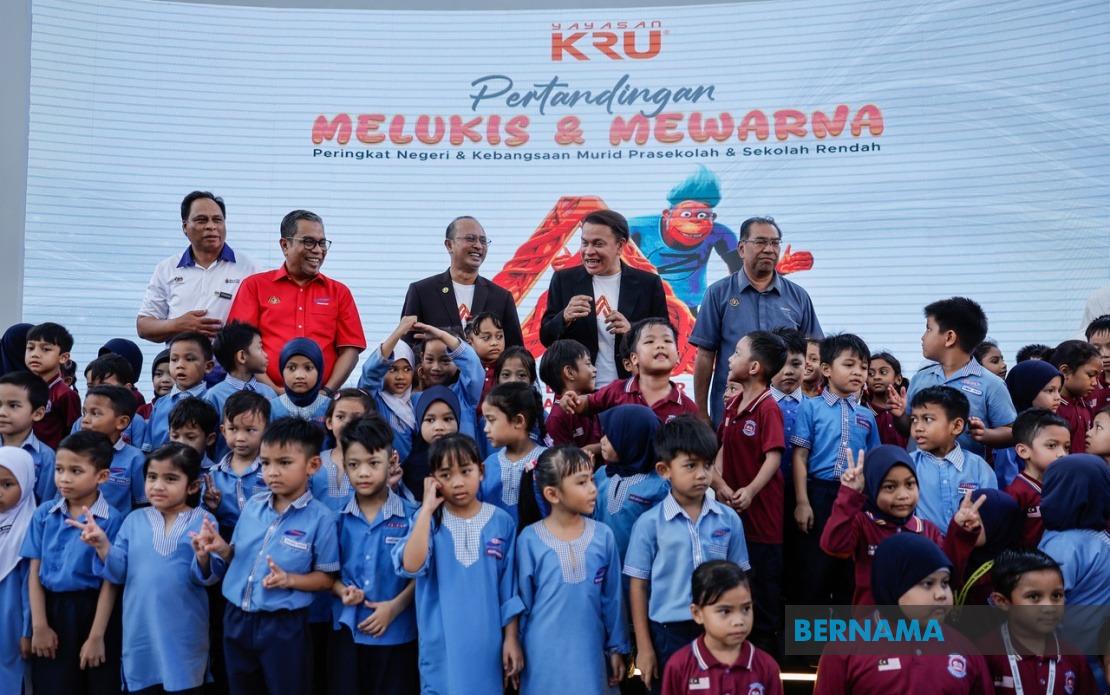
A creative initiative by Yayasan KRU has carved its place into Malaysia's record books after mobilising over 153,000 preschool children across the country in what has become the nation's largest participation event for a single colouring competition. The AKAR 2026 Awards, officially launched in Shah Alam on July 1, represents a significant achievement in simultaneously coordinating young learners nationwide while embedding an environmental message through its "I Love Orangutans" campaign theme.
The sheer logistical undertaking of this initiative underscores the growing importance of early childhood development programmes in Malaysia's educational ecosystem. With participants drawn exclusively from KEMAS and Unity kindergartens—two major preschool networks spanning the country—the competition reached a scale that previous educational initiatives have rarely achieved. The Malaysia Book of Records recognition validates not only the numbers but also the quality of organisation required to execute such a nationwide endeavour with simultaneous registration and participation protocols.
Yayasan KRU's leadership framed the achievement as more than a statistical milestone. Datuk Norman Abdul Halim, the foundation's Board of Trustees president, positioned AKAR 2026 within a broader vision of developing Malaysia's younger generation with dual emphasis on artistic expression and environmental stewardship. By directing prize winnings into participants' National Education Savings Scheme (SSPN) accounts, the programme connects immediate creative gratification with long-term educational investment, a pragmatic approach that acknowledges the financial pressures families face while supporting learning.
The financial structure reveals careful calibration across different competitive tiers. Approximately RM100,000 in total prize money is distributed across state and national levels, with individual state champions receiving recognition before advancing to the August 29 national finals in Putrajaya, where top-tier winners compete for prizes reaching RM3,000. This tiered approach ensures that recognition extends beyond major urban centres, acknowledging the participation of preschoolers from less densely populated regions who may not reach national levels but still receive acknowledgement and reward for their creative efforts.
The competition's environmental dimension deserves particular attention within Malaysia's current sustainability discourse. Integrating an orangutan conservation message into a children's colouring initiative represents a subtle yet powerful educational strategy—embedding ecological awareness during formative years when children develop attitudes toward natural conservation. This aligns with Malaysia's broader commitments under international environmental agreements and domestic biodiversity protection frameworks, particularly given the critical conservation status of orangutans in Sabah and Sarawak.
Governmental coordination across multiple agencies points to the multi-stakeholder approach now characterised as essential for ambitious educational programming. The National Higher Education Fund Corporation (PTPTN) provided financial support, while the Education Ministry (MOE), Community Development Department (KEMAS), and Department of National Unity and National Integration (JPNIN) contributed operational and administrative frameworks. This collaborative structure demonstrates how cross-agency synergy can amplify programme reach and impact, a model potentially applicable to other national initiatives targeting young learners.
KEMAS's involvement carries particular significance given its primary remit of servicing underserved communities and low-income households. By partnering Yayasan KRU, KEMAS extended access to creative development opportunities to preschoolers who might otherwise lack exposure to structured artistic competitions. Datuk Mohd Hanafiah Man, the KEMAS director-general, explicitly connected creativity to workforce competitiveness, framing artistic development as an economic imperative rather than a peripheral cultural activity—a perspective increasingly validated by research on creative industries' contribution to national GDP.
The AKAR 2026 initiative reflects shifting attitudes toward preschool education in Malaysia, where early childhood development has transitioned from being viewed primarily as childcare infrastructure to recognition as a critical foundation for later academic and social outcomes. The scale of participation suggests that Malaysian parents increasingly value structured creative activities, and that preschool institutions themselves prioritise programmes extending beyond basic literacy and numeracy instruction.
Looking forward, the August 29 national finals in Putrajaya will concentrate winners from across Malaysia's thirteen states and three federal territories into a single competitive event. This convergence creates opportunity for networking among educators, cross-state exchange of best practices in early childhood development, and documentation of innovative preschool methodologies that have proven effective in diverse Malaysian contexts. The visibility afforded by the Malaysia Book of Records recognition may also encourage other organisations and foundations to develop similarly ambitious educational competitions, potentially elevating standards across the early childhood sector.
The record-breaking achievement also raises questions about scalability and sustainability of such initiatives. With 153,000 participants, Yayasan KRU has demonstrated capacity to manage unprecedented numbers, but replicating or expanding this scale annually requires secure funding and committed institutional partnerships. The continuation of AKAR beyond 2026 will reveal whether this represents a sustainable model or a singular achievement driven by exceptional organisational effort and resource availability in this particular year.

