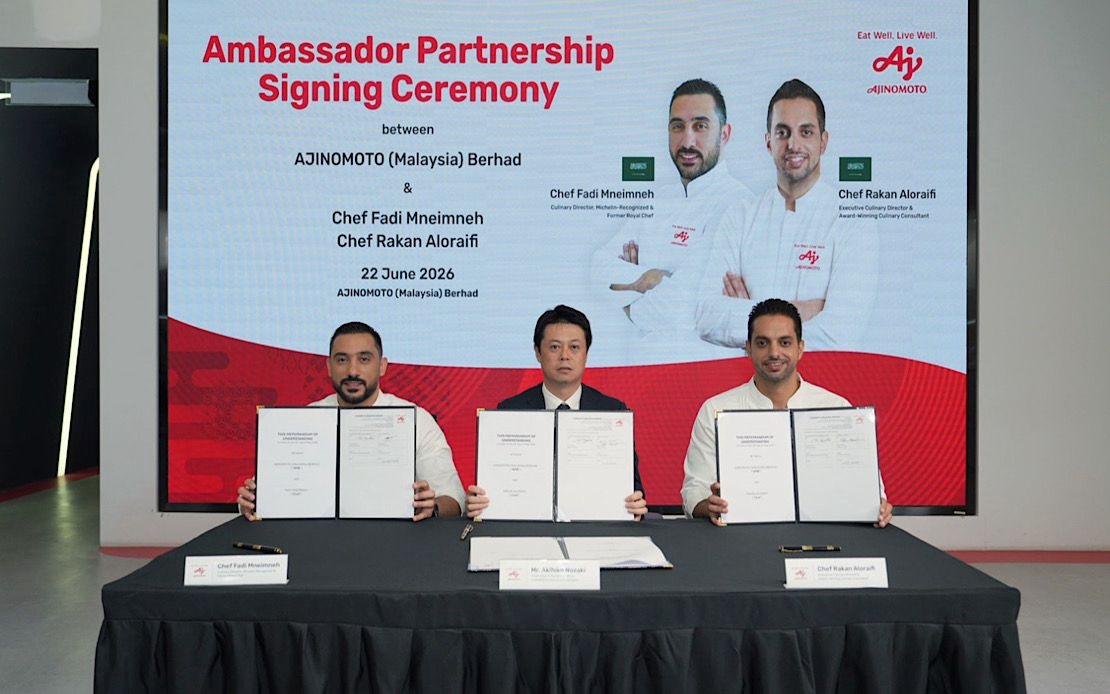
Malaysia's leading food manufacturer Ajinomoto (Malaysia) Berhad is pursuing an ambitious Middle East expansion strategy by tapping into the region's most influential culinary voices. The company has formed a strategic partnership with Chef Fadi Mneimneh and Chef Rakan Aloraifi, two of Saudi Arabia's most respected food industry figures, as it capitalizes on rapidly growing demand for premium halal food solutions across the Arabian Peninsula and beyond. This collaboration signals a broader shift in how Malaysian food exporters are approaching international markets—moving beyond traditional distribution models toward partnerships that leverage local expertise and consumer trust.
Chef Fadi Mneimneh brings significant prestige to the arrangement as a Michelin-starred culinary director with previous experience serving as a royal chef, while Chef Rakan Aloraifi contributes credentials as an award-winning executive director and respected culinary consultant across the region. Together, they represent formidable influence within Middle Eastern hospitality and food service circles, positioning AMB to access networks that pure commercial outreach might struggle to penetrate. For Malaysian exporters watching these developments, the partnership demonstrates how personality-driven marketing and chef endorsements have become critical tools in saturating competitive premium food markets where consumers increasingly seek validation from trusted culinary authorities.
The two chefs visited AMB's manufacturing facility in Bandar Enstek, Negeri Sembilan, for an intensive session examining the company's production methods, quality assurance protocols, and halal certification processes. This factory visit served multiple strategic purposes: it provided the international chefs firsthand exposure to AMB's manufacturing standards while simultaneously offering the company tangible evidence of operational transparency that can be leveraged in marketing communications to Middle Eastern distributors and hospitality decision-makers who increasingly demand supply chain visibility. The session also functioned as an educational experience regarding umami—the fifth taste profile derived primarily from glutamates—exploring how this Japanese culinary concept could be integrated authentically into traditional Middle Eastern cooking without compromising cultural identity or recipe authenticity.
The core of this collaboration centers on demonstrating that contemporary food innovation need not displace traditional culinary heritage. AMB strategically positioned umami enhancement as a complementary technique rather than a replacement for conventional Middle Eastern flavor profiles, an important distinction in markets where cultural authenticity carries significant commercial weight. Through live culinary demonstrations, Chef Fadi and Chef Rakan prepared authentic Middle Eastern dishes utilizing selected Ajinomoto products, creating what the company describes as a fusion between regional gastronomic traditions and Japanese-inspired food science. This approach reflects sophisticated understanding of how premium halal consumers evaluate imported food products—they seek quality enhancement and modern technique coupled with respect for established culinary traditions rather than western dominance of flavor or technique.
For Malaysian readers and regional business observers, this partnership carries implications extending far beyond a single company's commercial ambitions. It exemplifies how Southeast Asian food manufacturers can leverage halal certification and production expertise as competitive advantages in Middle Eastern markets, areas where regional manufacturers increasingly dominate. AMB's positioning as a Malaysian halal-certified producer provides distinct credibility advantages over western competitors, particularly as Middle Eastern consumers grow more conscious about supply chain ethics and religious compliance. The company essentially converts Malaysia's reputation for halal governance standards into market access that companies without such certification cannot easily replicate, creating lasting competitive moats in one of the world's fastest-growing premium food segments.
The partnership structure also reveals evolving sophistication in how Asian food manufacturers approach international expansion. Rather than establishing isolated subsidiary operations or relying solely on traditional sales representatives, AMB is building ecosystems of influential advocates who can communicate product value and quality directly to hospitality professionals, restaurant owners, and procurement decision-makers. The inclusion of AMB's Brunei distributor representative during the factory visit signals intent to build regional distribution networks and facilitate knowledge exchange among existing partners, multiplying the partnership's indirect impact across multiple markets simultaneously. This networked approach creates momentum that pure transactional relationships could never generate, building communities of aligned stakeholders invested in each other's success.
The collaboration extends into planned demonstrations at the Hotel, Restaurant and Café (HORECA) exhibition tentatively scheduled for October 2026 in both Riyadh and Jeddah. This timing and venue selection demonstrates strategic patience and long-term commitment—HORECA events function as primary networking and sourcing platforms for Middle Eastern hospitality professionals, chefs, restaurant operators, and procurement executives. By securing prominent demonstration slots with internationally recognized chefs as primary attractions, AMB positions itself at the center of industry conversations within target markets rather than as a peripheral supplier seeking attention. The demonstrations are designed to directly reach decision-makers in high-value segments including luxury hotels, fine dining establishments, and upscale restaurant groups—the client base most capable of generating substantial recurring orders and brand advocacy through their own culinary reputation.
The halal dimension deserves particular emphasis for Malaysian stakeholders evaluating their own international expansion strategies. AMB's repeated emphasis on halal certification, halal integrity, and alignment with Middle Eastern religious and cultural values transforms regulatory compliance into a primary marketing asset. As Middle Eastern food consumers grow more discerning regarding halal authenticity and supply chain transparency, companies like AMB that can demonstrate not merely certification but genuine understanding of halal requirements gain proportionally greater competitive advantage. Malaysian manufacturers benefit from decades of experience developing robust halal governance frameworks, putting them ahead of competitors from regions where halal compliance represents a newer, less culturally embedded consideration. This institutional advantage, when properly leveraged through partnerships with credible local figures, becomes nearly impossible for competitors to replicate quickly.
The umami education dimension also reflects sophisticated recognition that premium Middle Eastern markets increasingly embrace culinary innovation provided it respects cultural foundations. Rather than positioning Ajinomoto as a western convenience product or industrial ingredient, the partnership frames umami enhancement as scientific deepening of existing flavor traditions. This narrative positioning helps overcome historical skepticism regarding processed food products and monosodium glutamate specifically, which carries residual concerns in some Middle Eastern markets. By having respected regional chefs publicly demonstrate and endorse umami applications in recognizable traditional dishes, AMB essentially crowdsources the credibility building process, converting celebrity chef validation into market acceptance that years of advertising alone could not achieve.
Looking forward, this partnership model may influence how other Malaysian food and beverage manufacturers approach Middle Eastern and other premium international markets. The collaboration demonstrates that securing distribution agreements alone creates insufficient competitive advantage in contemporary premium food segments where consumers seek stories, authenticity, and trusted recommendations alongside product quality. By investing in relationships with influential culinary figures, providing them factory access and education regarding product capabilities, and creating platforms for their public endorsement through respected industry events, manufacturers create self-reinforcing cycles of advocacy that generate credibility traditional sales approaches cannot match. For companies evaluating their own international strategies, AMB's approach offers a template worth studying—particularly for manufacturers seeking to establish presence in culturally distinct markets where local expertise and trust prove more valuable than aggressive pricing or promotional discounting.

