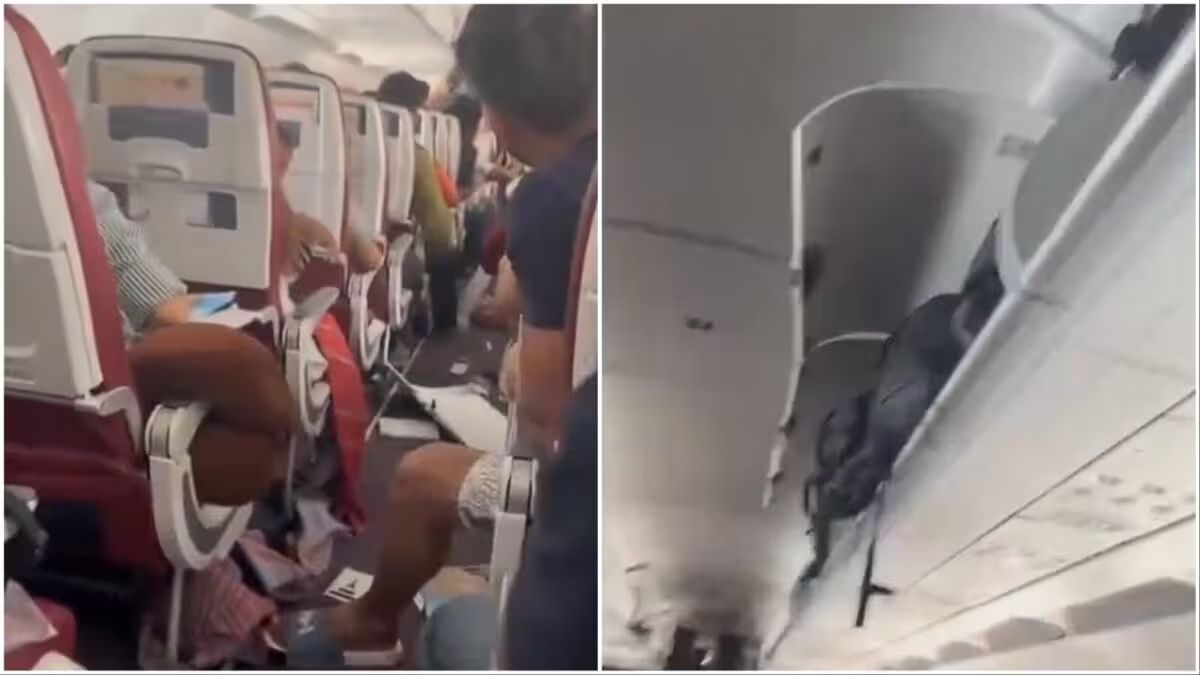
Airbus has announced plans to deploy a team of technical specialists to New Delhi this week to support the ongoing investigation into an Air India A320 that experienced a dramatic mid-air incident, underscoring the seriousness with which the aircraft manufacturer is treating the occurrence. The decision comes as authorities await confirmatory test results for the flight's chief pilot, marking a pivotal phase in the inquiry that has drawn international scrutiny to India's aviation sector and raised questions about the structural and operational factors that may have contributed to the unscheduled altitude loss.
On August 4, the Airbus A320 carrying 137 passengers and eight crew members was en route from Phuket, Thailand to New Delhi when it suddenly descended approximately 300 feet, a loss substantial enough to cause alarm among those aboard and result in injuries to 17 people. The aircraft subsequently stabilised itself and completed its journey safely, landing without further incident at the Indian capital's airport. The rapid stabilisation prevented what could have been a far more catastrophic outcome, but the unexplained nature of the plunge has prompted both aviation authorities and the manufacturer to initiate thorough investigative procedures to prevent similar incidents.
Air India's initial statement characterised the event as an unexpected loss of altitude and pledged full cooperation with all investigating bodies, while simultaneously notifying Airbus of the incident. The airline's measured public response reflects standard protocol in such situations, though the sparse disclosure of details has fuelled media speculation and raised public concern about aviation safety. India's civil aviation ministry subsequently classified the occurrence as a Serious Incident and assigned the investigation to the Aircraft Accident Investigation Bureau, the nation's primary body responsible for examining significant aviation accidents and incidents.
Airbus, in its capacity as the original equipment manufacturer, is providing technical assistance to the investigating authorities. An Airbus spokesperson confirmed on Monday that the company is assembling a team of specialists equipped with detailed knowledge of the A320's systems, flight control mechanisms, and operational protocols. The manufacturer's involvement in such investigations is standard practice and essential for determining whether the incident stemmed from technical failures, design issues, maintenance problems, or operational factors.
Indian news outlets have extensively reported that the aircraft experienced multiple technical irregularities in the period immediately preceding the altitude loss, though neither Air India, Indian aviation authorities, nor Airbus have officially confirmed the nature or sequence of these alleged malfunctions. This information gap has created uncertainty and underscores the importance of the official investigation process, which typically takes considerable time to thoroughly examine all contributing factors. The final determination will likely involve detailed analysis of the flight data recorder, cockpit voice recorder, and comprehensive interviews with crew members and engineers.
The medical consequences of the incident affected 12 passengers and four crew members, all of whom required hospital admission following the flight's landing in New Delhi. While the injuries were significant enough to warrant hospitalisation, none have been reported as life-threatening, though the psychological impact on those aboard undoubtedly remains considerable. The incident has reignited public discussions about aviation safety and the robustness of commercial aircraft design and maintenance standards across Indian carriers.
A critical element of the investigation involves drug screening tests administered to both pilots following the landing. While such screenings are routine protocol after serious aviation incidents, the preliminary result for the pilot-in-command indicating a need for confirmatory testing has attracted substantial media attention and speculation. Samples have been dispatched for detailed laboratory analysis, with the final results remaining pending public release. Both pilots have been removed from active flying status pending the investigation's conclusion, a precautionary measure adopted to ensure operational continuity and prevent potential conflicts of interest.
This incident represents the latest challenge confronting Air India, which has endured a tumultuous period characterised by operational disruptions and reputational damage. The airline has grappled with widespread effects from Middle Eastern geopolitical instability, which has disrupted flight schedules and operational planning across the broader region. More significantly, the airline's image suffered a devastating blow in June 2025 when Flight 171, a Boeing 787 Dreamliner bound for London, crashed immediately after departing from Ahmedabad, resulting in 241 fatalities among the 242 passengers and crew aboard, plus 19 people on the ground—a tragedy that remains among India's worst aviation disasters.
In response to mounting operational and safety concerns, Air India appointed Tewolde Gebremariam, the former chief executive of Ethiopian Airlines, to lead the carrier as its new chief executive officer last week. Gebremariam's appointment signals the airline's intent to implement comprehensive operational reforms and restore confidence among passengers and regulators. His extensive experience managing a respected African carrier is expected to bring fresh perspectives to operational safety, maintenance standards, and crisis management protocols.
For Malaysian and Southeast Asian aviation stakeholders, this incident carries significant implications. The Phuket-New Delhi route operates within the region's airspace, and the safety systems governing such operations affect numerous regional carriers and their passengers. The technical and operational lessons emerging from this investigation will likely inform regulatory discussions across ASEAN nations and potentially influence maintenance and training protocols adopted by regional airlines. Additionally, the incident highlights the critical importance of rigorous safety oversight, particularly given the region's expanding air traffic and the complexity of modern aircraft systems that require constant vigilance and investment in investigative expertise.
The investigation's outcome will be closely monitored not only by Air India and Indian aviation authorities but by regional aviation bodies and international organisations that establish and monitor safety standards. As Airbus experts arrive in New Delhi to begin their technical analysis, the coming weeks will prove crucial in determining the precise causes of this alarming mid-flight incident and in identifying corrective measures that might prevent recurrence across the global A320 fleet, which remains one of the world's most widely operated commercial aircraft.

