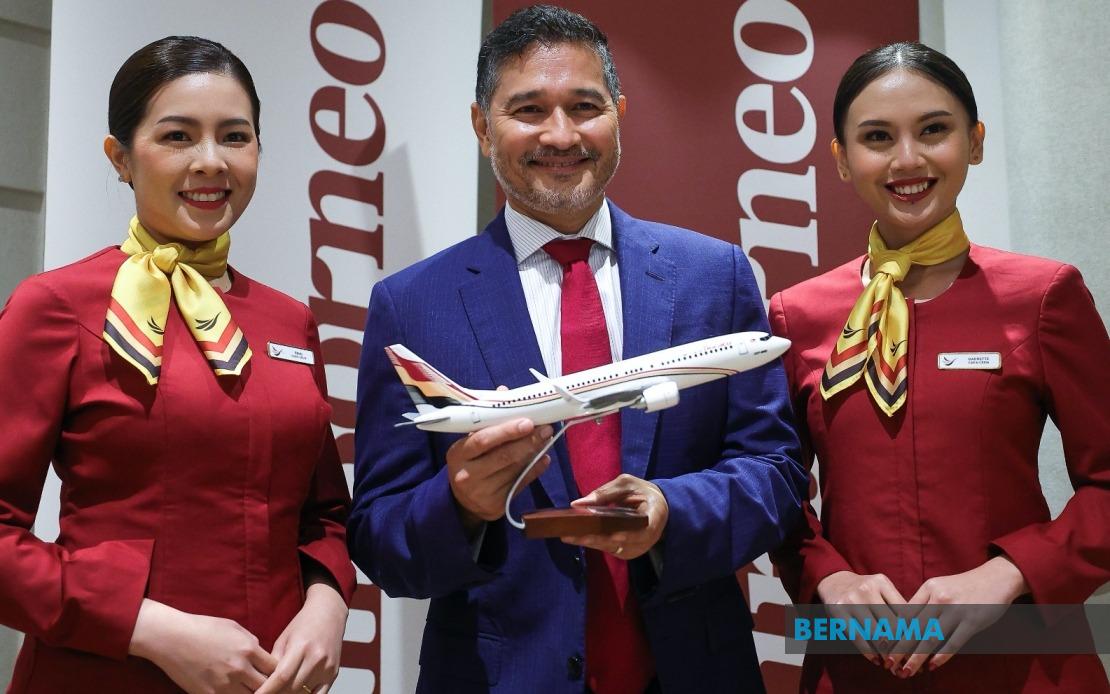
AirBorneo has committed to maintaining a fixed RM375 all-in one-way fare on its Kuala Lumpur-Kuching service throughout the year, marking a significant move to address longstanding concerns about volatile regional airfares. The Sarawak state-owned airline announced the pricing strategy during a media roundtable in Kuching on Monday, emphasizing its intent to provide travellers with predictable costs regardless of seasonal demand fluctuations.
The decision to lock in the fare came after what the airline's chief executive officer, Megat Ardian Wira Mohd Aminuddin, described as rigorous analytical work spanning six months of pricing data. The carrier examined fluctuations in fuel costs and conducted detailed comparisons with competing airlines serving the same route, establishing that RM375 represents a competitive position within the market range. By anchoring to this single price point across all seasons, AirBorneo seeks to eliminate the premium pricing that often characterises peak travel periods, a persistent grievance among Sarawakians and other regional passengers.
The launch of twice-daily services between Kuching International Airport and Kuala Lumpur International Airport Terminal 1 represents a watershed moment for air connectivity between Sarawak and Peninsular Malaysia. AirBorneo's entry into this route introduces fresh competition and challenges the pricing structures previously dominated by established carriers. The airline's inaugural "Sarawakku Sayang" promotional fares extend beyond the standard economy offering, with Business Class seats priced at RM736 all-in, both including airport taxes and fuel surcharges that competitors sometimes advertise separately to attract customers with artificially low headline figures.
Megat Ardian Wira highlighted a critical distinction in how AirBorneo presents its pricing compared to industry practice. While some carriers may advertise base fares substantially lower than RM375, these figures often exclude mandatory charges that only become visible during the booking process. By adopting an all-inclusive approach, AirBorneo eliminates the hidden cost surprise that frustrates many regional travellers. This transparency addresses a longstanding irritation in Malaysian aviation, where advertised fares frequently bear little resemblance to final ticket prices once taxes, fuel surcharges, and baggage fees are applied.
The stabilisation of KL-Kuching airfares holds particular significance for Sarawakians, who have historically shouldered disproportionately high travel costs when connecting to Peninsular Malaysia compared with domestic routes elsewhere. Business travellers, students, and families visiting relatives have all expressed frustration at the premium charged for this essential regional connection. By committing to a consistent year-round price, AirBorneo demonstrates that airlines can maintain profitability while offering equitable fares, potentially pressuring competitors to reconsider their dynamic pricing models that punish passengers booking during school holidays or business travel seasons.
The airline's ambitious regional expansion plans extend well beyond the KL-Kuching route. Management aims to launch scheduled services to two or three ASEAN destinations by early next year, positioning AirBorneo as a genuine regional carrier rather than a domestic operator. These international connections would enhance Sarawak's position as a hub within Southeast Asia, strengthening business ties and facilitating tourism flows. The expansion reflects confidence in the market's capacity to absorb increased capacity and aligns with Sarawak's broader economic diversification strategy.
AirBorneo's aspiration to become the official airline for the 2027 SEA Games underscores the strategic importance of this network development. Hosting the biennial event alongside Peninsular Malaysia represents a transformative opportunity for Sarawak, requiring robust air transport infrastructure to accommodate athletes, officials, media, and spectators. As the official carrier, AirBorneo would operate dedicated charter flights and scheduled services supporting the games, an arrangement that would raise the airline's profile across Southeast Asia and establish lasting international routes. The two-year preparation period provides sufficient runway to build the necessary capacity and operational expertise.
The stabilisation strategy also serves broader policy objectives around regional equity and inclusive development. Malaysia's eastern states have historically received less infrastructure investment than more economically dominant areas, a disparity that elevated transport costs exacerbate. By offering competitive, predictable fares, AirBorneo contributes to levelling the playing field for business development, education access, and social connectivity across the country. Sarawakians travelling to Kuala Lumpur for medical treatment, professional conferences, or family visits benefit from certainty in travel budgeting, an advantage that compounds across millions of annual journeys.
The pricing model also reflects evolving passenger expectations shaped by international travel experiences. Travellers increasingly demand transparency and consistency rather than complex yield management systems that reward early bookings while penalising last-minute planners. AirBorneo's approach aligns with this demand shift, potentially establishing a competitive advantage as consumers become more conscious of total travel costs. The airline's willingness to forgo short-term revenue maximisation through peak-season surcharges suggests confidence in filling seats through volume rather than margin, a strategy sustainable only with disciplined cost management and efficient operations.
Longer term, the success of this fixed-pricing experiment may influence industry practices across Southeast Asia. Malaysia's aviation market remains dominated by legacy carriers accustomed to dynamic pricing, but the emergence of a state-owned airline competing on transparency and consistency could force competitive responses. Regional carriers in other ASEAN nations might observe AirBorneo's approach and consider whether similar strategies could improve their market position and passenger loyalty. The experiment thus carries implications extending beyond Sarawak's borders into the broader Southeast Asian aviation landscape.

