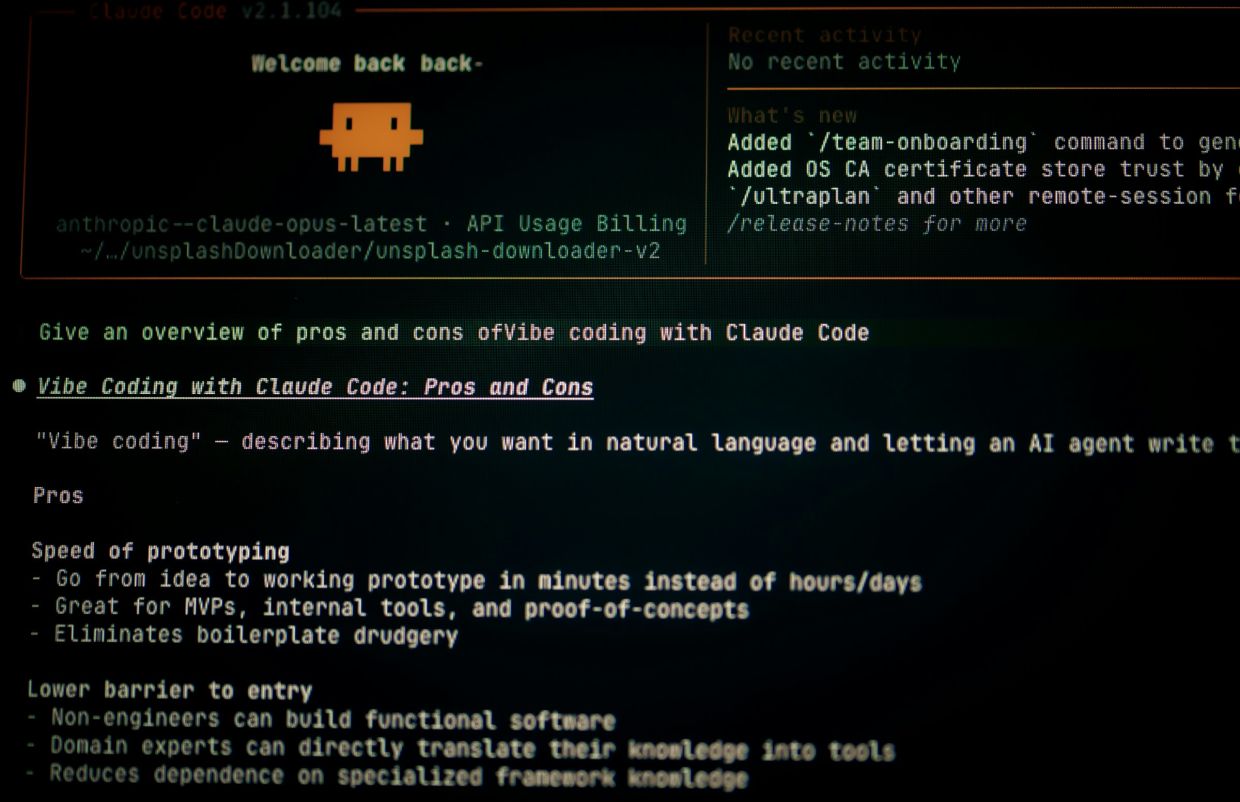
The technology startup landscape is undergoing a fundamental transformation as artificial intelligence coding assistants reshape hiring practices and workforce structures across the industry. Companies are discovering that experienced developers equipped with AI tools can accomplish work that previously required substantially larger teams, triggering a strategic shift toward leaner operations that prioritize architectural expertise over headcount expansion. This realignment signals a broader recalibration of how software gets built in an era when AI can instantly generate, test and fix code based on simple text instructions, fundamentally altering the programmer's role from line-by-line coder to strategic project orchestrator.
The adoption of AI coding platforms like Anthropic's Claude Code and OpenAI's Codex has accelerated dramatically within the startup ecosystem. Data collected by startup accelerators reveals the scale of this shift: a quarter of companies in Y Combinator's Winter 2025 batch developed software where AI generated 95 per cent of the codebase. This statistic encapsulates how profoundly these tools have penetrated early-stage company operations, enabling founders and small teams to achieve engineering outputs that would have been unimaginable just two years earlier. The economic calculus is compelling for entrepreneurs navigating tight fundraising environments and pressure to achieve profitability quickly.
Company leaders articulate a clear preference for what they term "smart laziness" — hiring seasoned developers who leverage AI to multiply their productivity rather than recruiting junior programmers to write code from first principles. This preference reflects a fundamental reassessment of what skills matter most in the AI-augmented development environment. Experience becomes paramount because architects must understand workflows, system design patterns and project architecture to effectively direct AI tools. Those without foundational knowledge of software development methodologies cannot adequately supervise or validate AI-generated code, making them substantially less valuable to organizations betting their operations on these new tools.
The financial incentives driving this consolidation are substantial. Premium AI subscriptions cost approximately US$200 monthly — a nominal expense compared to average developer salaries exceeding US$100,000 annually. For startups already operating under intense cost pressures, this calculation favors retaining skilled senior engineers with AI augmentation over expanding junior cohorts. The cost advantage becomes even more pronounced when considering that AI efficiency gains have made offshore hiring less attractive, as the productivity multiplier of artificial intelligence diminishes the competitive advantage of lower labor costs in other geographies. Several startup founders have publicly embraced this strategy, explicitly focusing on expanding capacity within their existing talented teams rather than pursuing traditional headcount growth.
Startups report staggering efficiency improvements from AI integration. Software companies implementing these tools claim to generate millions of dollars in annual savings through accelerated development cycles, reduced time-to-market and dramatically lower staffing requirements. One company executive projected that future hiring decisions would require candidates to demonstrate AI optimization strategies before receiving approval for new positions, suggesting that AI competency will become a prerequisite for organizational expansion. This institutional shift represents a departure from Silicon Valley's traditional growth-at-all-costs mentality, replaced by a leaner operational philosophy that prizes efficiency over rapid scaling.
However, this optimization trend carries troubling implications for the next generation of technology professionals. Comprehensive labor market analysis reveals disturbing employment patterns among junior developers. Stanford Digital Economy Lab researchers examining payroll data from millions of American workers found that employment among 22- to 25-year-olds in AI-exposed occupations including software development declined nearly 20 per cent from late 2022 peaks. Harvard researchers analyzing resume and job posting data across 62 million workers and 285,000 companies discovered that junior employment at firms adopting generative AI decreased roughly nine per cent relative to non-adopting competitors within six quarters, even as senior positions continued expanding. These findings demonstrate that AI adoption does not create a neutral employment environment — it actively displaces younger workers while rewarding experienced professionals.
Hiring momentum has slowed considerably as companies reassess their talent strategies. Cybersecurity executives report widespread hesitation across the industry, with many organizations conducting extensive recruitment interviews but demonstrating reluctance to extend offers. This caution reflects uncertainty about future needs in an AI-driven environment, creating a treacherous period for entry-level job seekers who typically depend on rotating through junior positions to build foundational skills and industry credentials. The delayed hiring decisions compound the challenge for recent graduates and career-switchers attempting to establish themselves in technology sectors.
Industry leaders remain divided on whether eliminating junior positions represents sound strategy. Amazon Web Services CEO Matt Garman has publicly criticized the notion of replacing junior developers with artificial intelligence, characterizing it as "one of the dumbest things I've ever heard" and warning that the industry risks severing the pipeline that historically produced the next generation of technology leaders. His critique highlights a fundamental paradox: while AI coding tools deliver immediate financial benefits to individual companies, the collective impact of widespread junior displacement threatens the industry's long-term viability and innovation capacity. Experienced professionals cannot indefinitely sustain technological advancement without junior cohorts developing expertise through hands-on experience.
Despite such warnings, concrete evidence suggests the trajectory will not reverse without intervention. Computer science enrollment has begun declining across major university systems. The University of California system experienced a six per cent enrollment drop, while two-thirds of computing programs nationwide reported declining enrollment figures according to the Computing Research Association. These diminishing pipeline numbers indicate that deterred prospective students are making calculations about career viability and employment prospects in a market where entry-level positions are disappearing. The feedback loop threatens to accelerate as fewer qualified candidates graduate into an already-tightened job market.
Startup founders remain committed to the efficiency model because the competitive logic remains immutable. In hypergrowth environments where capital depletion rates create existential pressure, the choice between expanding payroll or augmenting existing teams with AI tools presents a stark binary. The economic incentives pulling toward leaner operations remain powerful and show no signs of dissipating. Until venture capital markets or regulatory pressures change these dynamics, individual companies will rationally continue optimizing for AI-enhanced smaller teams rather than traditional expansion strategies.
For Malaysia and Southeast Asia, this global transformation carries significant implications. As multinational technology companies increasingly concentrate senior roles in primary hubs while distributing lower-wage work to regional centers, the AI-driven preference for experienced architects over junior developers may particularly disadvantage Southeast Asian talent pipelines that historically provided entry-level opportunities and training grounds. Regional tech ecosystems must prepare for a future where offshore junior development work faces existential pressure from AI capabilities, requiring strategic investments in advanced technical training and architectural expertise development. The window for younger Southeast Asian developers to establish themselves through traditional junior roles may be narrowing faster than many realize.

