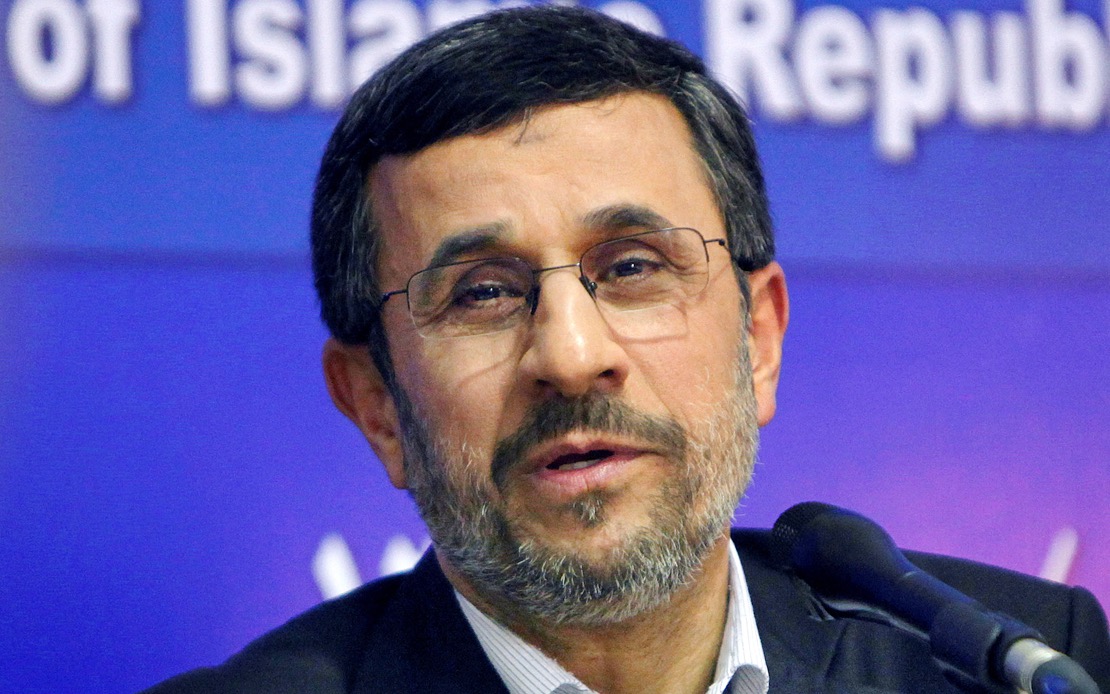
Former Iranian President Mahmoud Ahmadinejad has issued a forceful denial of allegations published by The New York Times, dismissing claims that Israel's Mossad intelligence agency sought to recruit him as a potential leader for Iran and that he currently remains under house arrest. In a statement released Tuesday, his office characterised the newspaper's reporting as entirely without foundation, part of what it described as a systematic campaign by the publication to spread misinformation and sow discord within Iranian society.
The New York Times report, published Monday, presented a detailed account of an alleged Israeli intelligence operation spanning recent years. According to the newspaper's sources, primarily American officials with knowledge of the situation, Mossad operatives made repeated attempts to cultivate a relationship with Ahmadinejad by providing financial support for his housing and travel expenses. The effort allegedly included multiple face-to-face meetings between Israeli operatives and the former president at locations outside Iran, including Budapest.
The newspaper's investigation suggested that this recruitment attempt formed part of a broader Israeli strategy aimed at engineering a change of government in Tehran. The operation reportedly intensified dramatically in late February during the opening phase of heightened US-Israeli military operations against Iran. According to the Times account, Israeli intelligence devised an ambitious plan to extract Ahmadinejad from the capital and subsequently position him as a replacement leader for the Islamic Republic.
Central to this alleged extraction operation was an Israeli airstrike on February 28 targeting what the newspaper identified as Ahmadinejad's compound. The strike allegedly damaged a building occupied by his security detail and destroyed his armoured vehicle. The Times reported that within hours of this assault, a black Peugeot sedan arrived at the scene, collected the former president, and transported him to an undisclosed safe house somewhere within Iranian territory. The newspaper attributed this account to four senior Iranian officials who claimed direct knowledge of events.
The account further alleged that Mossad operatives controlled the vehicle used in Ahmadinejad's transport, suggesting a level of operational sophistication and access within Iran that would represent an extraordinary intelligence achievement. Such a capability would indicate Israeli intelligence maintained significant infrastructure and local cooperation networks deep within Iranian society—a claim that carries substantial implications for assessments of Middle Eastern espionage activities.
Ahmadinejad's office categorically rejected each element of this narrative. The statement emphasised that all allegations were entirely false and accused The New York Times of deliberately manufacturing false reports to shape international public perception and deliberately exacerbate internal Iranian divisions. This counterattack represents a standard diplomatic response to intelligence allegations, though it notably did not provide detailed factual rebuttals to specific claims.
The denial regarding house arrest held particular significance given Ahmadinejad's recent public activities. The former president, who served as Iran's chief executive from 2005 through 2013, made a high-profile appearance last week at the funeral of Supreme Leader Ali Khamenei. This marked his first documented public appearance since the escalation of US-Israeli military operations against Iran, and such visibility would be extraordinarily difficult to maintain for someone genuinely confined to house arrest.
The timing and context of this controversy carry substantial weight for regional observers. The emergence of detailed intelligence allegations during an active conflict between Israel and Iran, combined with claims about potential regime change operations, feeds into longstanding Middle Eastern narratives about foreign intervention and political manipulation. For Southeast Asian nations, including Malaysia, which maintain complex diplomatic relationships across the Middle Eastern spectrum, such reports underscore the volatility of the region and the risks of entanglement in broader conflicts.
The allegations also illuminate the murky intersection of intelligence operations, media reporting, and political messaging during wartime. The New York Times's sourcing from American officials raises questions about whether such disclosures represent deliberate strategic communications designed to influence perceptions of Israeli capabilities or Iranian vulnerabilities. Conversely, the mere existence of such allegations—even if fabricated—potentially destabilises Iranian politics and creates internal suspicion.
Ahmadinejad himself remains a contentious figure in Iran's internal political landscape. His presidency was marked by confrontational rhetoric toward the West and expansion of Iran's nuclear programme, decisions that shaped the country's international relations for years afterward. His recent political activities, including unsuccessful attempts to register as a presidential candidate, demonstrate his continued ambition to influence Iranian affairs despite his formal departure from high office.
The broader strategic context involves escalating Israeli operations against Iran following the initial strikes on senior Iranian military commanders. Israel has conducted multiple waves of strikes on Iranian military installations, and the allegation of an attempted extraction operation targeting a former president represents an extraordinarily ambitious claim about Israeli operational reach. Whether such an operation occurred, was attempted but failed, or was entirely invented remains unclear from publicly available information.
For Malaysian and Southeast Asian policymakers monitoring regional developments, this controversy illustrates how intelligence allegations and political denials can create information environments where determining basic facts becomes extraordinarily challenging. The absence of independent verification means regional observers must exercise considerable caution in assessing claims about Middle Eastern security operations. The incident also underscores how former political figures, even those no longer holding official power, can become targets in intelligence operations and become subjects of international dispute.

