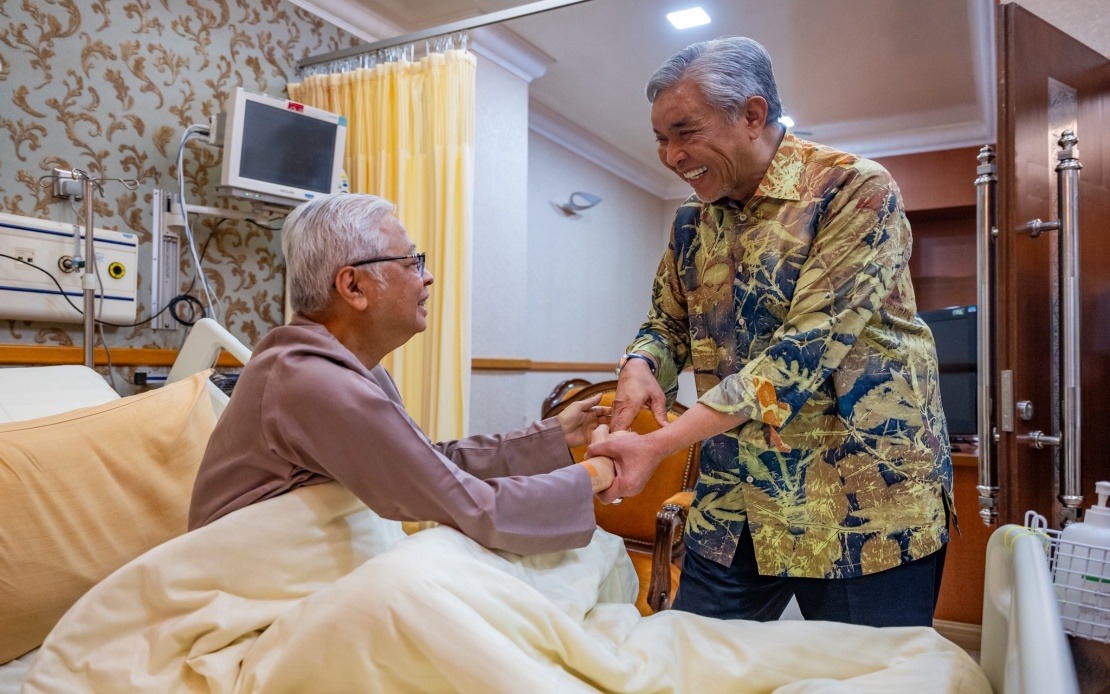
Deputy Prime Minister Datuk Seri Dr Ahmad Zahid Hamidi made a visit to the bedside of former Prime Minister Datuk Seri Ismail Sabri Yaakob at the National Heart Institute (IJN) in Kuala Lumpur, demonstrating continued political solidarity during a period of health challenges for the senior statesman. The visit underscores the significance placed by the current administration on the wellbeing of previous leaders, particularly those who remain active in Parliament.
Through a statement posted on the social media platform X, Ahmad Zahid conveyed his hopes for Ismail Sabri's complete recovery and restoration to full health. He articulated a prayer for the Bera Member of Parliament to regain his strength and be able to resume his regular parliamentary and personal commitments without impediment. The gesture reflects the ceremonial and substantive concern that high-ranking government figures typically extend to their predecessors during medical crises, maintaining institutional continuity across administrations.
Ismail Sabri's hospitalization emerged following a medical incident on August 6, when he experienced health complications while at the Malaysian Anti-Corruption Commission (MACC) headquarters for a scheduled statement recording session. The sudden nature of the episode necessitated his immediate transfer to IJN, Malaysia's premier cardiac facility, where medical specialists initiated an assessment of his cardiovascular condition. The location of the incident at MACC added an additional dimension to the situation, as Ismail Sabri has been a subject of ongoing investigations related to past governance matters.
At IJN, medical professionals determined that Ismail Sabri required intervention to address an abnormal heart rhythm condition. The therapeutic response involved the implantation of a wireless pacemaker, a modern cardiac device designed to regulate heartbeat and prevent potentially serious arrhythmias. This procedure represents a significant medical intervention that typically requires hospitalization and a recovery period, reflecting the seriousness of his underlying cardiac diagnosis. The advancement of wireless pacemaker technology has made such treatments less invasive than traditional approaches, reducing complications and recovery time.
The timing of Ismail Sabri's health emergency coincided with his ongoing engagement with Malaysian investigative authorities. His attendance at MACC on the day of his collapse demonstrated his continued cooperation with formal inquiries, even as his health status raises questions about the appropriate conduct of such proceedings. The incident highlights the intersection of medical vulnerability and ongoing institutional accountability processes in Malaysia's political landscape.
Ismail Sabri's tenure as Prime Minister, which concluded in 2022 after approximately 20 months in office, marked a distinctive period in Malaysian governance. His administration navigated pandemic-related policy challenges and attempted to consolidate a fragile ruling coalition. Since departing the Prime Minister's office, he has remained active in parliamentary proceedings as the representative for Bera, maintaining a public profile while simultaneously facing scrutiny from anti-corruption bodies. His hospitalization therefore affects not merely a private individual but a continuing participant in Malaysia's political system.
The Deputy Prime Minister's public expression of concern reflects broader norms within Malaysia's political establishment regarding how leaders acknowledge the personal difficulties facing colleagues and predecessors. Such gestures, while performative in nature, serve important symbolic functions in maintaining collegial relationships across factional and partisan divides. They also represent acknowledgment that serious health crises transcend ordinary political competition and command respect from all quarters of the government.
For Malaysian citizens and regional observers, the situation illustrates the vulnerabilities that even senior political figures face when confronting acute medical emergencies. The incident at MACC, while unexpected, occurred in an environment where Ismail Sabri was engaged in his civic obligations. His swift treatment at a world-class medical institution demonstrates the accessibility of advanced cardiac care within Malaysia's healthcare system, though it also raises questions about the balance between investigative processes and individual health welfare.
The recovery process for someone who has undergone wireless pacemaker implantation typically extends over several weeks, with medical supervision gradually transitioning to outpatient monitoring. Whether Ismail Sabri will be able to resume his parliamentary duties and other obligations in a near-term timeframe remains dependent on his overall recuperation trajectory. His absence from parliamentary sessions would represent a notable gap in legislative proceedings, as Bera's representation would effectively diminish during any extended recovery period.
The broader implications of this incident extend to considerations about medical preparedness and crisis response within Malaysia's government institutions. That an acute cardiac event occurred during an official proceeding underscores the importance of having medical support protocols in place at all major government facilities. The swift response that enabled Ismail Sabri's transfer to appropriate specialist care likely contributed positively to his outcomes, demonstrating the value of established emergency procedures.
As Ismail Sabri enters the recovery phase following his pacemaker implantation, the Malaysian political establishment appears positioned to extend customary support to his recuperation efforts. The visit by Ahmad Zahid signals that despite any investigative scrutiny or political differences, senior government figures maintain recognition of their shared institutional responsibilities and the human dimension underlying political processes. The coming weeks will reveal both Ismail Sabri's medical progress and any adjustments to his public and political activities necessitated by his changed health status.

