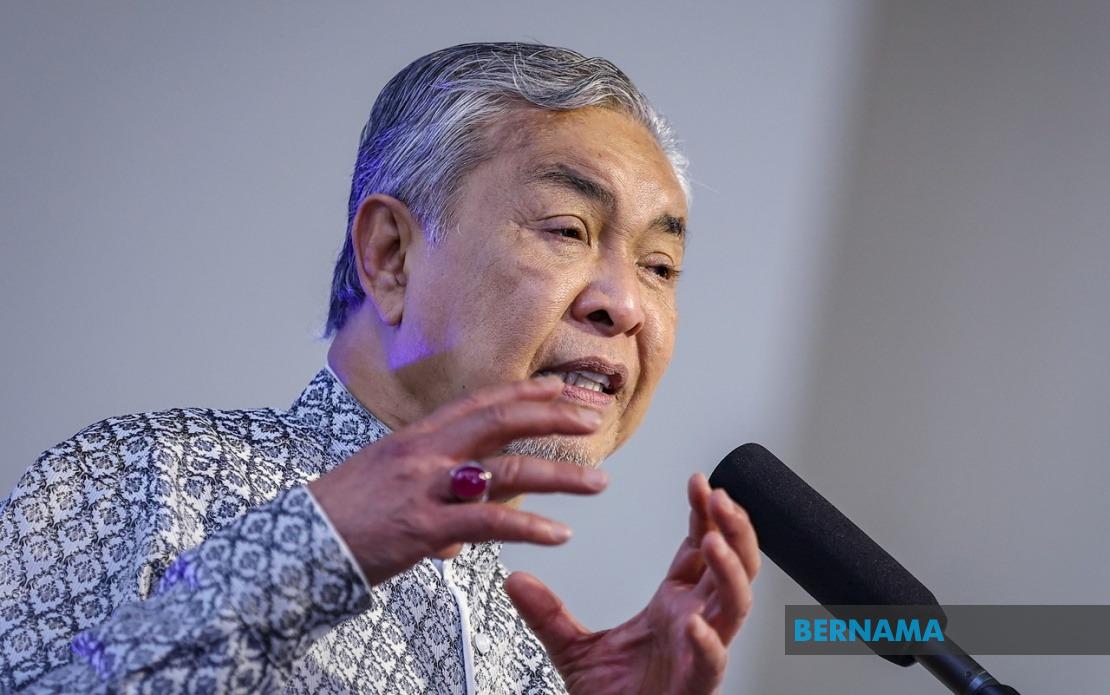
Barisan Nasional chairman Datuk Seri Dr Ahmad Zahid Hamidi has called for a more mature and measured approach to campaigning during the Johor state election, urging all competing parties to set aside old grievances unrelated to state-level governance. Speaking after attending a community programme in the Kempas constituency on July 3, the Deputy Prime Minister stressed that the election period should centre on the strengths of individual candidates and the concrete policy offerings they bring to voters, rather than reopening settled disputes from the past.
The appeal carries particular weight given that some of the parties vying for power in Johor maintain cooperative relationships at the federal government level. Ahmad Zahid highlighted this paradox, noting that it would be inappropriate for coalition partners to deploy divisive historical arguments in the state arena when they sit together regularly in Cabinet meetings. His comments appear directed at opposition parties that may seek to attack UMNO and BN through references to past controversies, a tactic the BN leadership views as undermining both the professionalism of the campaign and the working relationships established at the national level.
Ahmad Zahid emphasised that the awkwardness of such an approach would be felt acutely when federal-level colleagues encounter one another in official settings. By framing the matter this way, he positioned BN's appeal as a call for political decorum rather than a request to suppress legitimate debate. The message reflects a broader strategy within BN to shift the campaign narrative away from historical accountability issues toward forward-looking policy comparisons.
Despite control of Johor state government, Ahmad Zahid rejected suggestions that BN enters the contest in a position of strength. Instead, he characterised the coalition as the underdog, pointing to significant shifts in the state's political composition since the previous election. This rhetorical stance may serve multiple purposes: it energises BN's campaign machinery by avoiding complacency, and it provides context for why the party must redouble its efforts despite holding the incumbent advantage.
The demographic realities of Johor present both challenges and opportunities for BN's campaign strategy. With more than half of the state's voters now young people, electoral dynamics have shifted meaningfully from previous cycles. Ahmad Zahid acknowledged this explicitly, noting that BN's previous performance of capturing 40 seats out of 56 cannot be taken as a baseline for success this time around. The youth demographic shift demands a recalibrated approach that directly addresses the concerns and aspirations of voters who may have limited memory of or investment in historical political disputes.
Barisan Nasional's election manifesto, as presented by Menteri Besar Datuk Onn Hafiz Ghazi, places youth employment and skills development at its centre. The emphasis on Technical and Vocational Education and Training reflects recognition that young voters prioritise access to meaningful career pathways and wage growth over retrospective political arguments. This positioning allows BN to frame its campaign around tangible benefits rather than party history.
The national unemployment rate now stands at 2.9 per cent, a figure Ahmad Zahid cited as evidence of positive economic management. However, he acknowledged that raw employment statistics mask a more complex reality facing young people. The availability of jobs alone does not guarantee economic security; what matters to young voters is access to premium-wage employment that demands skills training and technical expertise. BN's manifesto specifically prioritises creating pathways to these higher-value positions through education and vocational programmes.
The technical and skills training element forms a cornerstone of BN's pitch to young Johor voters. By concentrating on this offering, the party attempts to move beyond rhetorical appeals and ground its campaign in demonstrable programmes addressing youth unemployment and underemployment. Ahmad Zahid's framing of this initiative as a substantive contribution to young people's futures stands in sharp contrast to campaigns built around historical grievances or personality-driven attacks.
Barisan Nasional is contesting all 56 seats in the 16th Johor state election, a comprehensive commitment that signals the party's intention to compete aggressively across the state. Scheduled polling on July 11 follows early voting on July 7, providing a defined timeframe within which campaigns must be conducted. The election represents a significant electoral test for BN, both as a measure of support in a traditionally important state and as an indicator of broader coalition health ahead of future federal-level contests.
Ahmad Zahid's call for campaign restraint and focus on substantive policy matters reflects BN's calculation that it benefits from limiting the scope of legitimate campaign discourse. By positioning historical arguments as divisive rather than debatable, and by appealing to political maturity, the coalition leadership seeks to channel voter attention toward policy comparisons where it believes its track record and resource advantages provide advantage. For opposition parties and independent analysts, the directive raises questions about whether such appeals represent genuine commitments to elevate political discourse or tactical efforts to insulate the incumbent from accountability scrutiny. The coming weeks of campaigning will reveal whether other political actors accept Ahmad Zahid's framing or persist in making historical grievances part of the electoral conversation.

