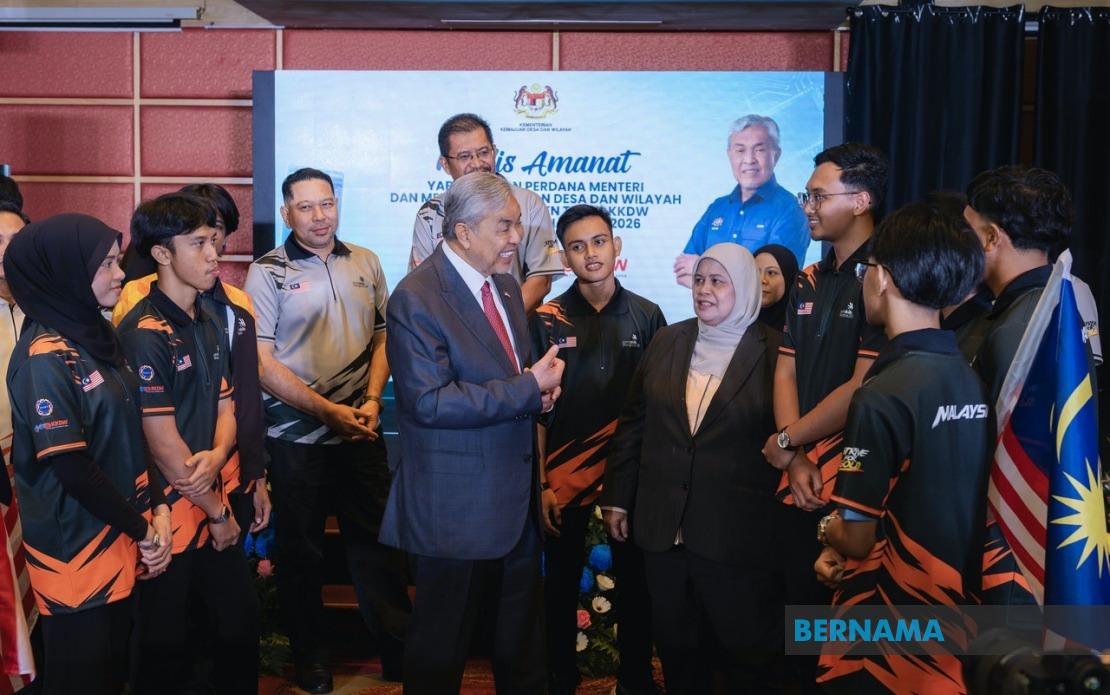
Deputy Prime Minister Datuk Seri Dr Ahmad Zahid Hamidi has announced an ambitious incentive scheme aimed at motivating Malaysian vocational and technical students competing in the upcoming WorldSkills Competition (WSC) 2026 in Shanghai, China, scheduled for September 22 to 27. The high-profile commitment involves personally funding umrah pilgrimages for any participants from Technical and Vocational Education and Training (TVET) institutions who secure gold medals at the international skills competition.
In his capacity as Rural and Regional Development Minister, Ahmad Zahid made the pledge while addressing Malaysia's contingent of nine competitors who will represent the country across nine skill categories. The initiative represents an unconventional approach to talent incentivisation in the vocational education sector, moving beyond conventional monetary rewards to offer religious pilgrimage sponsorships. The Deputy Prime Minister emphasised that these awards would be funded entirely from his personal resources, positioning the gesture as a token of genuine appreciation for exceptional achievement.
The scope of Ahmad Zahid's commitment extends beyond the competitors themselves, encompassing their immediate family members. He explicitly stated that should any TVET participant win gold, he would sponsor not only the medalist's umrah pilgrimage but also that of their parents, effectively creating a family-wide recognition programme. In a striking declaration of confidence in Malaysian vocational talent, Ahmad Zahid proclaimed his willingness to sponsor umrah trips for all nine participants and eighteen accompanying parents should the entire Malaysian contingent capture gold medals across all categories—a scenario that would represent an unprecedented sweep at the international competition.
The Malaysian delegation competing in WorldSkills Shanghai 2026 demonstrates the breadth of technical expertise being cultivated through the country's TVET system. Nadratulliyana Ab Malek will compete in Fashion Technology, while Haziq Syahmi Nazri represents the nation in Automobile Painting. Amirul Sharif Sharifudin will showcase Malaysian electronics expertise, with Mohammad Ezaly Iman Ramli bringing skills in Cyber Security and Wan Hamiz Ozai Wan Hamidzi specialising in Rail Vehicle Technology.
The remaining competitors include Khairul Idham Bahari in Cabinetmaking, Muhamad Nashrul Zulkifli in Digital Construction, Muhammad Haziq Lailla Zamri in Electrical Installations, and Muhammad Huzairy Mohamad Thes in Mechanical Engineering CAD. This diverse skill set reflects Malaysia's efforts to develop technical competencies across multiple sectors critical to economic development and industrial advancement.
The announcement carries significant implications for how Malaysia positions its vocational education sector on the international stage. WorldSkills competitions serve as global benchmarks for technical skills development, offering countries an opportunity to demonstrate the quality of training their institutions provide. Malaysia's participation in these events has historically generated modest medal tallies, making the Deputy Prime Minister's ambitious pledge a statement of both confidence and commitment to elevating the status of TVET achievement within Malaysian society.
The umrah sponsorship model as a recognition tool represents a culturally resonant approach in Malaysia's Muslim-majority context. By linking worldly achievement in technical skills with a religious pilgrimage opportunity, the initiative taps into deeply held values while simultaneously elevating the prestige associated with vocational excellence. This approach differs markedly from conventional scholarship or monetary incentive structures, potentially enhancing the emotional and cultural significance of winning at the international level.
The presence of Deputy Rural and Regional Development Minister Datuk Rubiah Wang at the event underscores governmental support for the TVET@KKDW contingent's preparation. The Ministry of Rural and Regional Development has positioned itself as a champion of skills development beyond traditional academic pathways, recognising that vocational training serves as a critical pipeline for equipping Malaysia's workforce with practical competencies demanded by employers across manufacturing, construction, and emerging technology sectors.
WorldSkills 2026 in Shanghai will feature fierce competition from other Asian nations investing heavily in vocational education systems. China, South Korea, Japan, and Vietnam have demonstrated consistently strong performance at WorldSkills competitions, reflecting substantial government investment in technical training infrastructure. Malaysia's competitive positioning depends not only on the individual talent of its participants but also on the quality of coaching, equipment access, and preparation time available to competing teams. Ahmad Zahid's personal pledge, while symbolically significant, represents governmental recognition of the importance these competitions hold for national economic competitiveness.
The timing of this announcement ahead of the competition provides the Malaysian contingent with clear recognition that their efforts enjoy high-level political support. For many young vocational students, participation in international skills competitions represents a career-defining opportunity, offering exposure to global standards, networking with peers from other nations, and validation of technical competencies in a neutral, objective setting. The umrah sponsorship pledge adds an additional layer of motivation, particularly for competitors from rural or economically disadvantaged backgrounds for whom such pilgrimage opportunities might otherwise remain inaccessible.
From a policy perspective, Ahmad Zahid's initiative reflects broader Malaysian government efforts to elevate the status of TVET within the national education ecosystem. Historically, technical and vocational pathways have attracted lower social prestige compared to academic tertiary education, creating supply-side challenges for sectors requiring skilled tradespeople and technicians. By publicly championing vocational excellence and providing meaningful rewards for outstanding achievement, policymakers attempt to reframe perceptions of skills-based careers as genuinely prestigious and worthy of ambitious young Malaysians' commitment.
The practical execution of this pledge, should Malaysian participants achieve gold medal success, would require careful coordination with both the Ministry of Rural and Regional Development and relevant religious authorities to arrange the umrah sponsorships efficiently. Nevertheless, the announcement signals strong political will to support Malaysia's vocational talent pipeline and to recognize achievements in skills competitions with tangible, meaningful rewards that resonate culturally with the predominantly Muslim participant and supporter base.

