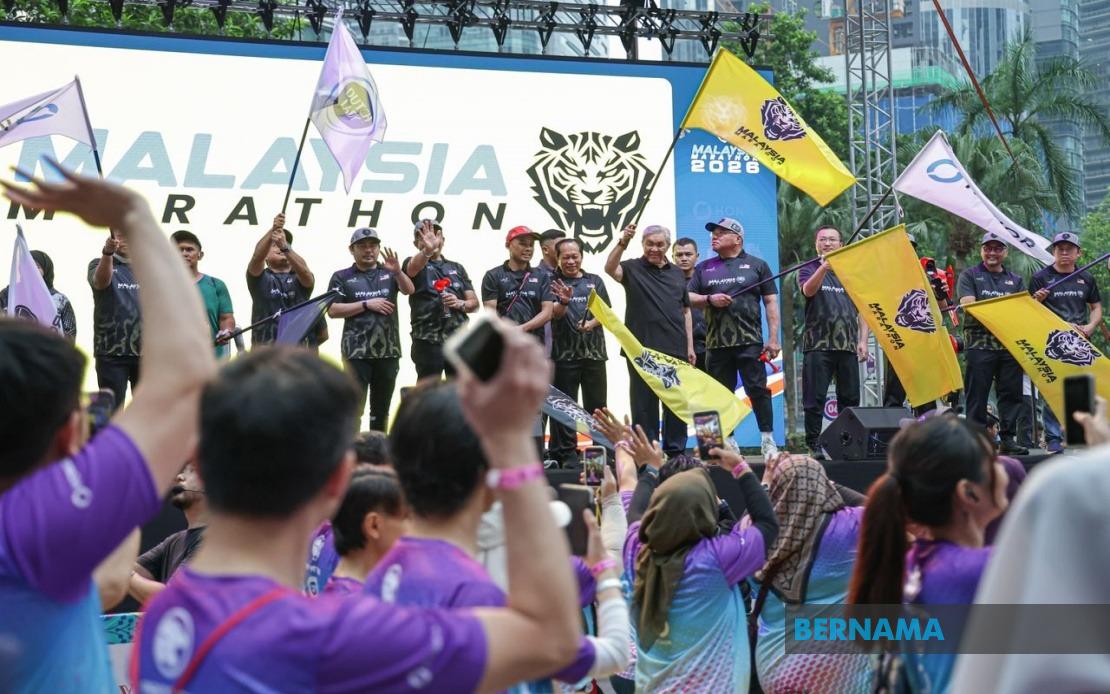
Deputy Prime Minister Datuk Seri Dr Ahmad Zahid Hamidi formally launched the Malaysia Marathon 2026 on August 30 by sending off 10,000 participants in a 5-kilometre Fun Run, signalling the government's commitment to promoting mass participation sports and active lifestyles among Malaysians. The inaugural running of this World Athletics-recognised event unfolded across the Kuala Lumpur City Centre (KLCC) grounds and served as a highlight of the nation's lead-up to the 2026 National Day celebrations, demonstrating how major sporting fixtures are being woven into the fabric of Malaysia's national calendar.
The morning's festivities at KLCC began with patriotic ceremonies featuring the national anthem 'Negaraku' and a musical performance by the Malaysian Armed Forces band, underscoring the event's significance beyond athletics. Tourism, Arts and Culture Minister Datuk Seri Tiong King Sing and Deputy Works Minister Datuk Seri Ahmad Maslan joined Ahmad Zahid in overseeing the proceedings, reflecting the multi-ministry coordination required to execute an event of this scale. The ceremonial elements reinforced that Malaysia Marathon 2026 transcends a typical running competition, functioning instead as a platform for national cohesion and celebration.
The Fun Run participants formed just one component of a considerably larger sporting spectacle that drew approximately 25,000 competitors across multiple distances. Earlier in the morning, the 42-kilometre Full Marathon commenced from Pavilion Kuala Lumpur with 2,000 entrants, followed by staggered starts for the 21-kilometre category accommodating 8,000 runners and the 10-kilometre race featuring 5,000 competitors. This tiered structure allowed athletes of varying abilities and ambitions to participate in a unified event framework, democratising access to organised marathon running and appealing to both serious competitors and recreational fitness enthusiasts.
Among the day's most visually striking moments was a one-kilometre Malaysian flag parade involving 1,000 students from Kolej Poly-tech MARA (KPTM) Bangi. The parade transformed the event into a youth-centered celebration, embedding the marathon within educational institutions and signalling government investment in engaging younger generations in sports and national pride. Such symbolic gestures carry particular weight in Malaysia's sporting ecosystem, where events increasingly serve dual purposes as vehicles for athletic achievement and nation-building.
A notable logistical shift marked this edition: organisers designated KLCC grounds as the unified finish line for all race categories, departing from tradition by relocating from Dataran Merdeka. This change reflects evolving urban planning considerations and the capacity advantages offered by KLCC's modern infrastructure, though it also signifies Malaysia's gradual repositioning of iconic sporting venues as cities modernise. The decision affects not only athletes but spectators, support networks, and the broader ceremonial experience of completing a marathon.
World Athletics recognition of Malaysia Marathon 2026 carries substantial credibility in the international running community, positioning Kuala Lumpur alongside established marathon destinations globally. For Malaysian distance runners aspiring to international competition, a recognised event provides legitimacy to performance standards and creates pathway opportunities. The endorsement also attracts overseas participants, as evidenced by the mixed local and international participant base, transforming the event into a cultural and economic asset for the nation's tourism sector.
The timing of this marathon's debut—anchored to National Day preparations—reflects broader governmental strategy of leveraging sporting events for patriotic messaging and civic engagement. As Malaysia approaches its 2026 national milestone, major events serve as countdown markers and collective experiences that reinforce national identity. The marathon's architecture, welcoming runners across multiple distances, makes participation accessible to diverse demographic segments, potentially broadening the constituency invested in the nation's celebratory calendar.
From a Southeast Asian perspective, Malaysia Marathon 2026 positions the country within the regional running circuit and competes for the attention and participation of runners throughout the region. Thailand, Singapore, and Indonesia host established marathons, and Malaysia's entry with World Athletics recognition signals serious competitive intent. The event's proximity to National Day 2026 creates a distinctive positioning, differentiating it from other regional races and potentially attracting runners seeking meaningful participation in Malaysia's national celebrations.
The successful orchestration of 25,000 participants across four categories demonstrates logistical capabilities that extend beyond sport into transport coordination, medical support, crowd management, and volunteer mobilisation. These infrastructural elements, often invisible to participants, represent investments in urban sporting capacity that benefit future events and reflect Malaysia's maturing event management ecosystem. The involvement of military bands, educational institutions, and multiple government ministries indicates that Malaysia Marathon 2026 functions as a whole-of-government initiative rather than a purely commercial or athletic undertaking.
Looking ahead, the inaugural success positions Malaysia Marathon 2026 as potentially annual fixture in the nation's sporting calendar, pending organisational sustainability and continued official support. Ahmad Zahid's personal participation in the flag-off ceremony signals high-level political endorsement, a factor that often determines long-term viability and resource allocation for sporting initiatives in Malaysia. The event's integration with National Day celebrations creates natural recurrence opportunities and audience expectations that could solidify its status as a signature Malaysian sporting event.

