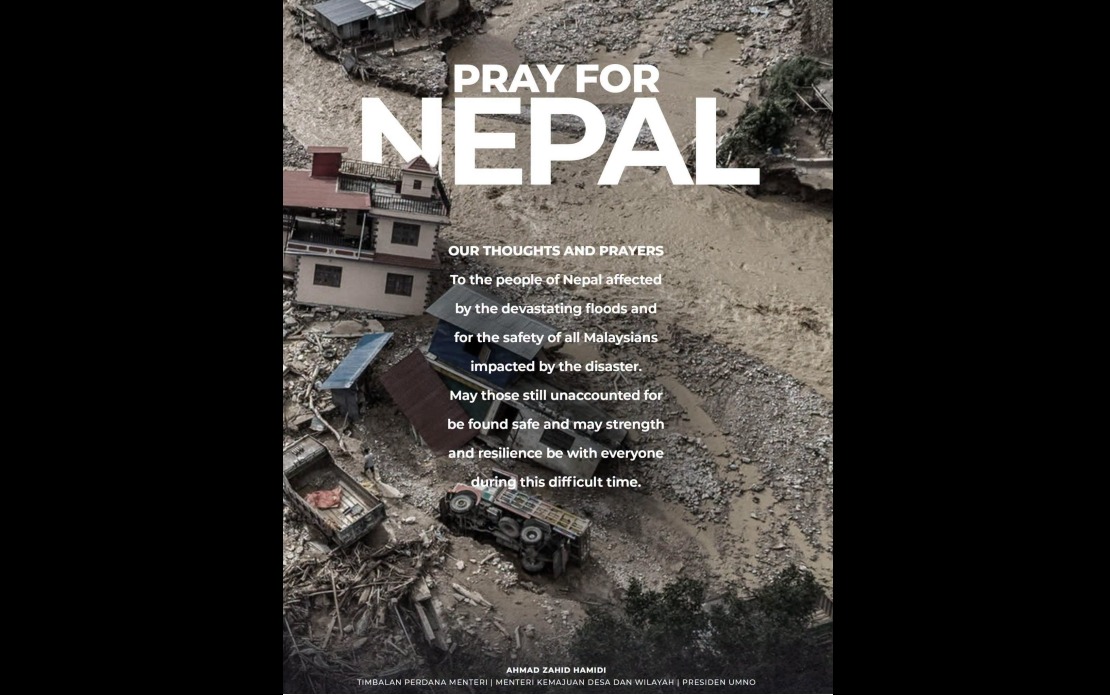
Deputy Prime Minister Datuk Seri Dr Ahmad Zahid Hamidi has expressed profound concern for the safety and wellbeing of Malaysians affected by the devastating flood disaster that has swept across Nepal, with hopes that those whose whereabouts remain unknown will be located and returned safely to their families. The senior government official conveyed his sympathies to the bereaved families who lost family members in the calamity and demonstrated Malaysia's solidarity with the Nepali nation during this period of acute crisis.
In a statement posted on social media on August 27, Ahmad Zahid articulated the emotional toll of the catastrophe, describing himself as deeply saddened by the catastrophic flash floods that have claimed numerous lives, displaced families from their homes, and wrought extensive damage across the disaster-stricken regions. He emphasised that his thoughts and prayers remain focused on the people of Nepal, with particular attention to those who have suffered the loss of family members and those families who are in a state of anxious uncertainty regarding the fate of missing relatives.
The floods represent one of the most severe natural disasters to affect the Himalayan nation in recent years, with the cascading effects of the disaster extending beyond national borders to impact foreign nationals, including Malaysian citizens who were present in the country for tourism, business, or other purposes. The displacement of families and the resulting humanitarian crisis have underscored the vulnerability of communities in monsoon-prone regions of South Asia, where weather patterns can shift dramatically and trigger life-threatening conditions within a short timeframe.
Ahmad Zahid appealed for divine intervention to facilitate the search and rescue operations being conducted across affected areas, requesting that all individuals facing imminent danger be extracted to safety with speed and efficiency. The deputy prime minister's invocation of spiritual support reflects the gravity of the situation and the earnest hope that rescue teams would achieve success in their ongoing efforts to locate survivors and pull them from dangerous circumstances.
In his statement, Ahmad Zahid extended compassion to all families impacted by the tragedy, offering words of encouragement and requesting that affected households be granted inner strength and the fortitude required to navigate the challenging period ahead. Such expressions of solidarity from Malaysia's political leadership serve to reinforce diplomatic ties with Nepal and demonstrate Malaysia's commitment to supporting member nations of the international community during times of severe hardship.
According to data compiled by Nepal's tourism administration, the official death toll from the unprecedented flooding had reached 359 individuals by the evening of August 27, with the figure having climbed substantially since the initial onset of the disaster. This grim toll reflects the scale and intensity of the natural catastrophe, which unfolded with little warning and devastated multiple districts across the country with torrential rainfall and powerful water surges.
The impact on Malaysian citizens abroad represents a concern for the Ministry of Foreign Affairs and diplomatic missions, which typically coordinate consular support and assistance for nationals stranded or affected by natural disasters in foreign territories. The flooding in Nepal serves as a reminder of the unpredictable nature of monsoon seasons in the broader Asian region and the challenges faced by travellers and expatriates navigating these seasonal hazards.
For Malaysian policymakers and observers of South Asian affairs, the Nepal floods underscore the importance of regional cooperation in disaster management, early warning systems, and cross-border humanitarian response mechanisms. The Southeast Asian region itself faces comparable vulnerability during monsoon periods, making the lessons learned from Nepal's experience directly applicable to Malaysia's own disaster preparedness frameworks.
Beyond the immediate humanitarian response, the disaster raises questions about climate resilience and infrastructure development in mountainous regions of South Asia, where rapid urbanisation and deforestation have potentially exacerbated flooding risks. Malaysian experts in environmental management and disaster mitigation may find valuable insights in analysing how Nepal's topography and land-use patterns contributed to the severity of the flooding.
The statement from Ahmad Zahid reflects a broader pattern of diplomatic empathy demonstrated by Malaysia's leadership whenever significant calamities strike neighbouring or regional nations. Such gestures, though primarily symbolic, serve to strengthen bilateral relationships and position Malaysia as a responsible stakeholder in the international community's collective response to humanitarian crises.
The ongoing search and rescue efforts across Nepal will likely continue for days, with international aid organisations and neighbouring countries potentially offering additional resources and expertise. Malaysian humanitarian organisations may consider mobilising support through established channels, building on the diplomatic foundation laid by Ahmad Zahid's public expression of concern and solidarity with the affected population.

