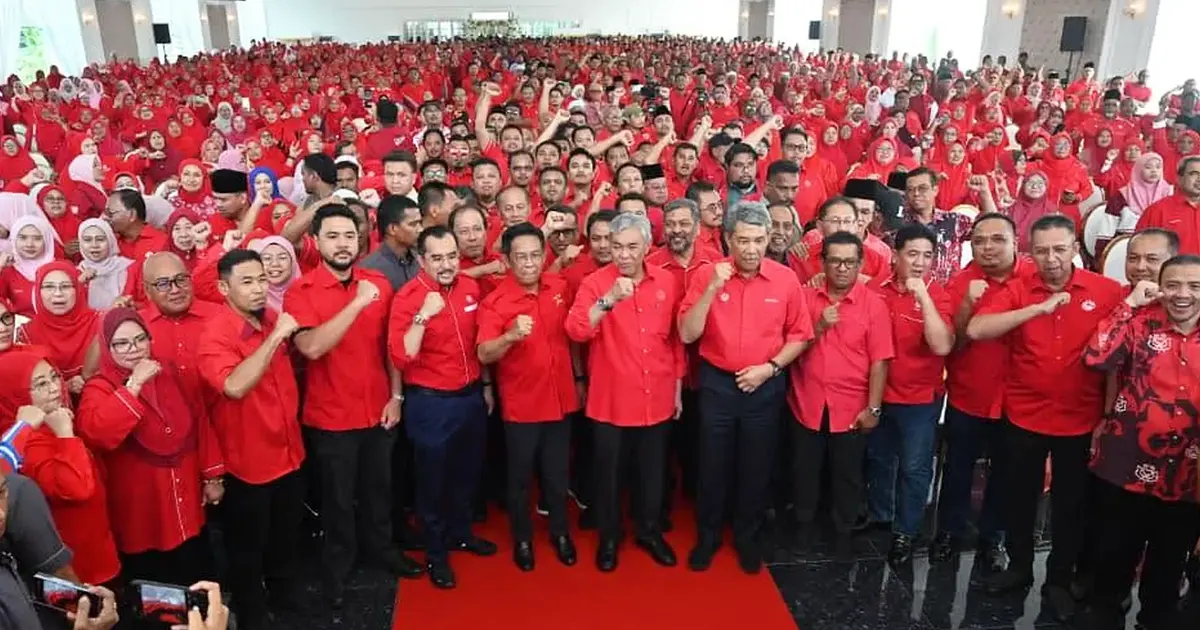
Barisan Nasional chairman Ahmad Zahid Hamidi has delegated the critical responsibility of managing candidate selection and seat negotiations to Tok Mat, the Negeri Sembilan chief, signalling a decentralised approach to the coalition's electoral preparations in the state. This move reflects an established pattern within BN's organisational structure, where state-level leadership assumes operational control over nomination processes whilst the national chairman provides overarching strategic guidance.
Tok Mat's elevation to the forefront of these discussions carries particular significance given Negeri Sembilan's importance to BN's electoral prospects. The state has traditionally been a competitive battleground where coalition performance directly influences the larger political balance in the peninsula. By empowering Tok Mat to lead these deliberations, Ahmad Zahid effectively positions the state machinery to leverage its understanding of local dynamics, factional alignments, and ground-level considerations that often determine electoral success.
The delegation underscores a pragmatic governance philosophy within BN's upper echelons. Rather than imposing centrally-determined candidates, the coalition appears intent on allowing state branches greater autonomy in identifying contenders who command local credibility and organisational support. This approach theoretically reduces friction between national party structures and state-level operations, though it simultaneously places considerable pressure on Tok Mat to balance competing interests among BN's component parties and internal factions.
Candidate selection remains one of Malaysian coalition politics' most contentious processes. Within BN, negotiations must accommodate the interests of multiple member parties, each protecting its historical territorial bases and leadership ambitions. Tok Mat's charge extends beyond mere vetting to encompassing the intricate seat-sharing arrangements that determine which BN component—whether UMNO, MIC, or other parties—contests which constituencies. These calculations demand intimate knowledge of constituency demographics, incumbent performance records, and grassroots sentiment across Negeri Sembilan's nine state assembly districts and corresponding parliamentary constituencies.
Ahmad Zahid's public acknowledgement that he has stepped back from direct involvement in these discussions serves multiple purposes within BN's political management. It demonstrates confidence in Tok Mat's administrative capabilities whilst simultaneously insulating the national chairman from the inevitable complaints that accompany any candidate selection process. In Malaysian politics, those directly responsible for selection decisions inevitably attract criticism from disappointed aspirants, their supporters, and rival factions. By delegating this role, Ahmad Zahid preserves his political capital for broader coalition management and strategic positioning.
Negeri Sembilan presents unique electoral circumstances that may have influenced this organisational decision. The state has witnessed evolving political dynamics in recent electoral cycles, with shifting voter preferences and emerging local leaders challenging traditional power structures. Tok Mat, as the state chief, possesses accumulated knowledge of these ground-level changes that might not be immediately apparent to national party observers. His direct engagement with candidate selection therefore allows for responsive adaptation to local realities rather than application of standardised national templates.
The timing of this delegation also merits attention, as electoral calendars in Malaysian states increasingly become subjects of strategic manipulation by ruling coalitions. While Negeri Sembilan's election date remains subject to constitutional parameters and the discretion of the state ruler, BN's internal preparations must commence well in advance. By formalising Tok Mat's leadership role in these discussions, the coalition signals readiness for electoral contests that could materialise on relatively short notice.
For Malaysian political observers, this announcement illustrates how BN continues adapting its operational structures whilst maintaining its fundamental coalition framework. The balance between centralised control and decentralised execution remains a persistent challenge for multi-party coalitions, and Ahmad Zahid's decision to elevate Tok Mat reflects ongoing efforts to optimise this equilibrium. However, such arrangements depend fundamentally on personal relationships and institutional trust between national and state leadership.
The implications extend beyond Negeri Sembilan itself. How effectively Tok Mat manages candidate selection and seat negotiations will influence perceptions of BN's organisational capacity ahead of potential federal-level electoral contests. Successful navigation of these internal processes typically generates momentum and cohesion, whilst visible conflicts over candidates or seat allocations can undermine coalition unity and invite challenge from opposition political forces.
Looking forward, the actual composition of BN's candidate slate will reveal much about Tok Mat's prioritisation philosophy and political capital. Whether selections emphasise incumbency retention, demographic representation, factional balance, or merit-based criteria will send important signals about the coalition's electoral strategy. These decisions simultaneously establish the parameters within which Negeri Sembilan's political contest will unfold, shaping the competitive landscape for all participating parties.

