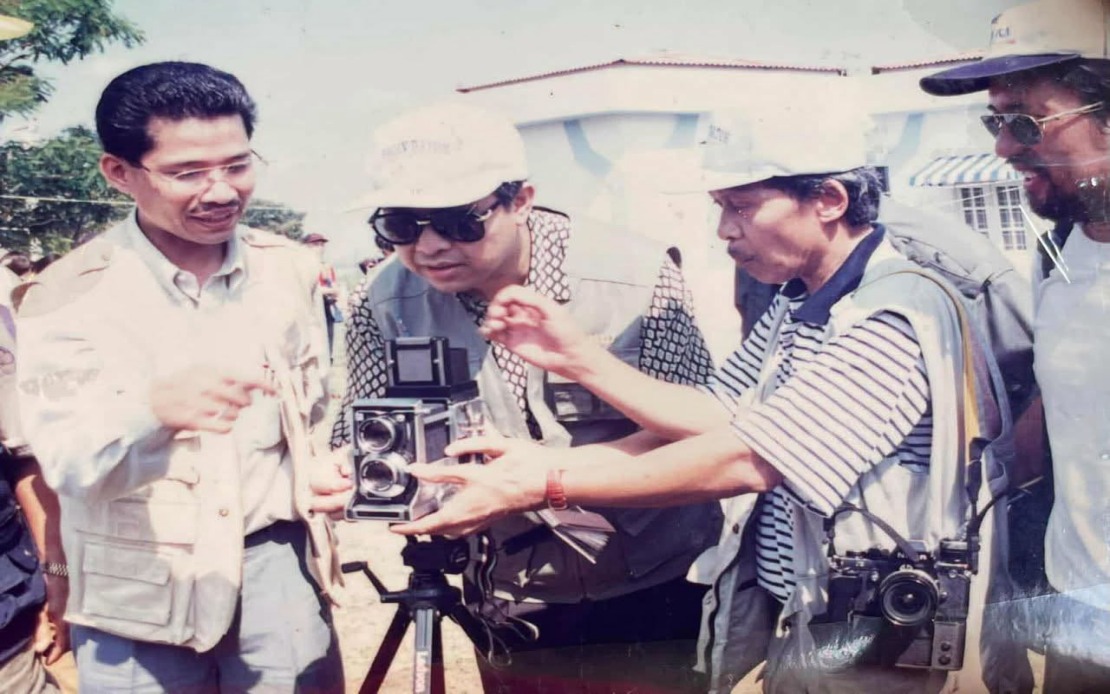
Deputy Prime Minister Datuk Seri Dr Ahmad Zahid Hamidi has marked World Photography Day 2026 with a public tribute recognising the multifaceted role photographers play in contemporary society. In remarks shared on social media, Ahmad Zahid extended his acknowledgement to all practitioners of the craft, from seasoned professionals to casual family documentarians, emphasising how each brings their own artistic vision to the act of freezing moments in time.
The Deputy Prime Minister's recognition extends across a broad spectrum of the photographic community. Professional photographers who work in commercial and editorial capacities alongside media practitioners documenting newsworthy events form one tier of this acknowledgement. Yet Ahmad Zahid also highlighted a often-overlooked category: the informal photographers within families and social circles who assume the role of visual historians during gatherings and celebrations. This inclusive framing underscores how photography transcends professional boundaries and permeates everyday Malaysian life, whether at weddings, festivals, community events, or intimate family occasions.
Central to Ahmad Zahid's message is the profound value society places on photographic imagery. He observed that people universally cherish photographs, keeping some as private keepsakes and displaying others prominently in homes and offices. This personal attachment to images reflects a fundamental human need to preserve and revisit significant moments, transforming fleeting experiences into tangible records that can be revisited repeatedly throughout a lifetime. The emotional resonance of carefully curated photographs speaks to their power in anchoring memory and identity.
Beyond individual sentiment, Ahmad Zahid drew attention to photography's larger historical and archival significance. Photographs frequently transcend their immediate context to become invaluable historical documents, serving future generations as windows into the past. News photographs, official records, and candid documentation of events accumulate into comprehensive visual archives that historians, researchers, and communities rely upon to understand previous eras. In this capacity, photographers function as unofficial custodians of collective memory, their work outliving them to provide context and evidence for understanding historical periods.
The Deputy Prime Minister illuminated the often-invisible labour underlying successful photography. While the final image may appear instantaneous, the work of photography demands patience, observation, and technical judgment. Photographers must anticipate significant moments, position themselves strategically, and make split-second decisions about composition and timing. What appears to viewers as a single captured second frequently represents extended preparation, waiting, and the accumulated experience that allows photographers to recognise the precise instant when all elements align. This invisible craftsmanship remains largely unacknowledged despite shaping the visual record society depends upon.
Ahmad Zahid emphasised the enduring nature of photographic documentation. While the moments being captured exist only briefly in time, their visual representation persists indefinitely. A photograph taken today may circulate for decades, shaping how future audiences understand and interpret the events, people, and circumstances it depicts. This permanence distinguishes photography from other forms of observation or documentation, granting photographers significant responsibility in determining how moments are framed, contextualised, and ultimately remembered by successive generations.
The tribute carries particular resonance for Malaysia, a nation with rapidly evolving visual culture and expanding documentation practices. From professional photojournalists covering significant political and social developments to family photographers preserving domestic narratives, Malaysian photography collectively constitutes an irreplaceable record of the nation's contemporary life. As Malaysia continues its development trajectory, these visual documentations will serve future researchers seeking to understand early twenty-first century Malaysian society, urban development, cultural practices, and social change.
In the digital age, photography has become democratised through smartphone technology and accessible editing software, expanding the ranks of active photographers across all demographic groups. Ahmad Zahid's inclusive acknowledgement reflects this transformation, recognising that photographic practice no longer remains confined to credentialled professionals but encompasses millions of Malaysians engaging with visual documentation daily. This democratisation has implications for historical preservation, as informal photographs generated by citizens increasingly complement official archival efforts.
The Deputy Prime Minister concluded his statement with an exhortation to photographers to continue their practice with commitment and purpose, framing contemporary photography as foundational to future remembrance. This framing positions photographers not merely as technical operators but as cultural workers whose decisions about what to photograph, how to frame subjects, and which moments merit preservation shape collective consciousness. His closing sentiment—that today's photographs become tomorrow's memories—encapsulates photography's transformative power to convert transient experience into permanent record, enabling continuous dialogue between present and future.

