Sudan's entrenched conflict shows few signs of resolution as the African Union Peace and Security Council doubles down on its opposition to foreign meddling in the nation's affairs. During high-level talks in Khartoum on Sunday, the AU's rotating chair Mohamed Khaled, an Algerian diplomat, reinforced the continental body's determination to shield Sudan from external pressure while charting a path toward sustainable peace through indigenous dialogue and political compromise.
The meeting between Khaled's delegation and Sudan's Sovereignty Council Chairman Abdel Fattah al-Burhan at the presidential palace underscored a critical anxiety gripping African capitals: the risk that international actors might exploit Sudan's instability to advance their own strategic interests or establish competing power structures that fragment governmental authority. Such parallel entities, whether politically motivated or militarily backed, could permanently weaken state institutions already struggling to maintain legitimacy and deliver basic services to a traumatised population.
Khaled's assertion that external interference actively fuels the conflict carries particular weight given Sudan's geopolitical positioning in the Horn of Africa and the broader Middle East. Multiple regional and global powers have historically vied for influence in Khartoum, and the AU's stance reflects genuine concern that without disciplined international restraint, the civil war could metamorphose into a proxy competition that deepens sectarian and ethnic fissures. The council's explicit rejection of attempts to create parallel governments signals alarm about initiatives that could legitimise splinter administrations claiming superior governance credentials or external recognition.
What renders the AU's intervention noteworthy for Southeast Asian observers is its emphasis on sovereignty and non-interference as foundational principles for conflict resolution. In a region where nations jealously guard their internal prerogatives and fear external powers instrumentalising internal divisions, Sudan's experience offers cautionary lessons. The AU's insistence on Sudanese-Sudanese dialogue as the sole legitimate negotiating framework mirrors principles that ASEAN nations have long championed, even when uncomfortable truths about governance must be confronted.
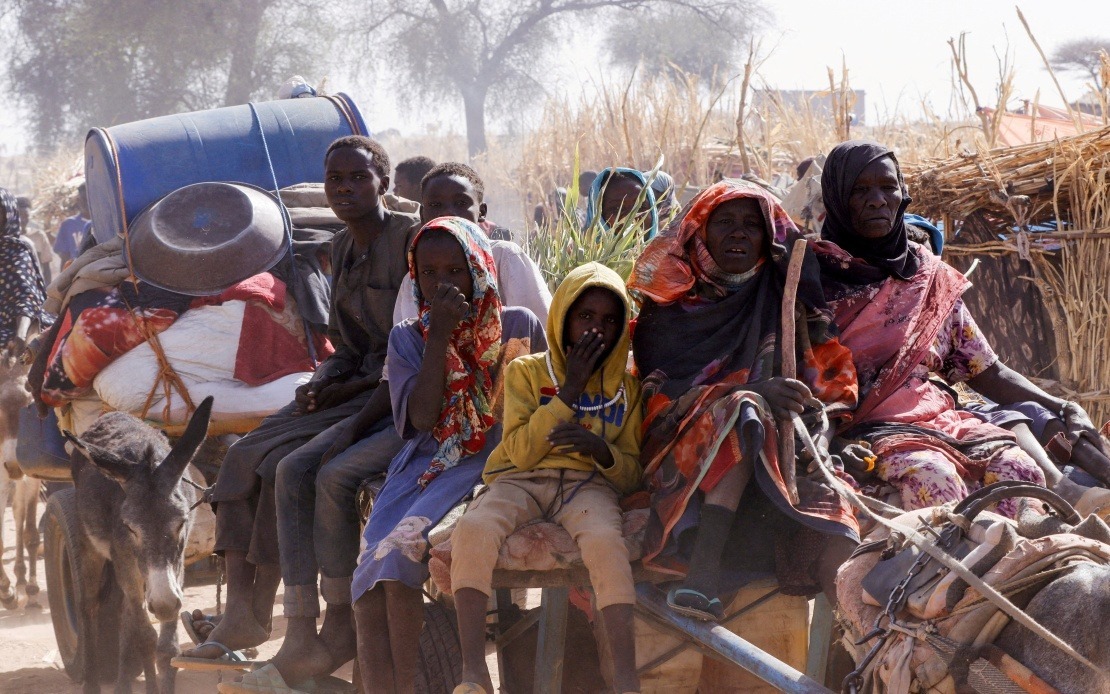
Sudanese Prime Minister Kamil Idris signalled to the AU delegation that national dialogue would commence shortly, a statement offering glimmers of hope in a landscape characterised by despair. Since April 2023, when tensions between the national army and the paramilitary Rapid Support Forces erupted into open warfare over military integration plans, Sudan has descended into one of the world's most catastrophic humanitarian emergencies. The fighting has claimed tens of thousands of lives while displacing approximately thirteen million people, figures that dwarf most other contemporary conflicts and represent a fifth of Sudan's pre-war population.
The Rapid Support Forces, initially recruited as irregular militias to counter insurgencies in Darfur and other border regions, have evolved into a potent military institution with substantial territorial control and logistical capabilities. Their resistance to integration into regular military hierarchies reflects deeper power struggles within Sudan's security establishment and the competing visions different factions hold for the nation's governance structure. This fundamental disagreement over military architecture cannot be resolved through external pressure or international mandates; only Sudanese stakeholders possess the legitimacy and contextual understanding necessary to negotiate sustainable settlements.
Khaled's characterisation of the meeting as "fruitful" and his welcome of steps toward renewed governance performance from Khartoum suggest that modest diplomatic progress is occurring beneath surface narratives of intractable conflict. The government's capacity to exercise administrative functions from the capital, even partially, represents a symbolic and practical necessity for rebuilding institutional coherence. Citizens subjected to prolonged civil war require tangible evidence that state structures are reconstituting themselves and capable of delivering essential services—healthcare, education, security, and justice—that define functional governance.
The AU's call for more inclusive transitional governance and political consensus-building around a constitutional framework recognises that Sudan's conflict ultimately demands political, not merely military, solutions. Elections held through transparent and competitive processes remain distant prospects, yet establishing the institutional and constitutional architecture that will eventually enable such contests is essential preparation. This sequencing of priorities—immediate dialogue, then broader political inclusion, eventually constitutional processes culminating in elections—reflects sophisticated understanding of post-conflict reconstruction's complexities.
For Malaysia and other Southeast Asian nations, Sudan's travails underscore the critical importance of strengthening multilateral mechanisms that can mediate between competing internal factions without enabling external powers to weaponise instability. The AU's assertion of continental responsibility for Sudan's peace process, rather than outsourcing resolution to distant powers with limited understanding of local dynamics, offers a model that ASEAN and its institutional partners might consider when addressing regional conflicts. Indigenous solutions, grounded in shared cultural and political values, often prove more durable than impositions by external actors.
The humanitarian dimension of Sudan's conflict cannot be minimised: thirteen million displaced persons represent an unprecedented regional catastrophe straining neighbouring countries' capacities to provide asylum and assistance. For a region like Southeast Asia that has grappled with refugee crises and the challenges of hosting large displaced populations, Sudan's scale offers sobering perspective. Malaysia itself has hosted hundreds of thousands of refugees and displaced persons, making it acutely sensitive to how conflicts generate human displacement that transcends borders and imposes burdens on already-stretched developing economies.
Moving forward, the AU's emphasis on rejecting parallel governments and foreign interference will likely prove insufficient without credible mechanisms for monitoring compliance and enforcing accountability among external actors tempted to exploit Sudan's instability. The council's statements reflect aspiration more than iron guarantees that international restraint will hold. Nevertheless, by placing these principles at the centre of its diplomatic engagement, the AU signals clearly that Sudan's peace process must remain firmly under Sudanese ownership and control.
The road ahead remains fraught with uncertainty. Entrenched militaries and paramilitaries rarely surrender power voluntarily, and the underlying disputes that triggered the April 2023 conflict remain unresolved. Yet the resumption of high-level dialogue, however tentative, suggests that even amid devastation and bloodshed, pathways toward negotiated settlement have not entirely closed. For Sudan's long-suffering population and for regional stability across Africa and the broader Middle East, renewed commitment to genuine dialogue and the AU's principled opposition to external meddling may yet prove the foundation upon which durable peace can eventually be constructed.

