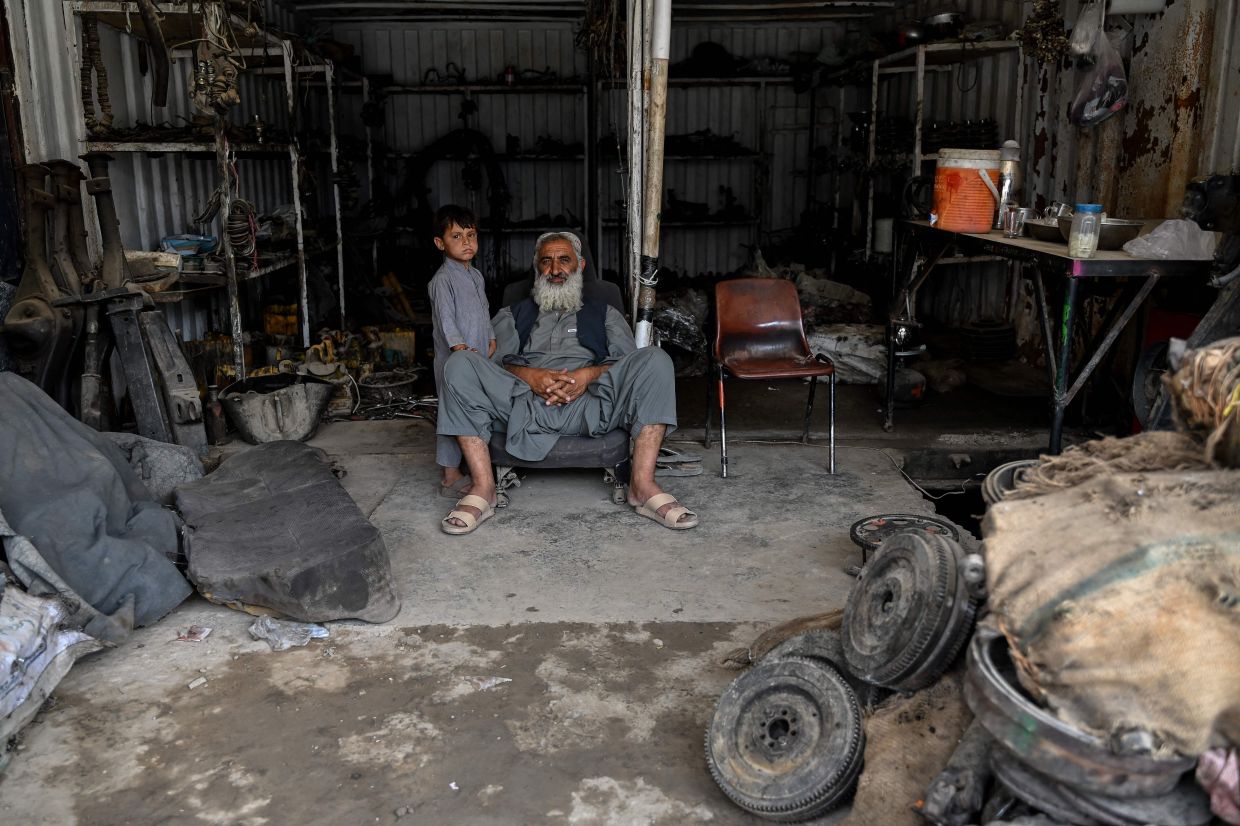
The automotive parts trade that once sustained thousands of workers in Kandahar province has virtually ceased, victim to a cascading series of regional crises that have clogged supply chains and rendered once-profitable businesses economically unviable. In Spin Boldak, a crucial trading hub on Afghanistan's southern frontier, importers, mechanics, and merchants who depended on steady flows of Japanese and international vehicle components now face warehouses filled with stranded inventory and mounting debts. The collapse reveals how deeply Afghanistan's economy remains tethered to global shipping corridors and regional stability, with disruptions thousands of kilometres away translating into immediate hardship for ordinary workers.
The first blow came in October when escalating cross-border violence between Afghanistan and Pakistan led authorities to seal the frontier, severing the primary overland route through which vehicle parts had historically flowed into Kandahar. For decades, this corridor represented the lifeblood of the trade—parts sourced from Japan, Europe, and other distant suppliers would move across Pakistan by truck, arriving in Spin Boldak ready for assembly or distribution across Afghanistan. Abdul Baqi Bina, deputy head of the Kandahar Chamber of Commerce and Investment, described a desperate scramble to find alternatives when the border slammed shut. Traders pivoted to a lengthy detour via Iran's Bandar Abbas port, adding time and expense to each shipment, yet preserving at least the possibility of continuing operations.
This fragile workaround proved temporary. When military conflict erupted in the Middle East in February, it triggered unprecedented chaos in one of the world's most vital trade arteries—the Strait of Hormuz, through which roughly one-third of global maritime trade passes. Shipping companies warned that normalcy would take months to restore, and the immediate consequence was catastrophic for Afghan importers reliant on components funnelled through United Arab Emirates ports. The alternative routing that traders had adopted, bringing parts through Dubai and other Gulf hubs before overland transport to Afghanistan, suddenly faced massive delays and astronomical cost increases.
The financial impact has been staggering. A single shipping container, which once cost approximately US$2,000 to move, now commands US$8,000—a four-fold increase that destroys the profit margins on which traders depend. Asadullah, an importer who sources primarily from Dubai and Japan, sits in his office watching inventory costs accumulate on more than thirty containers stranded in warehouses across Japan and the UAE. The congestion at Dubai's Jebel Ali port, one of the world's largest and a critical hub for Asian-Middle Eastern trade, has created bottlenecks that show no sign of clearing. For traders operating on thin margins, each day of delay represents hundreds of dollars in storage fees and deteriorating returns on invested capital.
The situation has forced agonising decisions. Masoud, another parts importer, has begun shipping containers back to Japan rather than incurring further storage and holding costs in the Gulf. His business, which previously moved dozens or hundreds of containers monthly, has contracted to zero—a total loss in the truest sense, with no mechanism to recover sunk costs or future opportunities visible on the horizon. He acknowledges what many traders understand but dare not speak aloud: without intervention to restore shipping normalcy, the economics of the trade cannot be salvaged. The margins that sustained livelihoods have evaporated, replaced by a choice between bankruptcy and abandonment.
Beyond the office walls of importers lies a more devastating human toll. The workshops where vehicles were assembled have fallen silent. Samiullah, a workshop owner, previously oversaw production of five to seven cars weekly; today his facility sits idle, with expensive tools and equipment gathering dust while he continues paying salaries to employees with no work to assign them. These are not large manufacturing plants with financial reserves—they are small operations dependent on consistent workflow to cover fixed costs. The longer the disruption persists, the greater the accumulated losses, and the harder it becomes to retain skilled labour.
The workforce itself faces an uncertain future. Mohammad Naeem, a 21-year-old crane operator employed at the Spin Boldak market, has begun contemplating a complete career shift because there is no timeline for recovery. Young workers lack the capital cushion of established traders and cannot afford to wait indefinitely for normal conditions to return. If the disruption extends beyond a few more months, many will simply leave the sector permanently, dispersing the accumulated expertise and skills that make complex automotive assembly possible. The prospect of rebuilding the industry even after supply lines normalise will be complicated by the loss of human capital.
The retail side of the automotive trade presents an equally grim picture. Noor Ali, who operates a showroom displaying vehicles built from imported Japanese parts, has watched customer traffic collapse in tandem with parts availability. A month has elapsed since his last sale; displayed around his showroom are colourful vehicles that represent both capital investment and blocked inventory. The logic is straightforward—customers cannot purchase vehicles when the market cannot supply spare parts or maintenance, and potential buyers have grown cautious about investing in assets when supply chains remain chaotic.
The broader economic context makes Afghanistan's vulnerability particularly acute. The World Bank assessed in May that Afghanistan faces exceptional exposure to external shocks, with the gap between imports and exports widening to a staggering 70 per cent of GDP in the 2025 fiscal year. This imbalance underscores how dependent the Afghan economy remains on imported goods and how little domestic production capacity exists to cushion external disruptions. The automotive parts sector exemplifies this dependency—Afghanistan cannot manufacture the components it consumes, making every international shipping disruption an existential threat to the entire value chain.
The regional conflicts that triggered this collapse show no clear resolution. The Pakistan border remains under tension, and Middle East instability persists, meaning shipping through the Strait of Hormuz continues facing risks. Traders and workers pin hopes on diplomatic breakthroughs and gradual normalisation of maritime traffic, yet acknowledgment is dawning that even if external conditions improve, recovery will be slow. Containers stranded in foreign ports will take weeks to clear, and business confidence once shattered requires time to rebuild. The Spin Boldak market, which once represented Afghanistan's connection to global commerce, now symbolises how fragile and dependent that connection remains, and how quickly regional upheaval can transform thriving enterprises into shuttered workshops and idle workers.

