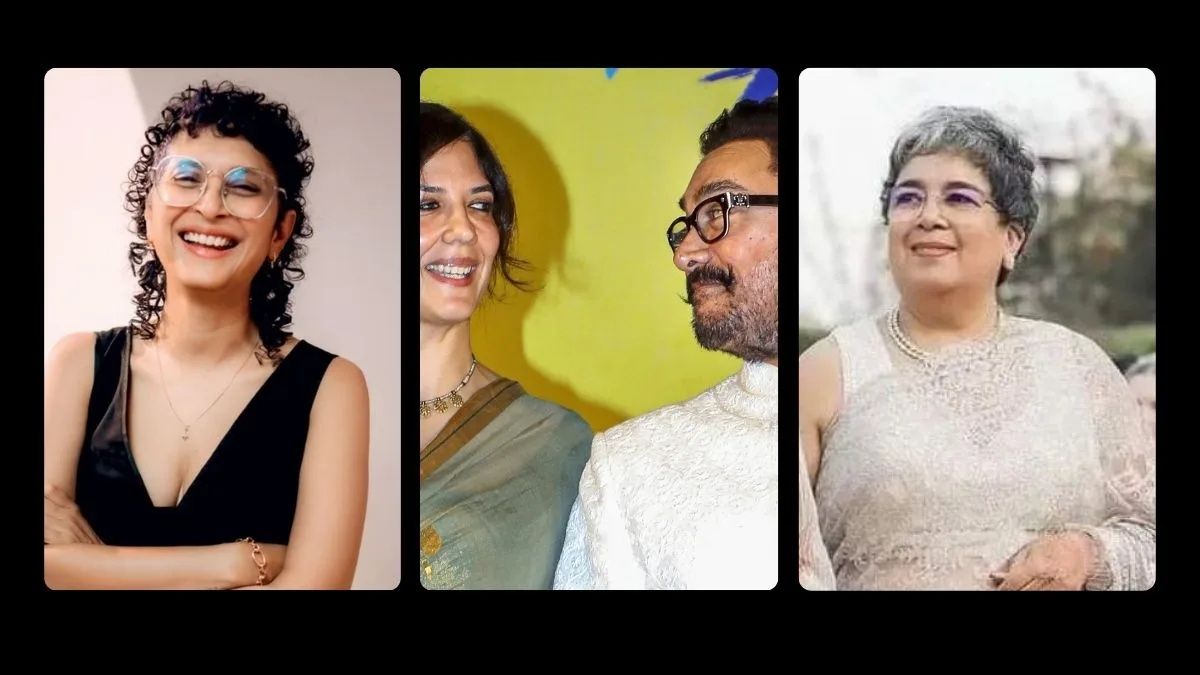
Bollywood star Aamir Khan has broken his silence on contentious allegations linking him to the 'love jihad' narrative, dismissing the claims as unfounded during an interview with Rediff. The actor's response came following his marriage to Gauri Spratt in July, which appears to have reignited discussions around his personal relationships and religious affiliations—a sensitive topic in contemporary Indian discourse. Khan's measured response highlights broader tensions within India regarding interfaith unions and the politicised terminology increasingly applied to such relationships across the country.
Central to Khan's defence is his assertion that his family has consistently embraced individuals from diverse religious backgrounds without imposing conversion requirements. This family principle, according to the actor, extends back several generations and represents a core value that guides personal decisions within the Khan household. By framing his marriage within this broader familial context, Khan positions his union with Spratt not as an anomaly or a political statement, but as a continuation of established family practice rooted in secular principles and mutual respect.
The actor cited multiple examples from his own extended family to substantiate his argument. Both of his sisters have married Hindu men, while his daughter has chosen a Hindu life partner. His cousin, filmmaker Mansoor Khan, is married to a Christian woman. Each of these relationships, Khan explained, proceeded without any requirement that the non-Muslim partner adopt Islam, thereby establishing a consistent pattern within the family of accepting spouses regardless of their religious identity. These examples serve as concrete evidence against the 'love jihad' characterisation, which operates on the premise that interfaith marriages are inherently problematic or orchestrated along religious lines.
Regarding his own marital history, Khan was explicit in addressing each relationship individually. His first marriage to Reena Dutta, which commenced in 1986 and concluded in divorce in 2002, involved a civil ceremony that did not involve religious conversion. Similarly, his subsequent marriage to filmmaker Kiran Rao in 2005 remained on secular legal grounds. The couple announced their separation in 2021, though they have maintained professional collaboration and share custody of their son, demonstrating that the dissolution of their marriage did not undermine shared values or mutual respect. Khan's third marriage to Gauri Spratt, solemnised on July 5 at his Mumbai residence, also followed the civil marriage format.
Khan provided additional context regarding Gauri Spratt's background, noting that she identifies as Christian but does not actively practise the religion. This detail appears strategically significant in Khan's rebuttal, as it further distances the marriage from the 'love jihad' narrative, which typically presupposes religious commitment or conversion on the part of the non-Muslim spouse. The characterisation suggests that religious identity, while present, is not a driving force in the relationship or a source of conflict—a perspective that directly contradicts the assumptions underlying the allegations against Khan.
The genesis of Khan and Spratt's relationship followed an unconventional timeline. The two had known each other for approximately 25 years but were not in a romantic relationship during that period. Their reconnection occurred roughly two years prior to their marriage in Bengaluru, facilitated through Khan's cousin Nuzhat Khan. What began as renewed friendship gradually transformed into a romantic partnership spanning more than two years before culminating in marriage. This extended courtship period, combined with their prior decades-long acquaintance, suggests a relationship built on established rapport rather than sudden attraction or calculated intention.
Khan's introduction of Spratt to the media during celebrations marking his 60th birthday in March of the previous year represented a public validation of their relationship before the marriage took place. This transparent approach to announcing their union stands in contrast to narratives that might suggest clandestine or problematic conduct. The relatively public nature of their relationship's progression appears designed to counter suggestions that the marriage represents anything secretive or ideologically motivated.
In responding to the accusations directly, Khan characterised the contemporary discourse around such matters as increasingly absurd, remarking that life has become "more comical as time passes." This comment reflects broader frustration with the politicisation of personal relationships and the application of loaded terminology to everyday human connections. The 'love jihad' framework, which has gained traction in Indian public discourse, imposes a political lens onto intimate decisions that individuals make based on personal affinity and choice—a conflation that Khan's statement implicitly critiques.
The 'love jihad' allegation represents a significant contemporary challenge in India, particularly affecting public figures whose relationships cross religious boundaries. The term itself carries deeply political connotations, originating from assertions that minority religious communities deliberately pursue interfaith marriages as a conversion strategy. Such allegations have become increasingly weaponised in public discourse, placing individuals like Khan—prominent voices in Indian culture—under scrutiny for their personal choices. Khan's comprehensive rebuttal, grounded in family history and factual detail, attempts to redirect the conversation away from ideological frameworks and toward the actual experiences of his family members.
For Malaysian readers, Khan's situation offers relevant perspective on how religiously diverse societies address interfaith relationships. Malaysia's own constitutional framework makes Islam the federation's official religion while protecting freedom of religion for other communities, creating a distinct but parallel context for discussing interfaith unions. The prominence Khan accords to civil marriage ceremonies, secular framing, and mutual respect without conversion requirements reflects one approach to navigating religious diversity—an approach with potential resonance in Southeast Asia's own multireligious societies.
Khan's defence also highlights the distinction between consensual interfaith partnerships based on individual choice and any coercive or ideologically motivated conversions. By systematically demonstrating that none of his family members have undergone religious conversion despite multiple interfaith marriages, Khan constructs an empirical counter-narrative to allegations premised on the assumption that such conversions are inevitable or deliberate. This granular approach to addressing the allegations, backed by specific family examples, attempts to shift the burden of proof back toward those making accusations.

