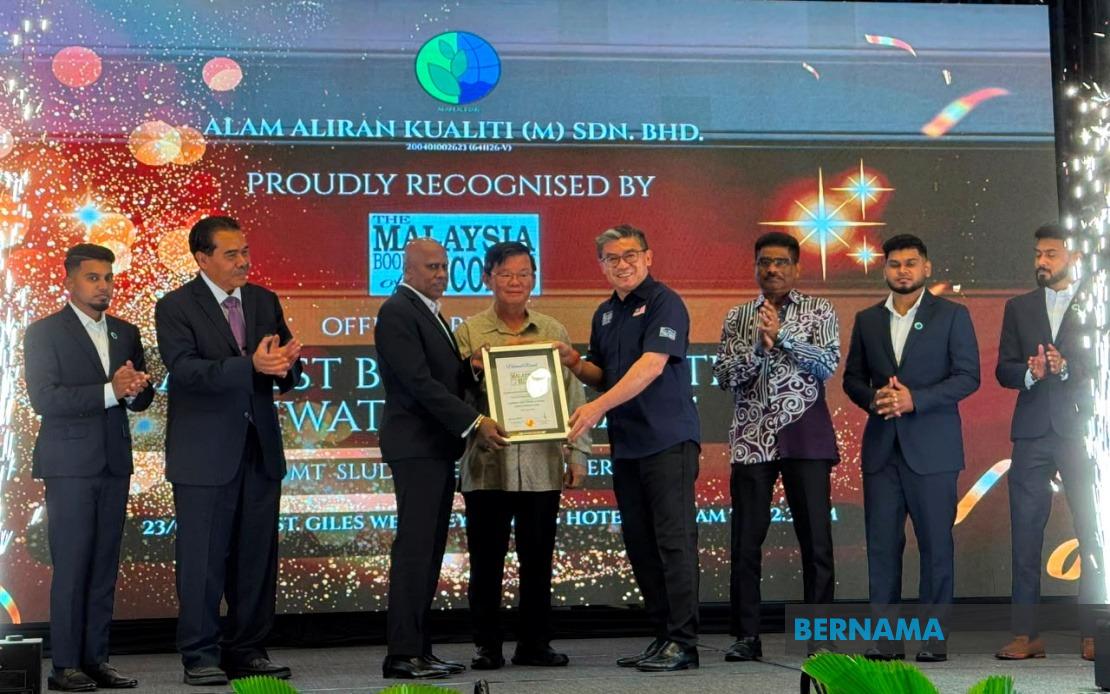
Alam Aliran Kualiti (M) Sdn Bhd achieved a significant milestone when the Malaysian Book of Records presented the company with official recognition for operating the 'Largest Belt Press System Dewatering Plant' at its Sungai Dua facility in George Town. The accolade underscores Malaysia's growing capacity in environmental engineering, particularly in managing water treatment byproducts through cutting-edge technology developed in partnership with Perbadanan Bekalan Air Pulau Pinang (PBAPP).
The Sungai Dua Dewatering Plant represents an engineering feat that addresses one of Southeast Asia's pressing environmental challenges: the disposal and recovery of water treatment sludge. With a daily treatment capacity reaching 10 million litres and the ability to handle approximately 450 tonnes of water treatment sludge, the facility demonstrates how industrial-scale infrastructure can tackle sustainability without compromising operational efficiency. For a region where water scarcity increasingly threatens economic development, such innovations carry profound implications across multiple sectors.
According to Gokulaan Balan, director of AAK, the recognition extends beyond mere technological accomplishment. He emphasised that the achievement reflects Malaysian engineering's capacity to deliver infrastructure meeting international standards, a perspective particularly relevant as Southeast Asian nations compete globally for investment in environmental technology. The director framed the MBOR recognition not as a conclusion but as validation for AAK to pursue more ambitious environmental solutions, signalling the company's intention to expand its innovation portfolio in coming years.
The presentation ceremony, attended by Penang Chief Minister Chow Kon Yeow and presided over by MBOR chief executive officer Christopher Wong, elevated the project's significance beyond corporate achievement. The involvement of state leadership indicates government recognition that private-sector environmental solutions contribute meaningfully to national sustainability targets. This alignment between governmental aspirations and corporate capability offers a model increasingly relevant to Malaysian development strategy.
Chow's remarks during the ceremony highlighted the facility's circular economy dimensions, which transform traditionally problematic waste streams into valuable resources. The plant recovers treated water for reintroduction into treatment processes, simultaneously reducing losses and conserving freshwater supplies. More innovatively, AAK's associated Eco Green Brick Manufacturing Plant converts SW204 scheduled waste into construction materials, exemplifying how industrial byproducts can fuel secondary markets rather than accumulate in landfills. For Penang specifically, where water security concerns have prompted regional water transfer agreements, such recovery mechanisms strengthen resilience.
The circular economy integration proves particularly significant within Malaysia's broader sustainability framework. Rather than treating waste management and water supply as separate challenges, the Sungai Dua facility addresses them simultaneously. This integrated approach reduces the environmental footprint of conventional water treatment while creating economic value through material recovery. The Eco Green Bricks market particularly interests construction sectors across Malaysia and the wider region, where sustainable building materials command premium positioning among developers responding to investor and consumer environmental consciousness.
AAK's trajectory since its establishment in 2004 reflects Malaysia's maturation in specialised environmental engineering. The company evolved from a scheduled waste management provider into a comprehensive solutions provider spanning dewatering, sludge treatment, and secondary material production. This vertical integration demonstrates how Malaysian firms can capture entire value chains in emerging green economy segments, positioning local expertise competitively against international operators. The MBOR recognition amplifies such capability narratives essential for attracting both domestic and regional investment.
For Penang's water security specifically, the facility addresses documented challenges. The state confronts seasonal fluctuations and growing demand pressures partly offset through water imports from Kedah. By maximising recovery and minimising treatment losses, the Sungai Dua plant contributes to long-term supply stability while reducing interdependency on external sources. As climate variability increasingly affects monsoon patterns and surface water availability across Malaysia, such infrastructure gains strategic importance beyond routine environmental management.
The recognition carries implications extending throughout Malaysia's water services sector. PAAB's involvement, represented by chairman Datuk Seri Jaseni Maidinsa at the ceremony, indicates that broader water asset management strategies incorporate such facilities into infrastructure development planning. As Malaysian utilities modernise aging systems and expand capacity for growing urban populations, belt press dewatering systems and associated recovery technologies emerge as standard expectations rather than innovative extras. This normalisation accelerates sector-wide adoption.
Gokulaan's statement that recognition marks a beginning rather than conclusion reflects competitive pressures within environmental technology markets. Larger international firms operate comparable or superior facilities globally, meaning Malaysian recognition, while valuable domestically, requires sustained innovation to maintain competitive positioning. AAK's emphasis on continued excellence and environmental responsibility suggests management understands that records remain breakable, necessitating perpetual advancement. This competitive mindset drives technological progress benefiting the entire sector.
The facility's capacity to process 450 tonnes of sludge daily positions it within Malaysia's waste management hierarchy addressing scheduled waste streams. These materials historically created disposal complications and environmental liabilities, particularly in water-dense regions. By converting such materials into commercial products rather than landfill inputs, the operation reduces environmental externalities while creating employment and tax revenue. The economic multiplier effects extend through construction supply chains utilising Eco Green Bricks.
Looking forward, the MBOR recognition provides AAK with marketing advantages within Malaysia and across ASEAN markets where water stress and waste management challenges intensify. The record status enhances tender competitiveness for similar facilities, whether in expanding current capacity or establishing new installations elsewhere. Regional governments increasingly invest in water infrastructure modernisation, creating opportunities for proven technologies and experienced operators. AAK's documented capability positioning positions the company favourably within these emerging procurement processes across Southeast Asia.

