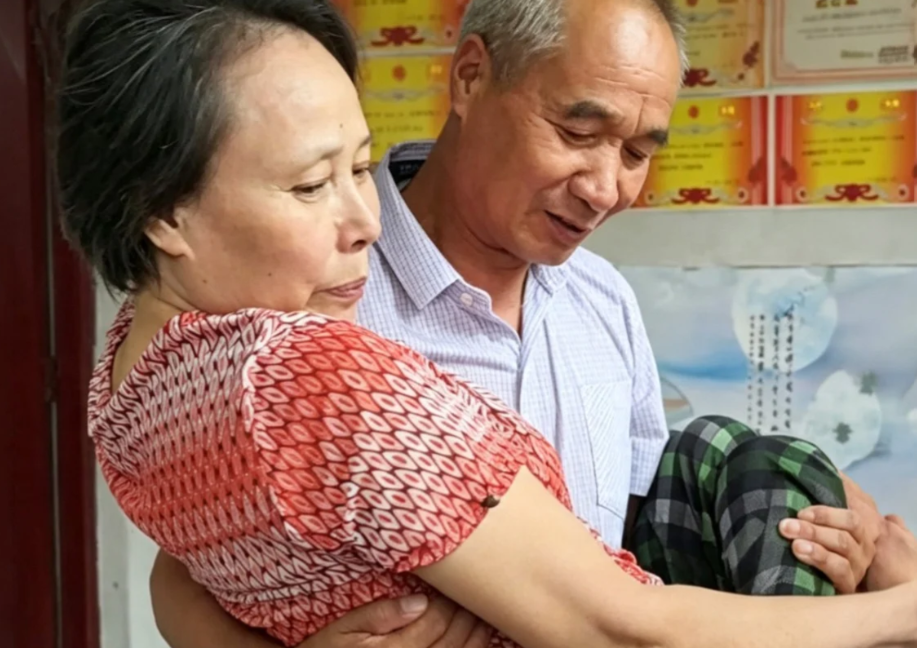
In the quiet city of Pingdingshan, Henan province, a remarkable testament to marital commitment has unfolded over two and a half decades, capturing the imagination of millions across mainland China through social media. Li Junliang, now in his sixties, has provided constant, comprehensive care for his wife Jia Fang since a catastrophic accident in 2001 left her paralysed from the chest down, unable to move or care for herself.
The turning point came when Jia, then 36 years old, fell from a cliff while riding in a pedicab—an incident so severe that it permanently robbed her of physical independence. At that moment, Li made a choice that would define the next quarter-century of his life. He committed to becoming her full-time carer while simultaneously raising their two children, who were aged 10 and 13 at the time the accident occurred. The responsibility was staggering: managing household duties, supporting two growing children, and attending to every physical need of a severely disabled spouse.
The daily reality of Li's commitment reveals the extraordinary discipline required. In the early years following Jia's injury, he turned her body every two hours without fail to prevent the development of pressure ulcers—a common and painful complication of paralysis. This meant forsaking unbroken sleep for years. Eventually, as his understanding of her condition deepened, he adjusted the routine to four-hourly intervals, yet he still has not experienced a full night's rest in two decades. The physical and mental toll of such vigilance would overwhelm most people, yet Li has maintained this regimen with quiet determination.
Beyond the medical necessities, Li has worked to preserve his wife's dignity and quality of life. He regularly transfers her to a wheelchair and wheels her outside to experience sunshine and fresh air—small gestures that many able-bodied people take for granted but which Li understands carry profound psychological weight. He performs therapeutic massage on her limbs to combat muscular deterioration, a technique requiring patience and knowledge he has accumulated through years of learning. The home itself reflects his attention to detail: visitors and neighbours have noted its cleanliness and organisation, no small feat for someone juggling caregiving with household management.
While the source material does not clarify Li's occupational status or income source, the family has evidently survived and even thrived. Their children grew into adulthood, completed their education, and established their own families—an achievement that speaks to the quality of parenting Li provided despite his overwhelming caregiving burden. Certificates and mementos adorning their home walls document their scholastic accomplishments, silent witnesses to a father's dedication in circumstances most would have found insurmountable.
Jia's perspective on their relationship illuminates the emotional foundation supporting this caregiving arrangement. She has spoken publicly about her gratitude, noting the physical toll visible in Li's prematurely greying hair, a stark contrast to her own still-dark locks. Her words—"My husband works tirelessly and worries about every aspect of our family"—convey both appreciation and acute awareness of his sacrifice. When she publicly thanked him for 25 years of care, her gratitude carried the weight of genuine recognition.
Li's response transcended mere dutiful obligation. Rather than portraying himself as a martyr or exceptional figure, he reframed his caregiving within the context of marital commitment and mutual obligation. He reminded Jia of vows made on their wedding day: that home would only be complete with her presence. This framing—treating caregiving not as an extraordinary burden but as the natural expression of a marriage contract—suggests a philosophical approach that may have sustained him through the most difficult moments. His declaration that he would continue for another 25, 35, or even 45 years was not made with hesitation but with apparent resolve.
Jia's own summary of their relationship—"I believe I am the happiest person in the world; I've married the right man"—reveals how their dynamic has transcended the merely functional. Despite her profound physical limitations, she has found meaning and contentment within the relationship, suggesting that Li's care has preserved not just her physical body but her sense of self-worth and emotional security. This reciprocal appreciation, even within such unequal circumstances, distinguishes their story from a simple tale of selfless service.
The community response provides additional context for understanding how this story resonates across Chinese society. An unnamed neighbour expressed astonishment at Li's consistency and the maintenance of domestic standards, acknowledging that few men would sustain such commitment over decades. Online commenters invoked moral and spiritual language, suggesting that Li's loyalty would bring divine blessing and that his wife was fortunate to have found such a partner. These reactions suggest a cultural appreciation for filial and marital devotion in Chinese communities, where such commitments retain significant social and moral weight.
For Malaysian and Southeast Asian readers, this narrative offers particular relevance in societies where extended family care traditionally substitutes for institutional support systems. Many regional families face similar situations—elderly parents with chronic conditions, spouses with disabilities, or children with special needs—yet lack adequate public healthcare infrastructure or social services. Li's story, while extraordinary in its consistency, highlights both the cultural expectation and the practical reality that family members often absorb caregiving responsibilities that wealthier nations delegate to professional services. The absence of information about Li's livelihood raises questions about how such families sustain themselves financially, a concern immediately recognisable to many in the region where balancing employment with caregiving presents acute challenges.
The international attention this story has received also reflects broader conversations about care work, gender roles, and marital obligation in contemporary Asia. While Li's devotion is remarkable, it simultaneously reflects the reality that women often become invisible when disability strikes, their identities subsumed into their dependency. That Jia has maintained a sense of self, agency, and emotional connection despite her circumstances speaks to their relationship's fundamental health, yet also highlights how easily such situations could become isolating or demoralising. The story thus functions simultaneously as inspiration and as a window into the precarious position of disabled individuals in societies with limited institutional care frameworks.

