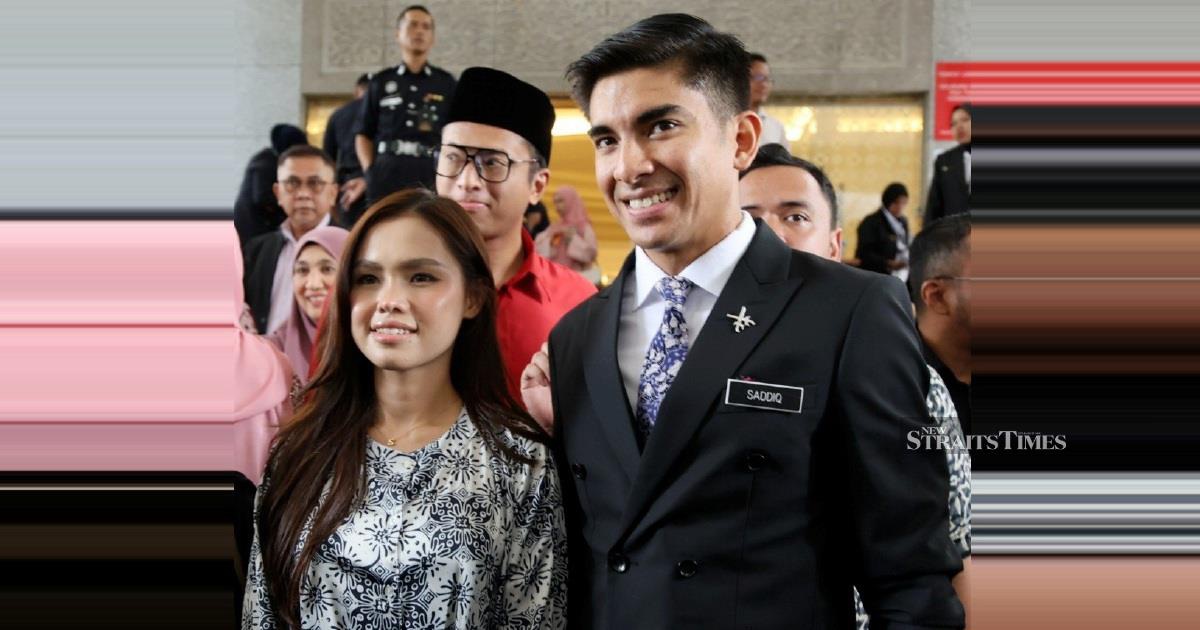
The relationship between Muar MP Syed Saddiq Syed Abdul Rahman and his fiancée, actress and recording artist Bella Astillah, continues to draw public attention—but this time for a reason that speaks to the quieter, more intimate dimensions of their commitment. Rather than court gossip or tabloid intrigue, the focus has turned to a sentimental practice that reveals the depth of their personal bond amidst the considerable pressures surrounding Syed Saddiq's ongoing legal challenges.
The revelation emerged when Bella Astillah discovered that her fiancé has made a deliberate point of wearing the neckties she selected for him specifically during his appearances at court. For someone navigating the demanding atmosphere of judicial proceedings, such a choice carries unexpected weight. The ties serve as more than mere fashion accessories; they function as tangible reminders of personal connection and emotional support during moments that demand composure and resilience.
Bella's emotional reaction to uncovering this practice underscores how profoundly the gesture resonated with her. In an era where public figures often project carefully curated images, this form of quiet loyalty—one that occurs largely outside the public eye, noticed only incidentally—demonstrates an authenticity that many find compelling. The actress-singer's response reflects a recognition that her fiancé carries their relationship with him, quite literally, into one of the most formal and challenging environments imaginable.
Syed Saddiq's positioning as the Muar member of parliament places him in the public eye on multiple fronts. His parliamentary responsibilities already demand careful navigation of complex political terrain. The additional burden of court proceedings creates a compound pressure that extends beyond typical political duties. In this context, small gestures of personal connection acquire heightened significance—they become anchors to stability and support during periods of considerable strain.
The act of deliberately choosing garments that carry personal meaning before entering a courtroom suggests a deliberate strategy for maintaining psychological equilibrium. Wearing items specifically selected by a loved one can serve as a psychological tool, a method of carrying reassurance into an environment that is inherently adversarial and designed to test resolve. For public figures already managing scrutiny and expectations, such personal anchors take on particular importance.
Malaysia's political landscape has witnessed considerable drama surrounding younger politicians in recent years, making Syed Saddiq a notable figure within that cohort. His career trajectory, coupled with his current legal circumstances, positions him at an intersection of political ambition, institutional pressure, and personal challenge. Against this backdrop, the discovery of his sentimental practice with Bella's gifted ties offers a humanising counterpoint to the clinical nature of political and legal proceedings.
Bella Astillah's prominence in Malaysian entertainment circles—spanning both music and dramatic acting—has established her as a public personality in her own right. Her deep emotional response to learning about Syed Saddiq's courtroom habit suggests a relationship characterised by genuine affection and mutual support rather than the transactional dynamics that sometimes characterise high-profile partnerships. The fact that she was moved by his consistent practice, rather than treating it as an expected gesture, indicates that the behaviour reflects spontaneous devotion rather than performative display.
From a broader perspective, this small domestic story offers a counterweight to the adversarial narratives that often dominate Malaysian news cycles. Where headlines frequently emphasise conflict, accusation, and judicial contention, the practice of wearing a loved one's gift to court represents a quieter form of human persistence. It suggests that even within formal institutions designed to test character and resolve, individuals maintain their capacity for tenderness and connection.
The sustainability of any relationship under the pressures that Syed Saddiq currently faces depends significantly on emotional support systems and mutual reinforcement. While observers from outside the relationship cannot fully comprehend the dynamics at play, small observable gestures offer glimpses into how couples navigate shared adversity. Bella's discovery and appreciation of her fiancé's practice indicates a relationship in which both parties actively seek to demonstrate commitment and presence.
For Malaysian readers following the broader narrative surrounding Syed Saddiq's political and legal situation, this detail humanises an otherwise abstract or headline-driven story. It reminds audiences that public figures are also private individuals navigating relationships, emotions, and personal challenges that exist alongside their public responsibilities. The ties worn in court become more than fashion statements; they represent the intersection of public duty and private devotion.
Moving forward, this gesture—now public knowledge—may continue to serve its original purpose, though awareness of its significance might alter its emotional resonance slightly. Nevertheless, the fact that Syed Saddiq chose to maintain the practice consistently, apparently without expecting public recognition or acknowledgement, speaks to the authenticity of the gesture. It remains an act of loyalty performed primarily for an audience of one, with the courtroom merely the stage.

