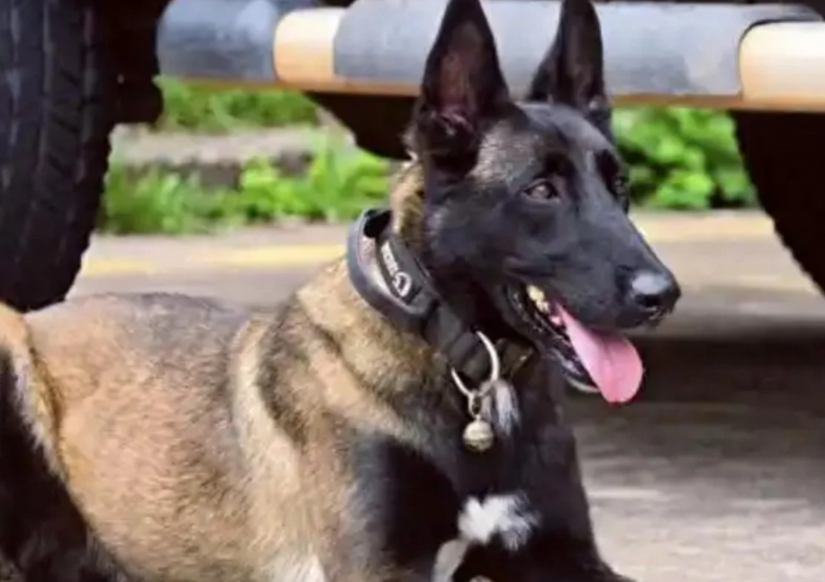
A four-year-old German shepherd named Bulu has become an unlikely symbol of loyalty across mainland China, capturing the imagination of millions after refusing food and water during six months of separation from his handler, a police officer known as Awei. Their emotional reunion, documented on video and shared widely on social media platforms, accumulated more than 10 million views and over 580,000 likes, resonating with audiences far beyond China's borders and raising broader questions about the bonds between working animals and their human partners in high-risk professions.
Awei, stationed in Chuxiong in Yunnan province, suffered catastrophic injuries during a narcotics operation in November of the previous year. While pursuing fleeing suspects through an abandoned building with Bulu in the lead, the officer mistepped in the darkness and fell from a second-storey height. The dog remained at his side immediately after the fall, circling anxiously and attempting to rouse him. First responders found Awei in critical condition, convulsing and vomiting blood as he drifted between consciousness and unconsciousness. Medical personnel at the scene urged him to hold firm, reminding him of their shared mission ahead.
The severity of Awei's injuries became apparent during hospital examination. Doctors diagnosed multiple fractures affecting both his head and chest, conditions that required him to remain in an induced coma for five days. The recovery process would ultimately stretch across six months, during which Bulu's behaviour transformed in ways that highlighted the profound attachment formed during years of working partnership. Rather than adjusting to a new routine or handler during this extended absence, the dog entered a state of persistent melancholy and declined to engage in normal activities.
Staff at the training base where Bulu was kept documented the dog's deterioration through surveillance footage. The animal appeared to lose interest in food and water, consuming only small quantities when offered sustenance. More tellingly, security cameras captured Bulu repeatedly returning to locations where he might encounter his handler: the dormitory they had shared, the main gate of the base, and the training routes they had patrolled together. On one occasion, when a police vehicle arrived at the facility, Bulu rushed toward it with evident excitement, only to be deflated when officers informed him that Awei was not aboard. These recorded moments collectively painted a picture of a working animal struggling with separation from a trusted partner in ways that transcended simple obedience or routine.
When Awei finally cleared medical restrictions and returned to active duty, supervisors arranged a carefully orchestrated reunion between handler and dog. The moment was captured on video and subsequently released to media outlets. As Bulu was brought forward, the dog immediately recognised his handler and began barking excitedly before sprinting toward him. Awei, overcome with emotion, dropped his luggage and knelt to embrace the animal. This brief but poignant sequence struck a chord with online audiences, accumulating views and engagement metrics that reflected genuine public investment in the narrative of devoted companionship.
The case that prompted the deployment in November ultimately reached a successful conclusion even as Awei recuperated. Colleagues continued the drug investigation without him, systematically pursuing leads and conducting operations that resulted in the arrest of 11 suspects. Officers recovered 4.4 kilos of narcotics and more than 500,000 yuan in illicit funds, amounts that underscored the significance of the original operation and the risks Awei had undertaken when pursuing fleeing targets through darkened corridors.
The viral story has directed unprecedented public attention toward China's police dog programme at a moment when statistical data illuminates both the scale and challenges of the operation. According to CCTV News, mainland China maintains more than 29,000 active police dogs as of 2024, a substantial force deployed across narcotics detection, search and rescue, explosives identification, and general law enforcement duties. These animals represent significant investments in training, care, and operational deployment, yet they remain largely invisible to the general public until incidents like Bulu's story emerge to humanise their contributions.
The working life of a police dog, whilst occasionally celebrated, carries genuine occupational hazards that deserve greater recognition. The typical career span averages eight years, though extended periods of high-intensity deployment in challenging environments—such as the operation that injured Awei—can accelerate physical deterioration. Joint and spinal injuries frequently develop in dogs subjected to sustained operational stress, conditions that may not become apparent until later in their service or after retirement. The physical toll of police work, combined with the emotional bonds formed with handlers, creates a complex welfare landscape that extends well beyond initial training.
Policy surrounding the retirement and post-service care of police dogs reflects evolving attitudes toward working animals. Most retire and remain within their original units, typically staying with their handlers in a semi-retirement capacity. Some animals eventually become available for public adoption once they transition out of active duty, allowing them to experience civilian life after years of rigorous training and deployment. However, the availability of such opportunities varies by region and by individual circumstances, meaning some dogs face uncertain futures once their working capacity diminishes.
The Bulu case has prompted broader conversations within Chinese society about recognising the agency and emotional capacity of working animals. Online commentators have reflected on the distinction between obedience and genuine attachment, with one widely shared response noting that Bulu was not simply waiting for a handler to return but mourning the absence of a comrade-in-arms. This sentiment reflects a subtle but significant shift in how working animals are conceptualised—not merely as tools executing commands, but as sentient beings capable of forming meaningful relationships and suffering genuine distress during separation.
For Southeast Asian observers, particularly those in Malaysia where police and military K9 units operate extensively, the story offers both inspiration and a prompt for reflection. The emotional intelligence displayed by Bulu challenges any tendency to view working dogs as interchangeable assets rather than individual animals deserving of recognition and care. Malaysian authorities managing similar programmes might draw lessons regarding handler retention policies, post-retirement welfare provisions, and the recognition that the bonds formed between working dogs and handlers represent genuine psychological relationships worthy of institutional accommodation.

