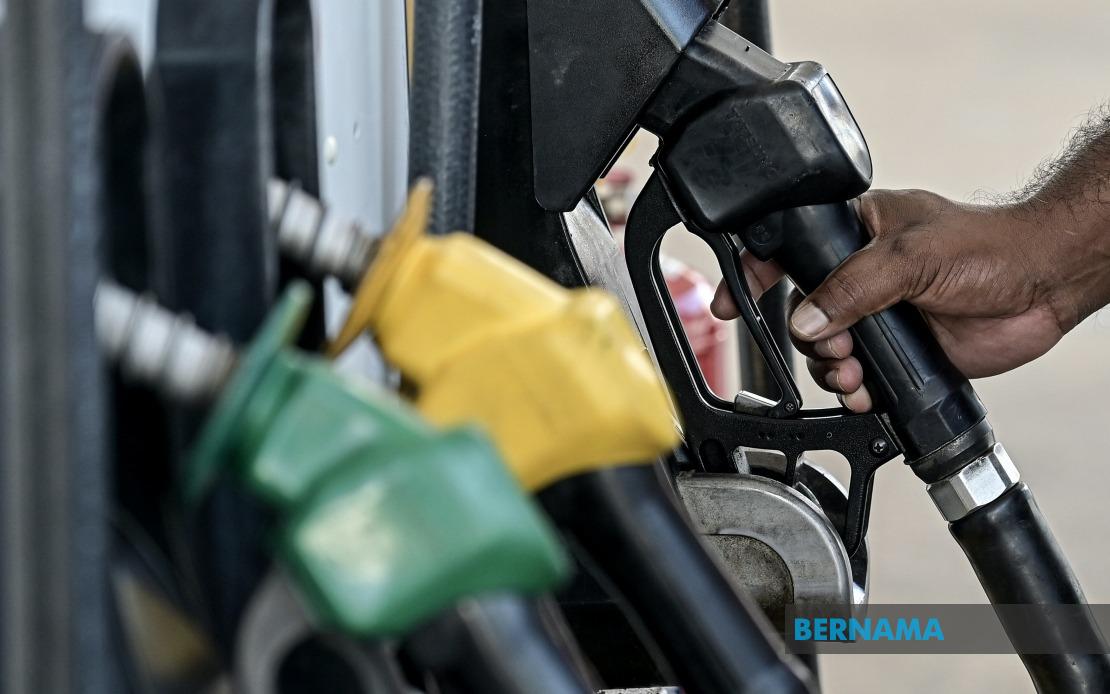
Malaysia's Ministry of Finance has rolled out an expanded fuel subsidy programme targeting roughly 700,000 private diesel vehicle owners beginning tomorrow, marking a substantial shift in how the government cushions citizens against volatile fuel costs. The new BUDI MADANI Diesel initiative will supply fuel at a capped rate of RM2.10 per litre to 400,000 eligible owners in Peninsular Malaysia and 300,000 across Sabah, Sarawak, and the Federal Territory of Labuan—a dramatic increase from the preceding BUDI Diesel Individu scheme, which previously funnelled monthly cash assistance to just 180,000 recipients in the peninsula.
The restructured programme represents a fundamental policy recalibration, replacing cash handouts with direct price intervention at the pump. This shift carries practical significance for Malaysian motorists, who have endured persistent pressure from global crude oil price fluctuations and currency movements. By anchoring diesel prices through the subsidy mechanism rather than through periodic payments, the government creates predictability in household budgeting for vehicle owners dependent on diesel—a constituency that includes small business operators, rural commuters, and families spanning multiple vehicle ownership across households.
Beyond private vehicle owners, the initiative extends a RM2.15 per litre subsidy to approximately 70,000 commercial and goods transport vehicles operating in East Malaysia and Labuan under the existing SKDS framework. The government has further widened the net by incorporating company-registered private pickup trucks and jeeps, subject to specified conditions, acknowledging that these vehicle categories occupy a grey zone between personal and commercial use and are frequently relied upon by agricultural workers, logistics micro-operators, and rural traders.
Early implementation data provides encouraging signals about operational readiness. Since the initiative's soft launch for Peninsular Malaysia drivers on June 27, the system has processed approximately 80,000 transactions within three days, dispensing roughly 3.2 million litres of subsidised diesel valued near RM7 million at the RM2.15 introductory rate. Critically, the MyKad verification infrastructure at fuel stations functioned without significant operational friction, suggesting that digital verification systems embedded within petrol station networks can scale effectively—a reassuring indicator as the programme expands nationwide.
The government has simultaneously introduced several supporting mechanisms designed to reduce friction in programme participation. A three-month ownership transfer fee waiver, effective immediately, eliminates charges up to RM100 for individuals transitioning vehicle registration—a targeted measure recognising that many households operate diesel vehicles under the names of deceased family members, retired parents, or spouses. To accommodate this administrative processing, the Road Transport Department will extend weekend operations at all state offices and branches from July 4 through 26, creating enhanced access windows for rural populations who cannot easily reach JPJ counters during standard business hours.
Perhaps the most innovative element involves a one-off transfer mechanism permitting initial beneficiaries to redirect their BUDI Diesel subsidy entitlements to immediate family members—spouses, parents, children, or siblings—who are not registered vehicle owners. This addresses a common household configuration where one family member holds title to a vehicle but another drives it daily. Once transferred and approved, the recipient can access subsidised fuel using their own MyKad against the original owner's monthly quota. Within just hours of June 30, the system received nearly 1,000 such transfer applications, demonstrating significant latent demand for this flexibility.
The subsidy programme operationalises a broader government objective to moderate cost-of-living pressures during a period when multiple economic headwinds—import inflation, energy price volatility, and regional supply chain constraints—have compressed household purchasing power. Diesel subsidies carry particular sectoral significance across Malaysia's economy; transportation, agriculture, construction, and small-scale manufacturing all depend substantially on predictable fuel costs. By stabilising diesel prices, the government seeks to prevent cascading inflationary effects that might otherwise appear in consumer goods pricing, logistics charges, and agricultural product costs.
For Malaysian policymakers, the programme reflects a pragmatic rebalancing between fiscal sustainability and immediate relief. Rather than indefinite, universalised subsidies that drain government revenues and create permanent expectation distortions, this targeted approach restricts benefits to verified vehicle owners while maintaining price discipline through defined eligibility criteria. The monthly quota system—with drivers allocated specific litres monthly rather than unlimited access—embeds conservation incentives while preventing subsidy leakage to large fleet operators or resale markets.
Regional implications merit consideration as well. Southeast Asian governments have experimented with differing subsidy architectures, ranging from Singapore's market-rate approach to Indonesia's broader universal schemes. Malaysia's hybrid model—combining targeted beneficiary lists with capped retail prices and digital verification—may offer a replicable framework for other middle-income economies seeking to balance fiscal conservatism with social protection during commodity price volatility. The real-time data generated from BUDI Diesel's implementation could inform regional policy discussions about subsidy effectiveness.
The initiative's success hinges substantially on sustained digital infrastructure performance and political consistency. Should the MyKad verification systems experience breakdowns during peak demand periods, or should the government alter subsidy rates amid fiscal pressure, programme credibility could erode rapidly. Equally important, public communication about eligibility criteria, application procedures, and monthly quota renewal must remain transparent—administrative confusion could frustrate beneficiaries and undermine the subsidy's intended cost-of-living relief.
Looking forward, the BUDI MADANI Diesel programme represents an experiment in precision-targeted subsidisation within a developing Asian economy's constraints. Its success or failure will likely shape subsequent approaches to fuel policy, cost-of-living interventions, and the broader question of how governments manage price stability during global commodity volatility. For Malaysian drivers, particularly in rural areas and among small business operators, the programme's tangible benefit begins immediately—but its ultimate impact on household finances and economic stability will only become apparent as implementation extends across months and supply chains adjust to the new subsidy environment.

