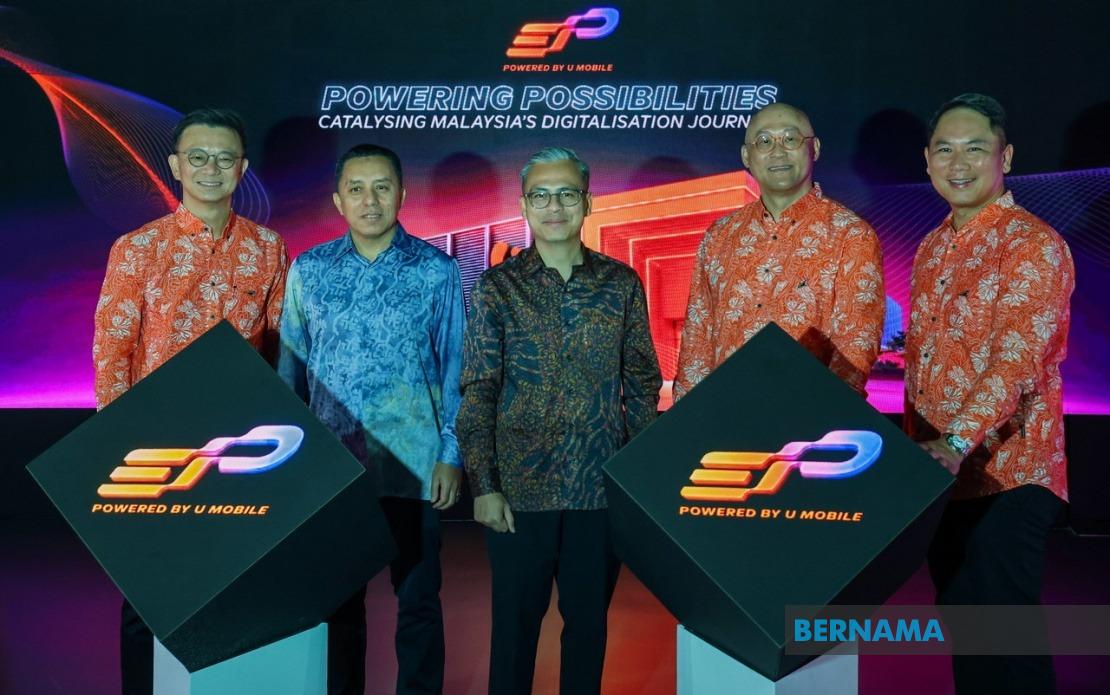
Communications Minister Datuk Seri Fahmi Fadzil has painted an optimistic picture of how 5G Advanced, commonly referred to as Ultra 5G, stands to reshape Malaysia's economic landscape by unlocking transformative capabilities across multiple industries. Speaking at the launch of the U Mobile Enterprise Innovation Platform Hub in Kuala Lumpur, the minister underscored the far-reaching implications of this next-generation connectivity technology, which harnesses artificial intelligence and robotics to deliver measurable improvements in how businesses operate and serve their communities.
The potential applications extend across sectors that form the backbone of Malaysia's economy. In healthcare, Fahmi highlighted how Ultra 5G could alleviate the burdensome workload carried by nursing staff in hospital wards, enabling more efficient patient care through remote monitoring and AI-assisted diagnostics. Agricultural producers, particularly those operating large-scale oil palm plantations, stand to benefit from enhanced productivity metrics, with the technology enabling real-time monitoring of crop health and automated resource management across vast estates. These improvements translate directly into cost savings and higher yields for farmers, addressing long-standing challenges in Malaysia's agribusiness sector.
The retail sector represents another significant opportunity, where 5G Advanced's sophisticated data analytics capabilities would empower merchants to revolutionise their approach to inventory management. Rather than relying on conventional stock-taking methods, retailers could implement predictive algorithms that anticipate demand fluctuations and optimise shelf placement based on consumer behaviour patterns. This granular understanding of market trends allows businesses to reduce wastage, respond swiftly to shifting preferences, and ultimately enhance the shopping experience for consumers navigating Malaysia's competitive retail landscape.
Beyond commercial applications, the security dimension of 5G Advanced deployment carries particular strategic relevance for Malaysia. The minister specifically flagged the deployment potential of drone technology powered by robust 5G networks to conduct surveillance operations, with particular emphasis on border security applications. Given Malaysia's extensive maritime boundaries and land frontiers, autonomous drone systems equipped with advanced sensors could dramatically improve monitoring capabilities and response times to security threats, creating a force multiplier for personnel stretched across challenging terrain.
Fahmi noted that preliminary implementations of 5G-enabled drone operations are already underway at select locations throughout the country, with border surveillance representing a priority use case. The Malaysian Border Control and Protection Agency (AKPS) and the Royal Malaysia Police (PDRM) should undertake comprehensive assessments to evaluate the suitability and feasibility of expanding these initiatives nationwide. Such evaluations would need to account for operational costs, technological integration with existing surveillance infrastructure, and the training requirements for personnel managing these sophisticated systems.
To realise this vision comprehensively, Fahmi stressed the importance of collaborative governance frameworks. The Malaysian Communications and Multimedia Commission (MCMC) has positioned itself as a willing partner prepared to coordinate with relevant government ministries, particularly the Home Ministry, to expand internet coverage in remote border regions that currently suffer from connectivity gaps. This commitment to infrastructure investment acknowledges a fundamental reality: advanced technologies such as Ultra 5G remain inaccessible in areas where basic broadband infrastructure has not yet been established.
Understanding the technical specifications of 5G Advanced helps contextualise why government officials and industry stakeholders view it as transformative. The technology represents the latest evolution of fifth-generation mobile networks, operating on a 5G Standalone architecture that fundamentally differs from earlier deployments. This SA framework delivers enterprise-grade connectivity characterised by ultra-low latency, enabling near-instantaneous communication between devices and systems. Network slicing capabilities allow operators to carve out dedicated bandwidth corridors for specific applications, ensuring that mission-critical operations maintain consistent performance even during periods of peak network congestion.
Capacity improvements are particularly notable, with 5G Advanced offering double the throughput of preceding 5G implementations. This expanded bandwidth proves essential for applications requiring continuous high-definition data transmission, such as remote surgical procedures or real-time agricultural monitoring across multiple simultaneous drone feeds. The architecture also incorporates enhanced AI-powered security protocols that protect against evolving cyber threats, a consideration of paramount importance as government agencies and private enterprises increasingly rely on interconnected systems for critical functions.
For Malaysia specifically, the successful deployment of 5G Advanced carries implications extending beyond immediate technological achievement. Regional competitiveness in the digital economy increasingly hinges on the speed and scale at which nations adopt and leverage cutting-edge connectivity infrastructure. Singapore and South Korea have already demonstrated how early 5G adoption accelerates innovation ecosystems and attracts technology-driven foreign investment. Malaysia's proactive positioning around Ultra 5G deployment signals to multinational enterprises and startups alike that the country remains committed to building a digitally sophisticated economy capable of competing at the highest levels.
The healthcare sector merits deeper consideration given Malaysia's ageing population and the mounting pressures on public health infrastructure. Ultra 5G enables telemedicine applications of unprecedented sophistication, potentially bringing specialist consultations to rural clinics that currently lack access to experienced physicians. For a nation grappling with geographic disparities in healthcare quality, such technology could prove genuinely life-changing, permitting surgeons at leading teaching hospitals to guide colleagues in provincial facilities through complex procedures in real time. Similarly, continuous remote monitoring of chronic disease patients could reduce hospital readmissions and prevent complications before they become critical.
Agriculture too stands at a technological inflection point. Malaysia's palm oil industry, while economically vital, faces mounting sustainability pressures and supply chain scrutiny from international buyers. Precision agriculture enabled by 5G networks and IoT sensors allows producers to optimise fertiliser application, water usage, and pesticide deployment, reducing environmental footprints while improving profitability. This technological pathway offers a credible route toward sustainable intensification, addressing critics' concerns about environmental degradation while maintaining the sector's economic viability for smallholder farmers dependent on palm cultivation for their livelihoods.
The minister's remarks also reflect broader thinking within Malaysia's technology policy establishment about the relationship between infrastructure and national capability. Connectivity alone does not drive transformation; rather, it enables it. The availability of 5G Advanced networks creates opportunities, but realising those opportunities requires complementary investments in skills development, regulatory frameworks conducive to innovation, and business models capable of capturing value from new technological possibilities. Government agencies including the MCMC must work in concert with telecommunications operators, technology vendors, and end-user industries to construct ecosystems where cutting-edge infrastructure translates into tangible economic and social benefits.
Moving forward, the success of Malaysia's 5G Advanced rollout will depend on sustained commitment from multiple stakeholders. Telecommunications operators must maintain investment momentum despite competitive pressures and capital constraints. Government agencies must create regulatory environments that encourage experimentation while maintaining necessary safeguards around spectrum management and consumer protection. Educational institutions should adjust curricula to prepare workers for technology-intensive roles emerging in transformed sectors. When these elements align, as they appear to be doing under Fahmi's leadership, Malaysia stands positioned to harvest substantial returns from embracing this transformative technology.

